Concussion Treatment & Neuropsychology
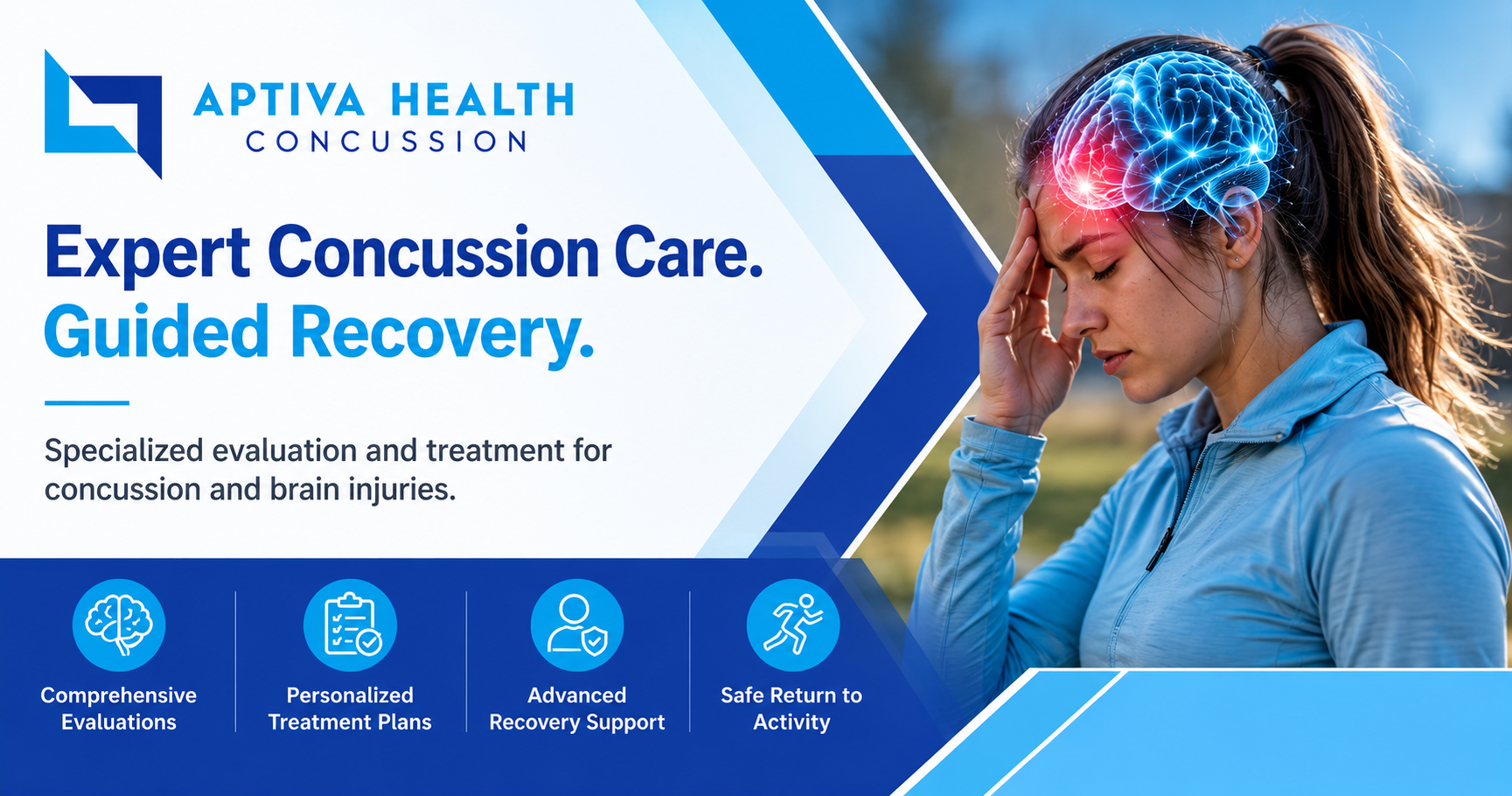
Aptiva's award-winning multi-disciplinary concussion team — neuropsychology, sports medicine, vestibular therapy and ImPACT testing — across two dedicated Concussion Institutes in Kentucky.
SCHEDULE AN APPOINTMENT
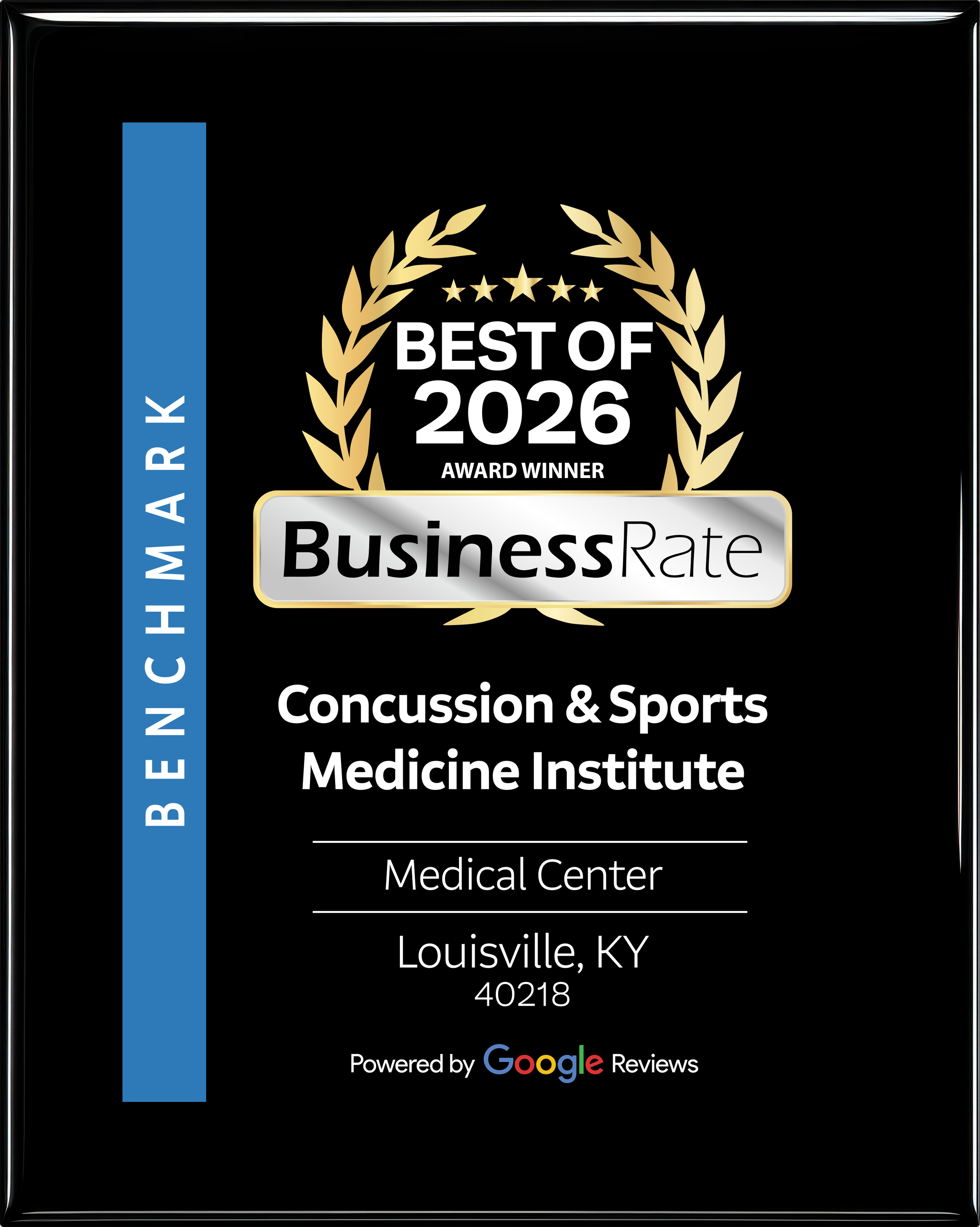
Voted Best of 2026
Best Medical Center Louisville, KY
Concussions Explained
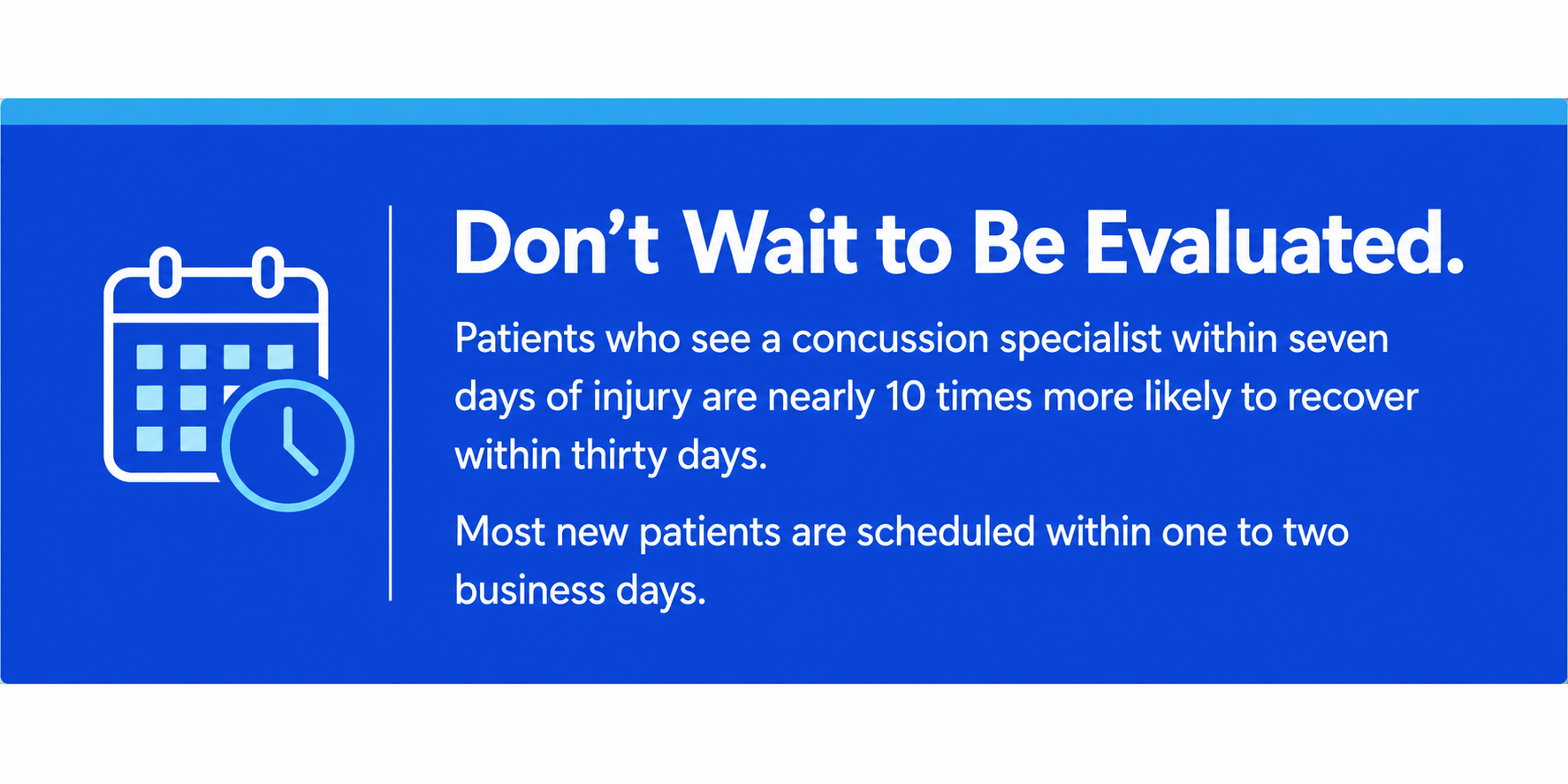
A concussion is a traumatic brain injury at the milder end of the spectrum — but "mild" doesn't mean unimportant. Research demonstrates that patients who see a concussion specialist within seven days of injury are nearly ten times more likely to recover within thirty days. Aptiva's Concussion & Sports Medicine Institute brings together neuropsychologists, a sports medicine physician, vestibular-certified physical therapists, and a certified athletic trainer in a single integrated practice — the only multi-disciplinary concussion team of its kind in the region. Two physical locations, in Louisville (3611 Newburg Road, voted Best Medical Center 2026) and Lexington (Codell Drive) with additional telehealth treatment options for patients in more than 40 states! Most patients are scheduled within one to two business days.
Award-Winning, Multi-Disciplinary Concussion Care
Most concussion clinics in the region operate as one neuropsychologist plus a referring sports medicine doctor, with vestibular therapy outsourced to a separate building and pediatric care handled by a different specialty group entirely. Patients spend the early weeks after a concussion — when speed matters most — driving between locations, repeating their history to providers who don't share records, and integrating their own care.
Aptiva's Concussion & Sports Medicine Institute is built differently:
Two clinical neuropsychologists (Dr. Lisa Manderino, Dr. Nathan Ramirez) for cognitive evaluation, neuropsychological assessment, and ongoing concussion management
A sports medicine physician (Dr. Robert Williams) for medical evaluation, return-to-play decisions, and coordination of overall care
A vestibular-certified physical therapist (Jared Simpson, PT, DPT, Cert. VT) for post-concussion dizziness, vertigo, balance impairment, and ocular-motor symptoms — concussion subtypes that require specialized rehabilitation
Two additional physical therapists (Simon Hoehn, Helen Jiang) for post-concussion strength, conditioning, and cognitive-physical re-integration
A certified athletic trainer (Tony Corrao, ATC) for baseline testing, sideline evaluation coordination with schools and coaches, and return-to-sport protocols
Under one roof, with shared charts, shared treatment planning, and shared patient outcomes data. And next door to Aptiva's main Louisville campus at 3615 Newburg Road, which means concussion patients with co-occurring orthopedic injuries (common after motor vehicle accidents, sports injuries, and falls) are coordinated with the orthopedic, spine and pain teams without leaving the campus.
The configuration has external validation: Aptiva's Concussion & Sports Medicine Institute was voted Best Medical Center in Louisville for 2026.
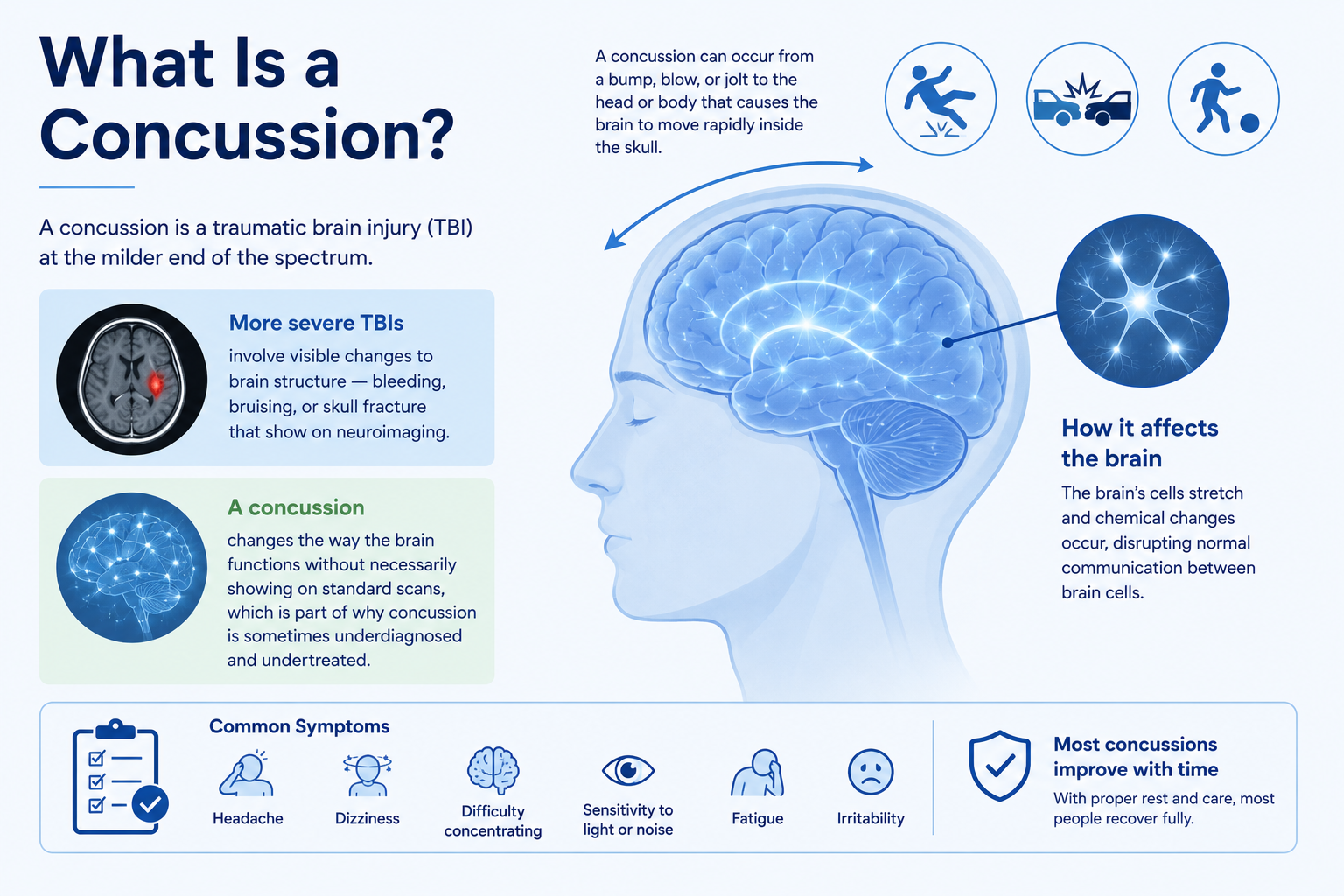
What Is a Concussion?
A concussion is a traumatic brain injury (TBI) at the milder end of the spectrum. More severe TBIs involve visible changes to brain structure — bleeding, bruising, or skull fracture that show on neuroimaging. A concussion changes the way the brain functions without necessarily showing on standard scans, which is part of why concussion is sometimes underdiagnosed and undertreated.
Two clarifications that change how patients should think about concussion:
You don't have to hit your head. Concussions happen when the brain moves rapidly inside the skull. A direct blow causes this — but so does a whiplash-type movement when the body is hit hard. Motor vehicle accidents, hard tackles, falls onto the body rather than the head, and even some workplace impacts can all produce concussion.
You don't have to lose consciousness. Only about 10% of concussions involve any loss of consciousness. Most concussed patients remain awake and aware throughout — which is part of why concussion symptoms often get dismissed in the first 24-48 hours and why specialist evaluation matters even when "it didn't seem that bad."
Common symptoms of concussion:
Headache (often the most common and persistent)
Confusion, difficulty concentrating, or feeling "foggy"
Memory problems
Dizziness, balance problems, or sense that things are spinning
Nausea or vomiting
Sensitivity to light or sound
Blurred or double vision
Sleep changes (sleeping too much or too little)
Mood changes — irritability, anxiety, sadness
Slowed reaction time
Symptoms may not appear until hours or days after the injury. Parents and family members watching someone who has hit their head should monitor for changes in mood, cognition, and physical symptoms over the days following.
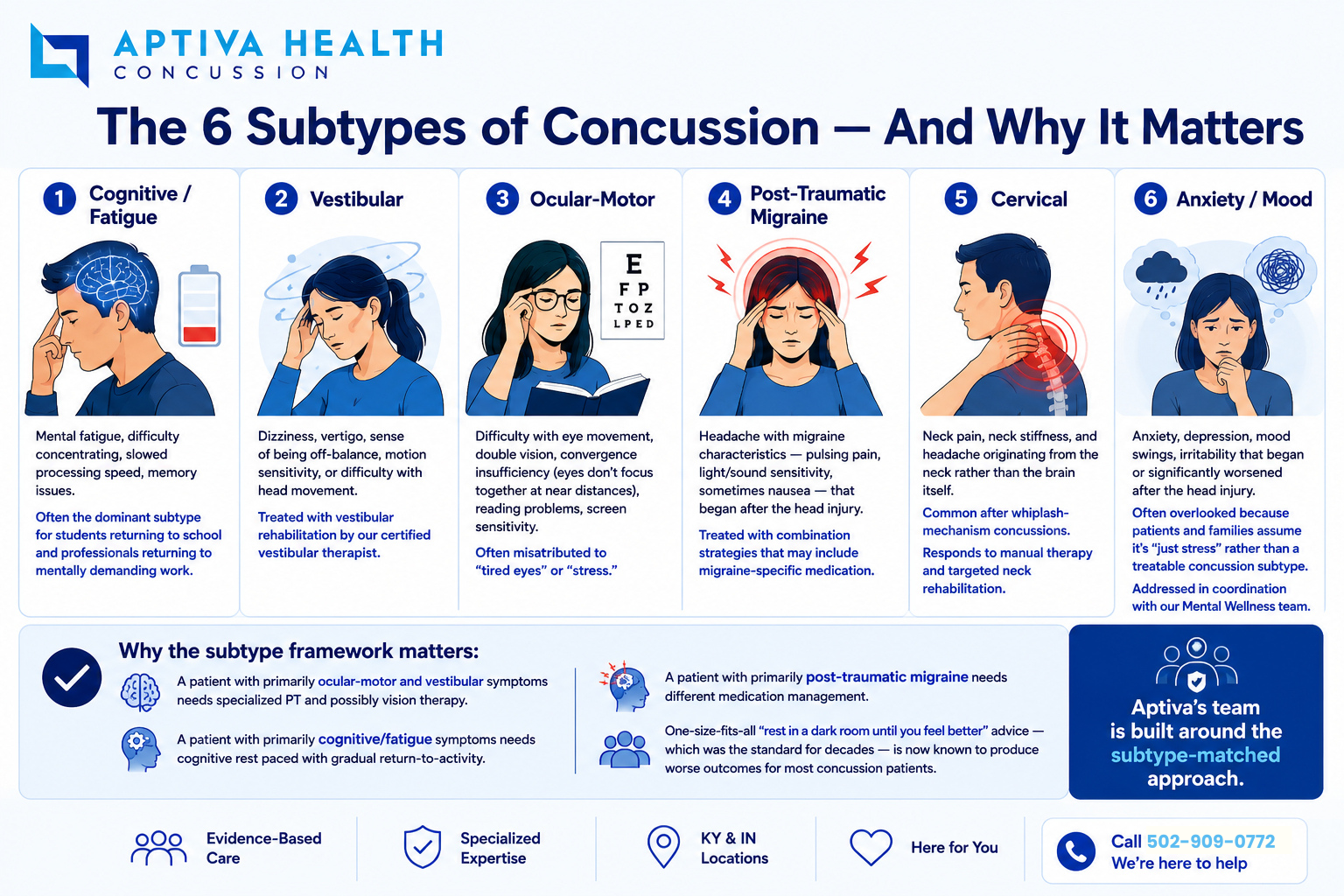
The 6 Subtypes of Concussion — And Why It Matters
Modern concussion research has identified that concussion isn't one undifferentiated condition. It's actually six distinct clinical subtypes, each with characteristic symptoms and matched treatment strategies. A patient may experience one subtype or several at once. Identifying the specific subtype is what changes the recovery curve — treating "concussion" generically tends to produce slower recovery than matching treatment to the specific impairment pattern.
The six subtypes Aptiva evaluates and treats:
1. Cognitive / Fatigue Mental fatigue, difficulty concentrating, slowed processing speed, memory issues. Often the dominant subtype for students returning to school and professionals returning to mentally demanding work.
2. Vestibular Dizziness, vertigo, sense of being off-balance, motion sensitivity, or difficulty with head movement. Treated with vestibular rehabilitation by our certified vestibular therapist.
3. Ocular-Motor Difficulty with eye movement, double vision, convergence insufficiency (eyes don't focus together at near distances), reading problems, screen sensitivity. Often misattributed to "tired eyes" or "stress."
4. Post-Traumatic Migraine Headache with migraine characteristics — pulsing pain, light/sound sensitivity, sometimes nausea — that began after the head injury. Treated with combination strategies that may include migraine-specific medication.
5. Cervical Neck pain, neck stiffness, and headache originating from the neck rather than the brain itself. Common after whiplash-mechanism concussions. Responds to manual therapy and targeted neck rehabilitation.
6. Anxiety / Mood Anxiety, depression, mood swings, irritability that began or significantly worsened after the head injury. Often overlooked because patients and families assume it's "just stress" rather than a treatable concussion subtype. Addressed in coordination with our Mental Wellness team.
Why the subtype framework matters: A patient with primarily ocular-motor and vestibular symptoms needs specialized PT and possibly vision therapy. A patient with primarily cognitive/fatigue symptoms needs cognitive rest paced with gradual return-to-activity. A patient with primarily post-traumatic migraine needs different medication management. One-size-fits-all "rest in a dark room until you feel better" advice — which was the standard for decades — is now known to produce worse outcomes for most concussion patients. Aptiva's team is built around the subtype-matched approach.
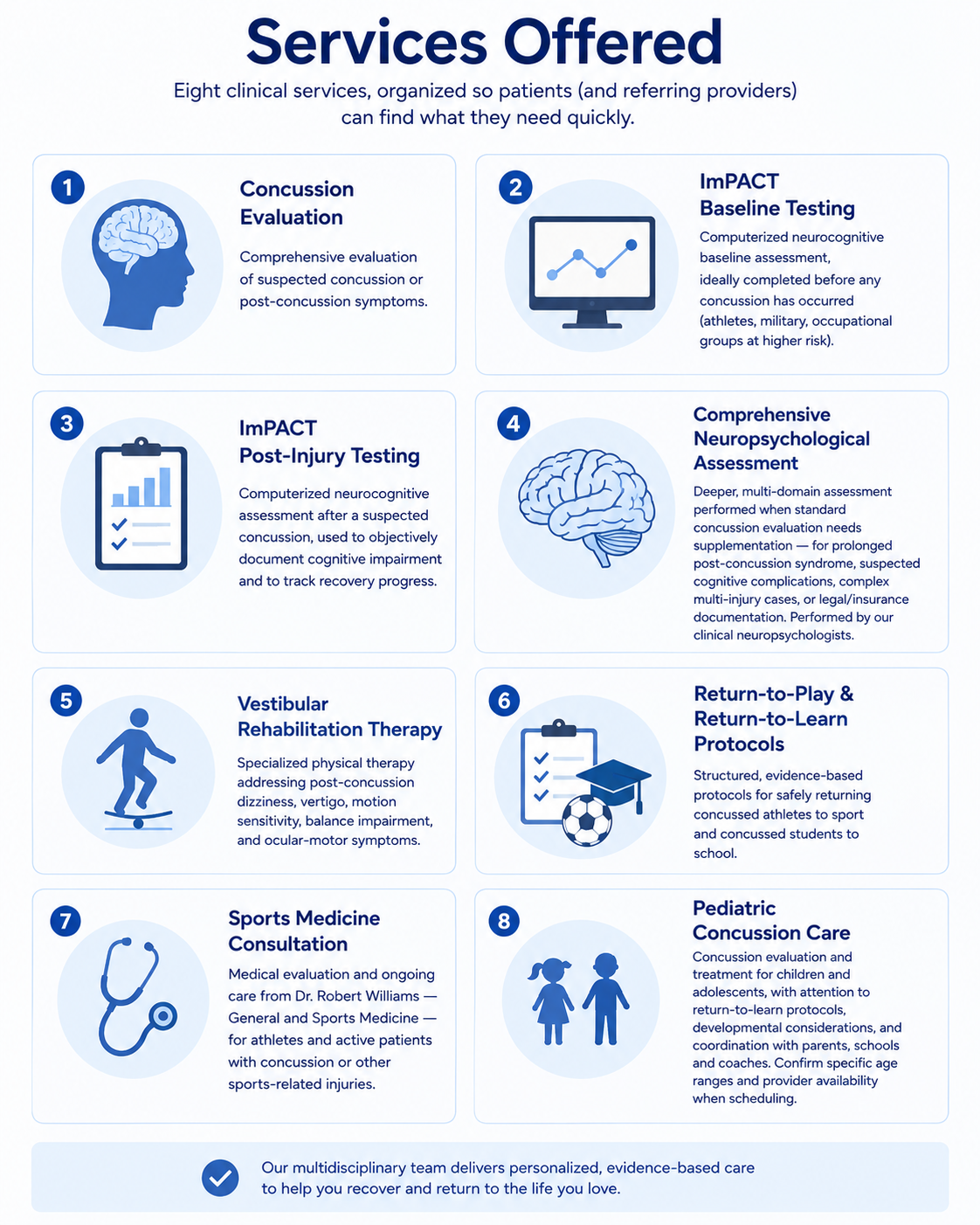
Services Offered
Eight clinical services, organized so patients (and referring providers) can find what they need quickly.
🧠 Concussion Evaluation Comprehensive evaluation of suspected concussion or post-concussion symptoms. Includes detailed history, neurological examination, cognitive screening, and symptom inventory. Used to confirm or rule out concussion and to identify the specific subtype(s) present.
📊 ImPACT Baseline Testing Computerized neurocognitive baseline assessment, ideally completed before any concussion has occurred (athletes, military, occupational groups at higher risk). Provides a personal "normal" against which any future post-injury results can be compared. Available walk-in: Tuesdays, Wednesdays and Fridays, 8 AM - 3:30 PM at our Louisville Concussion Institute.
🎯 ImPACT Post-Injury Testing Computerized neurocognitive assessment after a suspected concussion, used to objectively document cognitive impairment and to track recovery progress. Compared against baseline (if available) or against normative data.
🔬 Comprehensive Neuropsychological Assessment Deeper, multi-domain assessment performed when standard concussion evaluation needs supplementation — for prolonged post-concussion syndrome, suspected cognitive complications, complex multi-injury cases, or legal/insurance documentation. Performed by our clinical neuropsychologists.
⚖️ Vestibular Rehabilitation Therapy Specialized physical therapy addressing post-concussion dizziness, vertigo, motion sensitivity, balance impairment, and ocular-motor symptoms. Delivered by Jared Simpson, PT, DPT, Cert. VT, one of the few vestibular-certified therapists in the region. Learn more about vestibular rehabilitation →
🏃 Return-to-Play & Return-to-Learn Protocols Structured, evidence-based protocols for safely returning concussed athletes to sport and concussed students to school. Includes coordination with coaches, athletic trainers, schools, and parents.
🩺 Sports Medicine Consultation Medical evaluation and ongoing care from Dr. Robert Williams — General and Sports Medicine — for athletes and active patients with concussion or other sports-related injuries.
🧒 Pediatric Concussion Care Concussion evaluation and treatment for children and adolescents, with attention to return-to-learn protocols, developmental considerations, and coordination with parents, schools and coaches. Confirm specific age ranges and provider availability when scheduling.
Our Concussion Care Team
Seven licensed clinicians across neuropsychology, sports medicine, vestibular therapy, physical therapy, and athletic training — a structurally unusual depth for concussion care in this market. Most concussion clinics in the region operate with one-third the staffing.






Interview with our Director of Concussion Care
Post-Concussion Care: What to Do After a Suspected Concussion
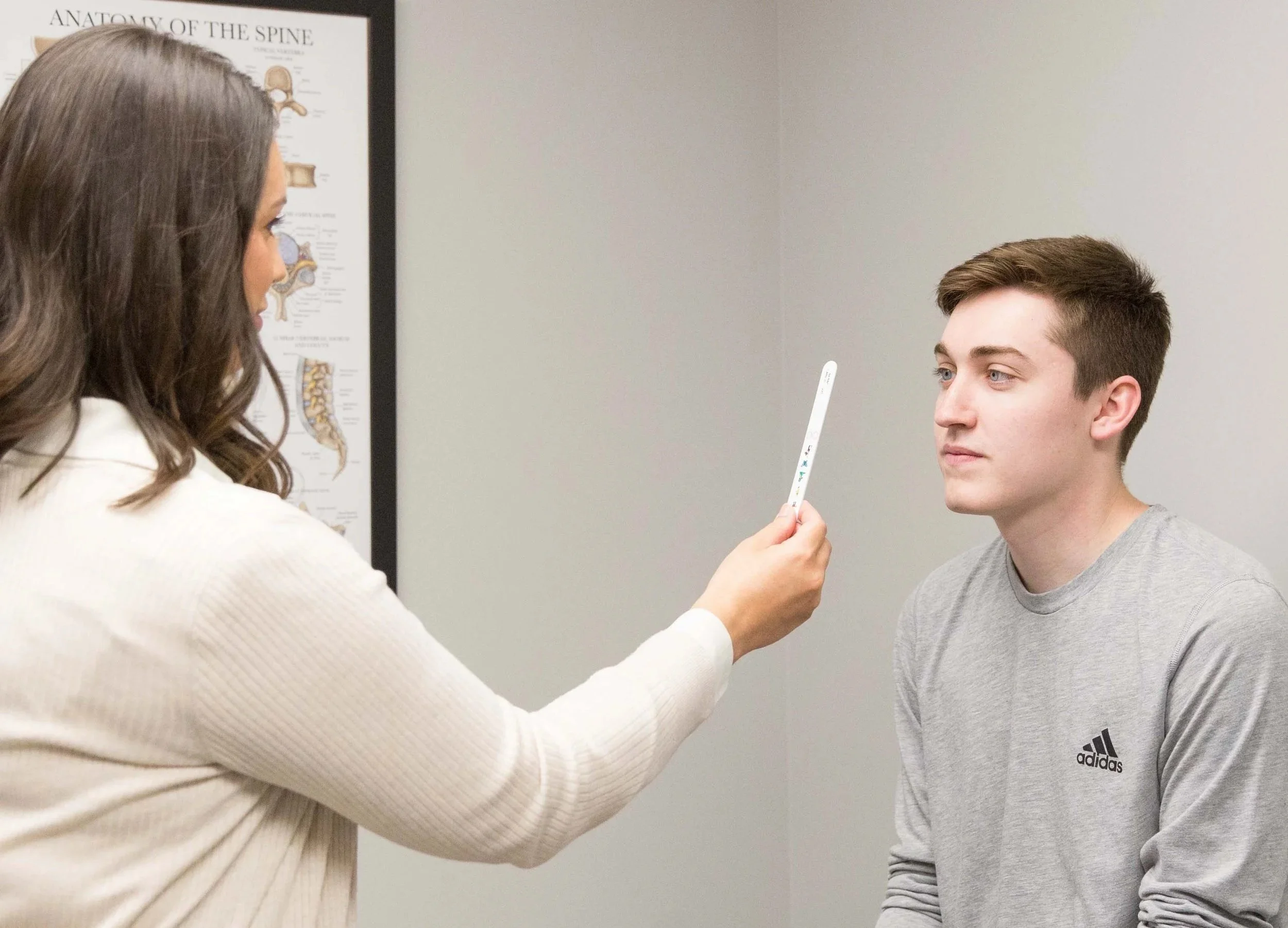
Aptiva offers a wide range of treatment options for patients with concussion. The first principles:
1. Don't wait to see a specialist. Research demonstrates that people who see a concussion specialist within 7 days after a concussion are nearly 10x more likely to recover within 30 days. If you suspect a concussion, schedule an appointment with a concussion specialist right away.
2. Don't rush back to full activity. Anyone with a head injury should return to usual activities gradually. The instinct to "push through" worsens most concussion subtypes.
3. Maintain sleep hygiene. Stick to a regular sleep schedule. Avoid napping during the day. If sleep is significantly disrupted, mention this to your provider — sleep problems are themselves treatable.
4. Medication when appropriate. Your concussion provider may recommend medication to address specific symptoms — common options include amitriptyline (for headache and sleep), ondansetron (for nausea), and short-term acetaminophen-based options. Medication is matched to symptoms, not used generically.
5. Manage stress. Stress measurably aggravates post-concussion symptoms. Stress-reduction strategies — including coordination with our Mental Wellness team when needed — are part of comprehensive concussion care.
6. Avoid alcohol, stimulants and recreational drugs. These substances directly aggravate concussion symptoms and slow recovery.
7. Vestibular rehabilitation when indicated. If you have post-concussion vertigo, dizziness, or balance problems, your concussion provider may recommend vestibular therapy with Jared Simpson, PT, DPT, Cert. VT.
8. Address psychological symptoms. Anxiety, depression, irritability, and mood changes after concussion are common and treatable. They are not "just stress" — they are often a specific concussion subtype that responds to focused care.
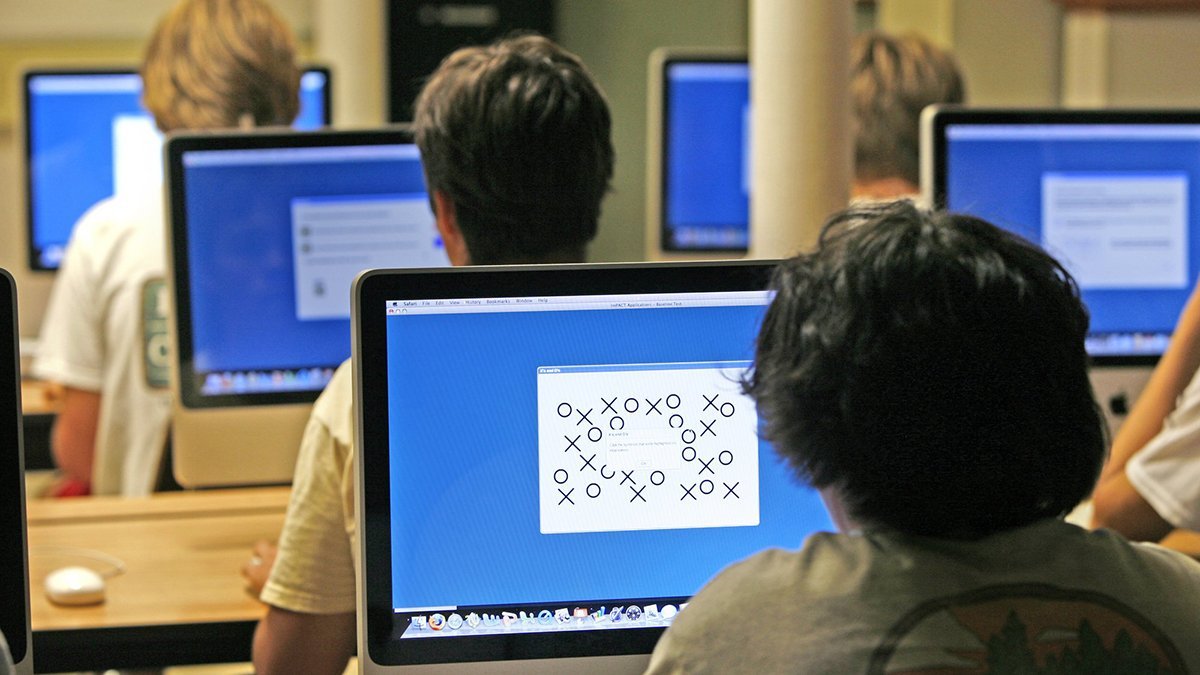
ImPACT Testing - Baseline & Post-Injury
ImPACT (Immediate Post-Concussion Assessment and Cognitive Testing) is a computerized neurocognitive test used widely in concussion management. It measures attention, working memory, reaction time, visual problem solving, and several other cognitive abilities.
Aptiva offers ImPACT in two contexts:
Baseline Testing — Walk-in Available Taken before any concussion has occurred. Useful for athletes, military personnel, certain occupational groups, and anyone in higher-risk activities. Provides a personal baseline against which any future post-injury test results can be compared — meaning a concussion specialist can detect specific cognitive impairment even when the post-injury score still falls within "average" normative ranges.
Walk-in baseline ImPACT testing at our Louisville Concussion Institute:
Tuesdays: 8:00 AM - 3:30 PM
Wednesdays: 8:00 AM - 3:30 PM
Fridays: 8:00 AM - 3:30 PM
No appointment required for baseline testing during these hours. Call 502-430-3689 if you have questions.
Post-Injury Testing Taken after a suspected concussion to objectively document cognitive impairment. Compared against the patient's own baseline (if previously established) or against normative data. Used to track recovery progress over time and to inform return-to-play and return-to-learn decisions.
Concussion Myths Debunked
Myth: You have to hit your head to have a concussion.
Fact: A concussion can occur when the brain moves inside the skull. This can be caused by a direct blow to the head, but can also occur when a blow to the body causes a whiplash effect to the head and neck.
Myth: You have to lose consciousness to have a concussion.
Fact: Only about 10% of concussions result in a loss of consciousness.
Myth: There’s nothing you can do for a concussion except rest and wait.
Fact: Research has come a long way in the last 15 years! We can now identify different subtypes of concussion and match appropriate treatment strategies based upon the subtype of concussion that a person is experiencing. Based upon the unique features of the injury, a concussion specialist can recommend active treatment strategies such as physical therapy, a home exercise program, and a structured plan for approaching daily activities like work and school. Matching treatment strategies to the specific type of concussion has shown to improve speed of recovery and other key outcomes for patients.
Myth: You can return to sport after a certain amount of time or after a certain symptom resolves.
Fact: Returning to sport participation too early can lead to worse symptoms, long-term impairments, and in rare cases even death by second impact syndrome (in which someone suffers a second concussion before the first one has fully healed). This is why it is so important to be sure a concussion has fully resolved before returning to sport. However, concussion can affect many different brain systems, and these systems may recover at different rates. Someone may feel better physically before other brain systems have fully recovered. A multidisciplinary evaluation including objective assessment of concussion-related symptoms and impairments is imperative to ensuring that an athlete is fully recovered before returning to sport participation.
Myth: Rest is the best treatment for a concussion
Fact: Rest is NOT best after a concussion! Prescribed rest actually has a negative effect on symptoms after concussion, and this negative effect is worse in younger individuals and in athletes compared to civilians.
Myth: Wearing a special type of helmet or other equipment can prevent concussions.
Fact: Wearing appropriate protective gear when participating in sports is hugely important because they can prevent severe brain injuries (such as brain bleeds and skull fractures). However, since concussions occur when the brain moves inside the skull, no helmet or device can entirely prevent them. Fortunately, concussions are also highly treatable injuries and are rarely associated with the types of permanent impairments seen in more severe injuries.
Myth: You have to stop playing sports after a certain number of concussions.
Fact: There is no “magic number” for what is considered “too many” concussions. Many factors need to be considered, including an athlete’s medical history and how they recover from each concussion. A concussion specialist can discuss risks and benefits of continued sport participation based upon an athlete’s unique circumstances.
Our Concussion Institutes
Aptiva operates two dedicated Concussion Institute locations, plus telehealth follow-up appointments for established patients across Kentucky and Indiana.
Louisville Concussion Institute — Best Medical Center 2026 - 3611 Newburg Road, Louisville, KY 40218. Next door to our main Aptiva campus at 3615 Newburg Road (Louisville Central) Visit the Louisville Concussion Institute page →
Lexington Concussion Institute - 426 Codell Drive, Suite 101, Lexington, KY 40509. Visit the Lexington Concussion Institute page →
Insurance & Payment Options
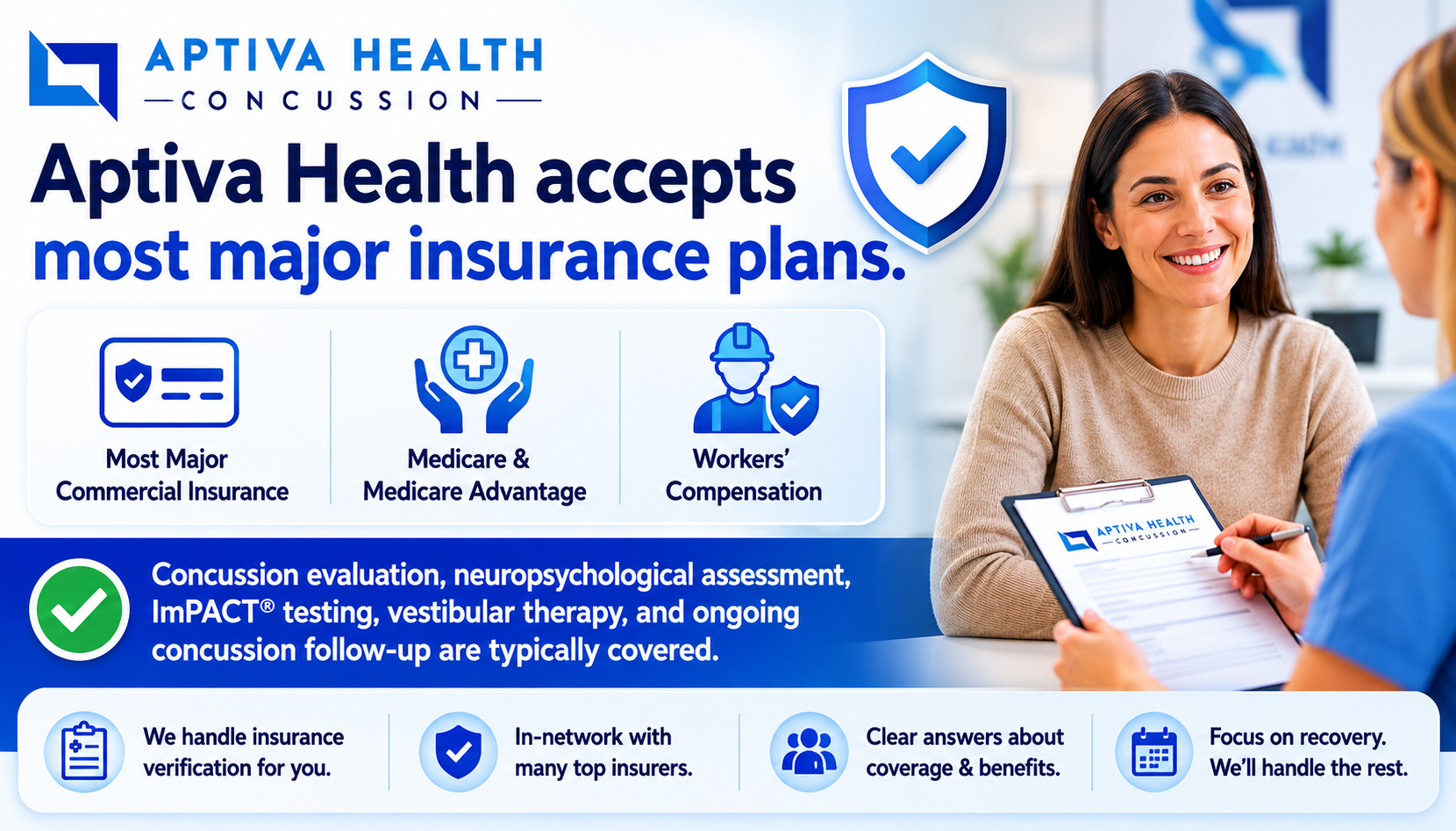
Aptiva Health accepts most major commercial insurance plans, Medicare, Medicare Advantage plans, and workers' compensation coverage. Concussion evaluation, neuropsychological assessment, ImPACT testing, vestibular therapy, and ongoing concussion follow-up are typically covered.
Call 502-430-3689 to verify your specific plan before scheduling.
Some patients find cash-pay options more cost-effective for certain services — particularly imaging and ImPACT testing — than running through their insurance. Learn more about cash pay options →
Concussion Referrals Welcome From
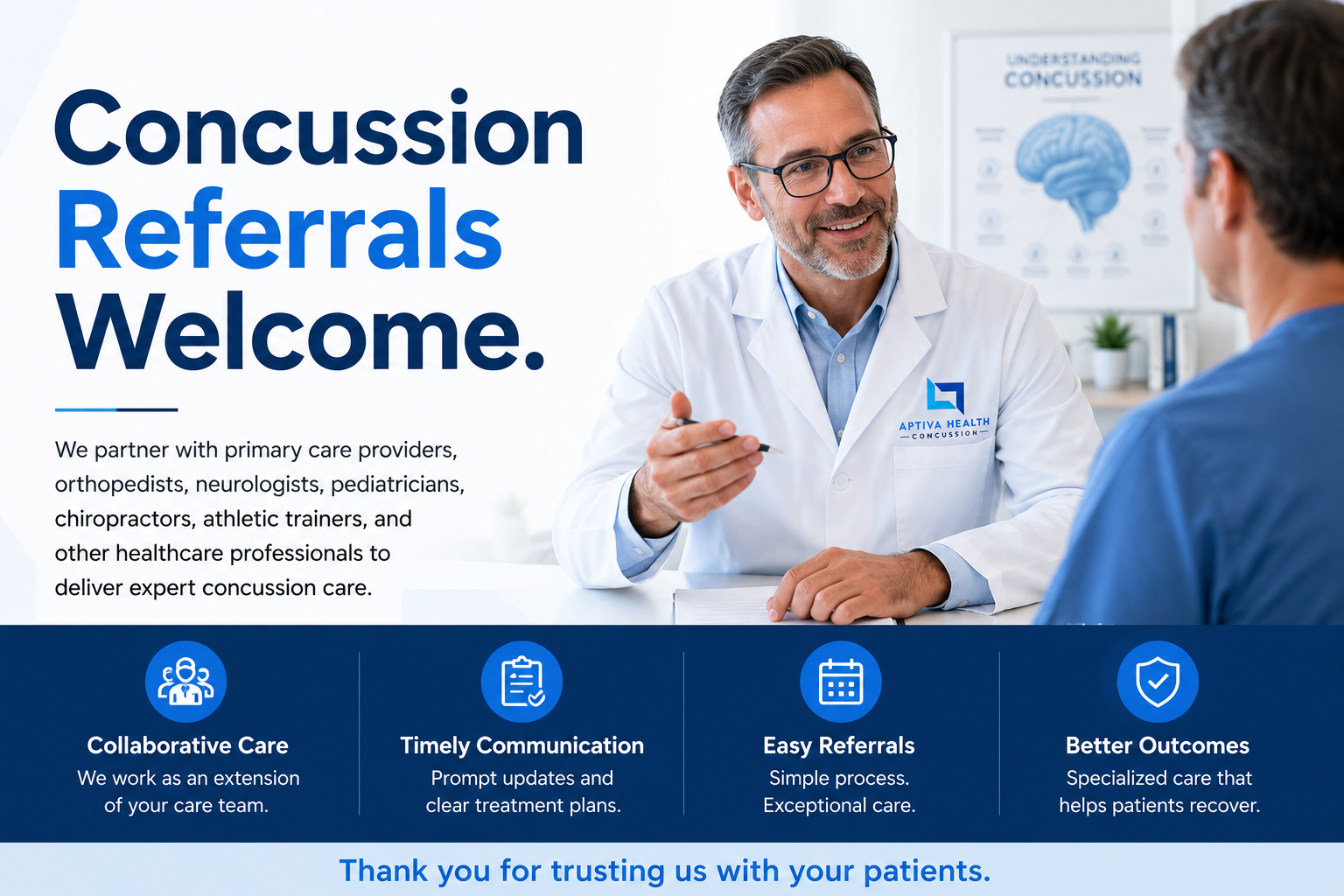
A short list specifically for referring sources. This is targeted at coaches, athletic trainers, primary care, neurologists, schools, employers — a section that is currently absent and that drives meaningful B2B referral volume in concussion care.
Athletic trainers, coaches, and school athletic departments
Primary care physicians, urgent care providers, and ER follow-up
Neurologists and other medical specialists
Workers' compensation carriers and third-party administrators
Schools and school nurses (for return-to-learn coordination)
Parents and guardians (no formal referral required)
Sports programs and organizations
For referring providers: Visit our Refer A Patient page or call 502-430-3689 for direct referral coordination.
Concussion - Frequently Asked Questions
FAQ #1
Question: What is a concussion?
Answer: A concussion is a traumatic brain injury (TBI) at the mild end of the spectrum. While more severe TBIs involve visible changes to brain structure on imaging (such as bleeding or skull fracture), a concussion changes the way the brain functions without necessarily showing on standard imaging. Concussions occur when the brain moves rapidly inside the skull, which can result from a direct blow to the head or from a whiplash-type movement caused by a blow to the body. Symptoms can range from mild and brief to severe and prolonged.
FAQ #2
Question: Do you have to hit your head to have a concussion?
Answer: No. A concussion can occur whenever the brain moves rapidly inside the skull. This can be caused by a direct blow to the head, but can also occur when a blow to the body causes a whiplash effect to the head and neck - common in motor vehicle accidents, sports injuries, falls, and some workplace injuries.
FAQ #3
Question: Do you have to lose consciousness to have a concussion?
Answer: No. Only about 10% of concussions result in a loss of consciousness. Most people with concussions remain awake and aware throughout the injury, which can sometimes delay seeking care. If you suspect a concussion based on any symptom - headache, confusion, dizziness, nausea, sensitivity to light or sound, mood changes, or trouble concentrating - it is worth being evaluated by a concussion specialist.
FAQ #4
Question: When should I go to the emergency room for a head injury?
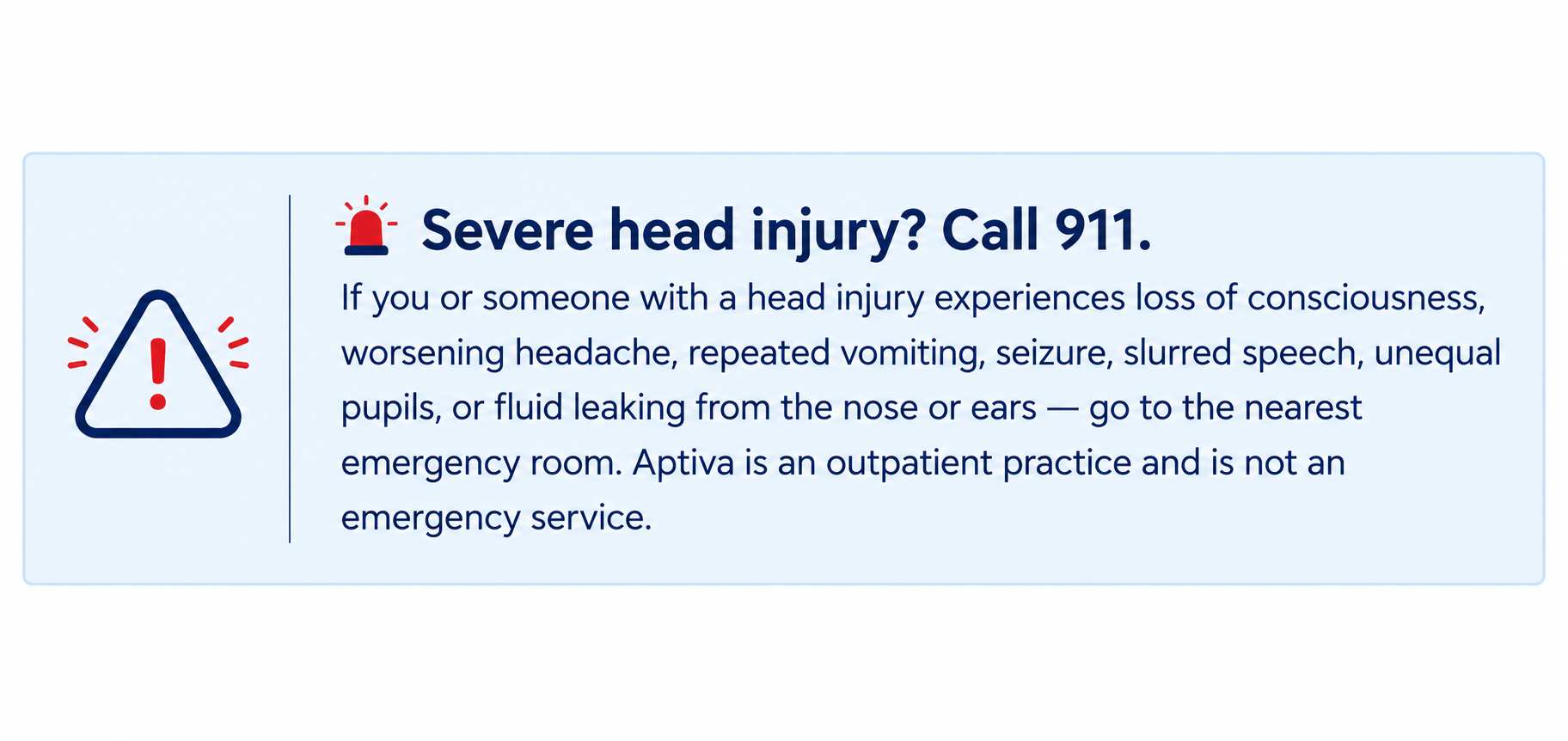
Answer: Seek emergency care immediately (call 911 or go to the nearest ER) if you or someone with a head injury experiences any of the following: loss of consciousness for more than a brief moment, a worsening headache, repeated vomiting, unequal pupils, seizure, difficulty waking up, slurred speech, weakness or numbness in arms or legs, fluid or blood leaking from the nose or ears, or signs of a skull fracture. These can indicate a more serious traumatic brain injury that requires emergency evaluation - not outpatient concussion care. Aptiva Health is an outpatient practice and is not an emergency service.
FAQ #5
Question: How soon after a head injury should I see a concussion specialist?
Answer: As soon as possible - ideally within the first week. Research demonstrates that patients who see a concussion specialist within seven days of injury are nearly ten times more likely to recover within thirty days compared to those who delay specialist care. Early evaluation allows for accurate diagnosis, identification of the specific concussion subtype, and the right matched treatment plan. Aptiva Health typically schedules new concussion patients within one to two business days.
FAQ #6
Question: What is ImPACT testing?
Answer: ImPACT (Immediate Post-Concussion Assessment and Cognitive Testing) is a computerized neurocognitive test used widely in concussion management. It measures attention span, working memory, reaction time, visual problem solving, and other cognitive abilities. Aptiva offers ImPACT testing in two contexts: baseline testing (taken before any injury, so post-injury results can be compared to the individual's own normal) and post-injury testing (taken after a suspected concussion to objectively document cognitive impairment). Walk-in baseline testing is available Tuesdays, Wednesdays and Fridays from 8 AM to 3:30 PM at our Louisville Concussion Institute.
FAQ #7
Question: What are the six subtypes of concussion?
Answer: Concussion research has identified six distinct clinical subtypes, each with characteristic symptoms and treatment approaches: cognitive/fatigue, vestibular (balance and dizziness), ocular-motor (vision and eye movement), post-traumatic migraine, cervical (neck-related), and anxiety/mood. A patient may experience one subtype or several at once. Identifying the specific subtype - rather than treating concussion as one undifferentiated condition - allows for matched treatment strategies and meaningfully faster recovery. Aptiva's multi-disciplinary team is structured specifically around this subtype-matched approach.
FAQ #8
Question: Is rest the best treatment for a concussion?
Answer: No - and this is a major shift in concussion care over the past decade. Prolonged rest actually has a negative effect on concussion recovery, with worse outcomes in younger patients and athletes compared to those receiving active treatment. Modern concussion care involves a brief initial rest period followed by gradually increasing activity, matched to the patient's specific concussion subtype. Active treatment strategies may include vestibular therapy, exercise progression, cognitive rehabilitation, and return-to-play or return-to-learn protocols.
FAQ #9
Question: Can children be evaluated for concussion at Aptiva?
Answer: Yes. Aptiva's concussion team treats pediatric patients - confirm specific age ranges and provider availability when you call. Pediatric concussion has unique considerations including return-to-learn (school) protocols, developmental factors, and the need to coordinate with parents, schools and coaches. Children and adolescents typically benefit even more than adults from prompt specialist evaluation, since prolonged or unmanaged pediatric concussion can affect academic performance and emotional health.
FAQ #10
Question: When can I return to sports or exercise after a concussion?
Answer: Return to sport is determined by a structured return-to-play protocol, not by a fixed amount of time. The protocol involves progressing through stages of activity (light aerobic, sport-specific exercise, non-contact training, contact training, return to play) with each stage requiring symptom-free completion before advancing. Returning too early - especially before all concussion-affected brain systems have recovered - can lead to worse symptoms, prolonged impairment, and in rare cases second impact syndrome. Aptiva's concussion specialists use objective testing (ImPACT, vestibular and ocular-motor exams) to confirm full recovery before clearing return to sport.
FAQ #11
Question: How many concussions is too many?
Answer: There is no fixed number that defines too many concussions. The decision to continue or stop participation in concussive activities depends on multiple factors including the individual's medical history, how each concussion was sustained, severity of each injury, recovery time required after each, and presence of any persistent symptoms. A concussion specialist can review this history and discuss the risks and benefits of continued participation based on the patient's specific circumstances.
FAQ #12
Question: Does insurance cover concussion treatment?
Answer: Yes. Aptiva accepts most major commercial insurance plans, Medicare, Medicare Advantage plans, and workers' compensation. Concussion evaluation, neuropsychological assessment, ImPACT testing, vestibular therapy, and ongoing concussion follow-up are typically covered. Call 502-430-3689 to verify your specific plan and benefits before scheduling. Cash-pay options are available for patients without insurance.