

Knee Replacement in Northern Kentucky
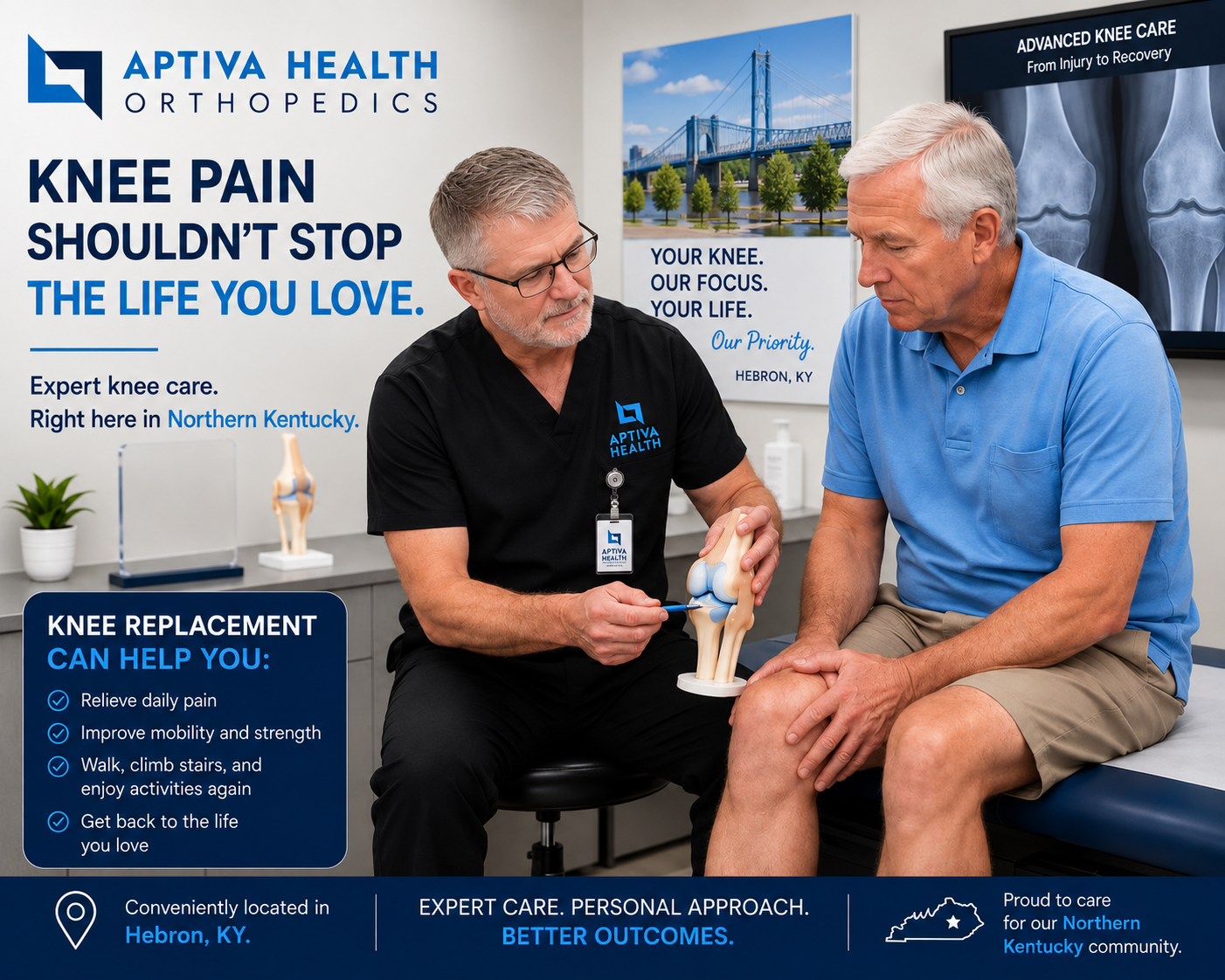
Knee Replacement Surgery in Northern Kentucky
Aptiva Health provides comprehensive knee replacement care in Northern Kentucky — from the first evaluation through imaging, conservative treatment, surgery, and rehabilitation — anchored by board-certified orthopedic surgeons and a team of orthopedic advanced practice providers. We treat knee arthritis at every stage, prioritizing conservative care first and offering both partial and total knee replacement when joint replacement becomes the right answer. With on-site imaging, on-site physical therapy, and an in-house orthopedic team, the entire knee replacement pathway happens under one roof.
Medically reviewed by D. Philip Stickney, MD Last reviewed: July 2026.
Schedule your appointment today!

What Is Knee Replacement Surgery?
Knee replacement surgery — also called knee arthroplasty — resurfaces a knee joint worn down by arthritis. When the smooth cartilage that caps the ends of the bones wears away, bone rubs against bone, producing pain, stiffness, and lost mobility. Knee replacement removes the damaged surfaces and replaces them with precisely fitted metal and plastic implant components that restore a smooth, gliding joint.
There are two main types:
Total knee replacement resurfaces all three compartments of the knee joint. It is the right choice when arthritis is widespread across the knee.
Partial (unicompartmental) knee replacement resurfaces only the single compartment damaged by arthritis, preserving the healthy ligaments and cartilage. It is an option for select patients whose arthritis is confined to one part of the knee.
Both procedures are performed using minimally invasive techniques whenever the anatomy allows — approaches that aim for smaller incisions, less tissue disruption, and a faster return to normal activity.
Conditions That Lead to Knee Replacement
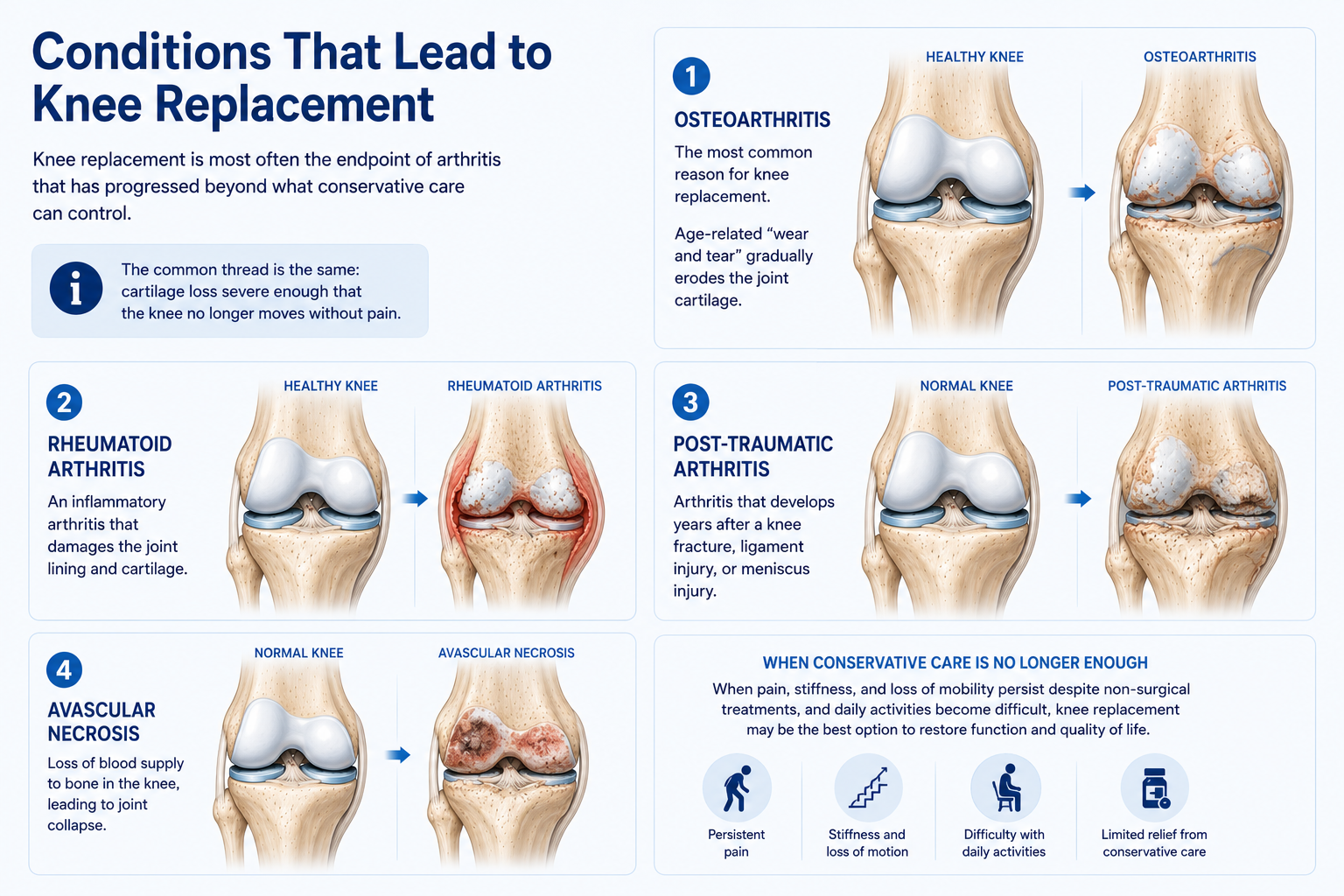
Knee replacement is most often the endpoint of arthritis that has progressed beyond what conservative care can control:
Osteoarthritis — the most common reason for knee replacement. Age-related "wear and tear" gradually erodes the joint cartilage.
Rheumatoid arthritis — an inflammatory arthritis that damages the joint lining and cartilage.
Post-traumatic arthritis — arthritis that develops years after a knee fracture, ligament injury, or meniscus injury.
Avascular necrosis — loss of blood supply to bone in the knee, leading to joint collapse.
The common thread is the same: cartilage loss severe enough that the knee no longer moves without pain.
Partial vs. Total Knee Replacement
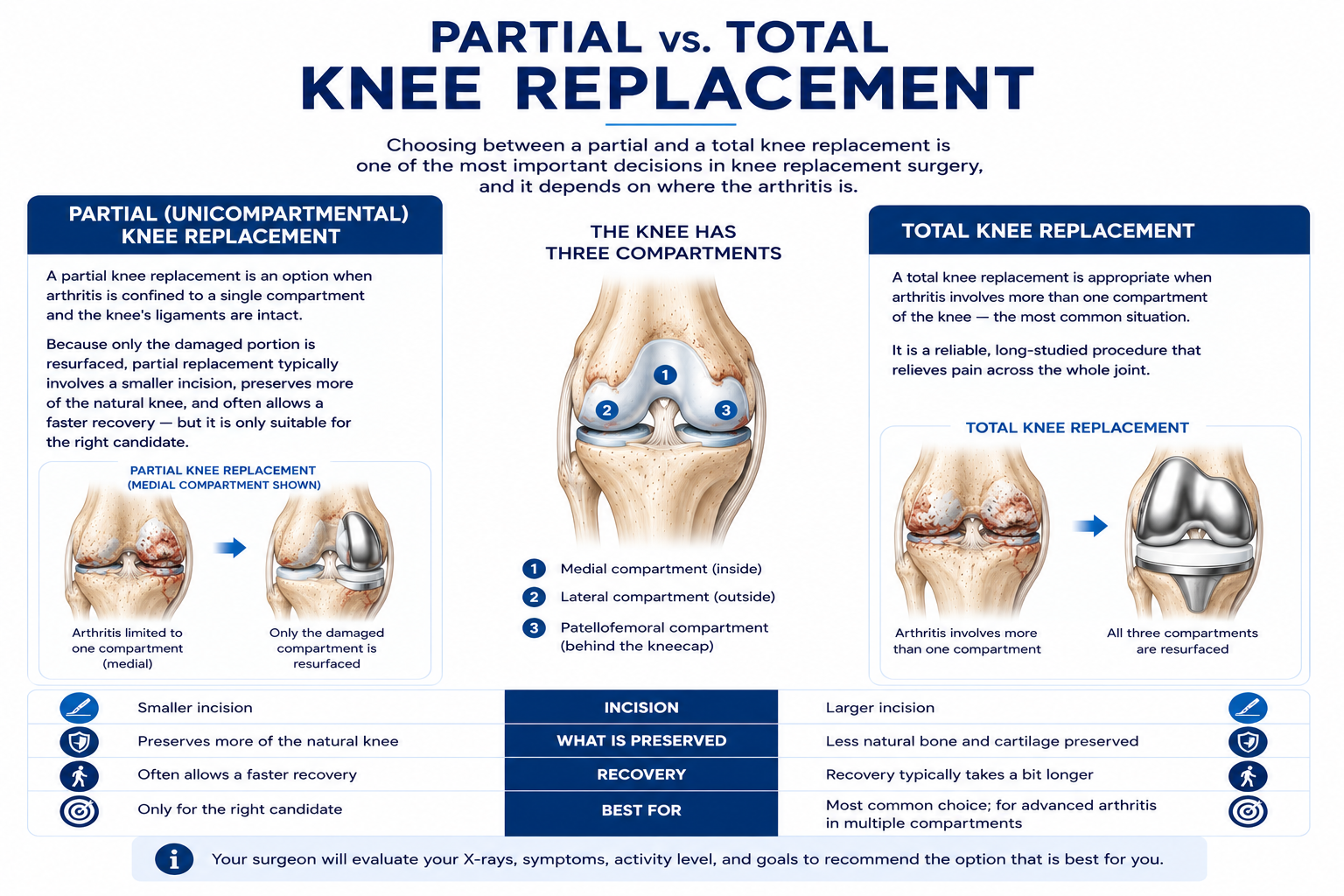
Choosing between a partial and a total knee replacement is one of the most important decisions in knee replacement surgery, and it depends on where the arthritis is.
A total knee replacement is appropriate when arthritis involves more than one compartment of the knee — the most common situation. It is a reliable, long-studied procedure that relieves pain across the whole joint.
A partial knee replacement is an option when arthritis is confined to a single compartment and the knee's ligaments are intact. Because only the damaged portion is resurfaced, partial replacement typically involves a smaller incision, preserves more of the natural knee, and often allows a faster recovery — but it is only suitable for the right candidate.
At Aptiva Health, your surgeon reviews your X-rays, MRI, and physical exam to recommend the procedure that fits your knee, rather than applying a one-size-fits-all approach.
The Aptiva Stepped-Care Approach to Knee Arthritis
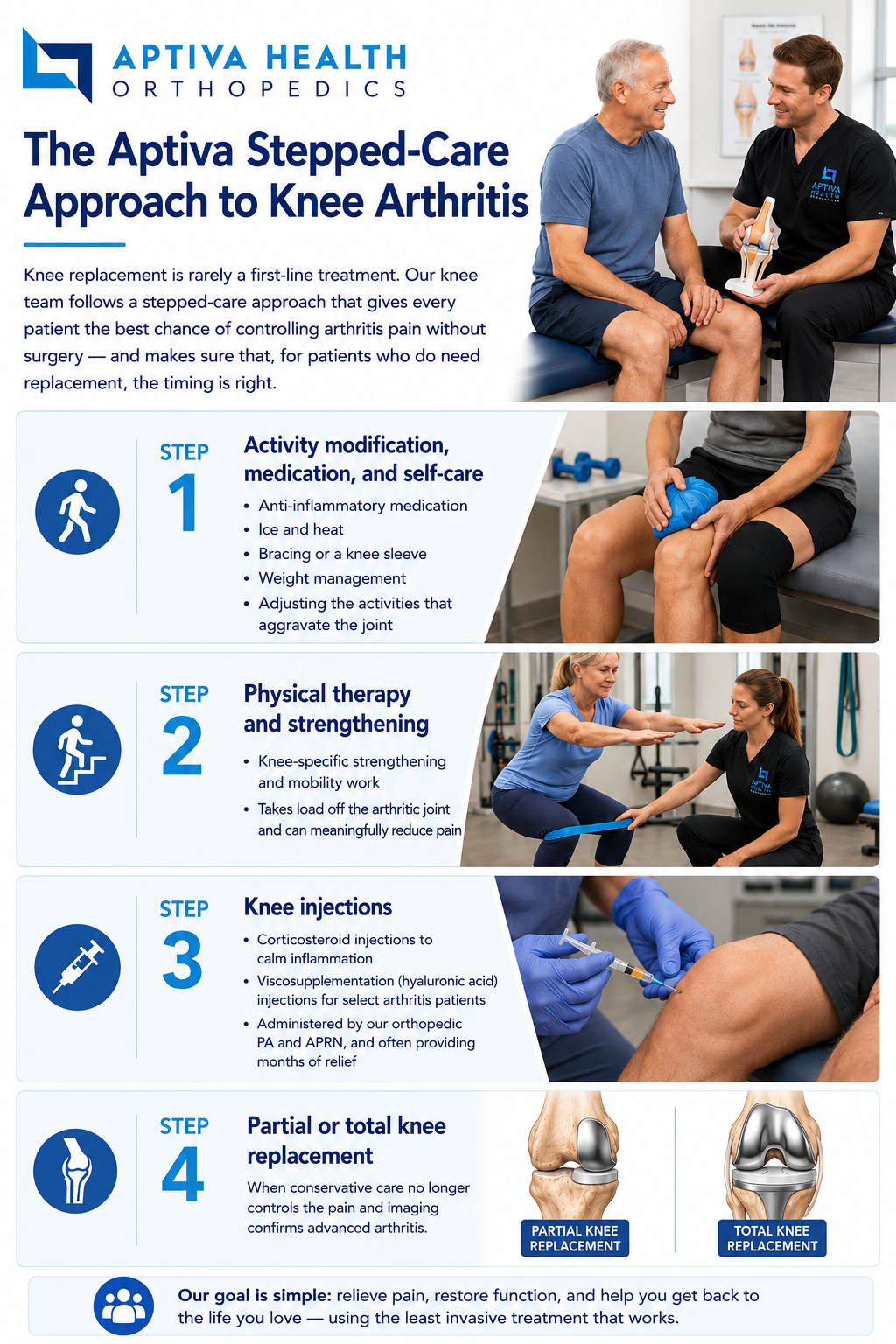
Knee replacement is rarely a first-line treatment. Our Northern Kentucky knee team follows a stepped-care approach that gives every patient the best chance of controlling arthritis pain without surgery — and makes sure that, for patients who do need replacement, the timing is right.
Step 1 — Activity modification, medication, and self-care. Anti-inflammatory medication, ice and heat, bracing or a knee sleeve, weight management, and adjusting the activities that aggravate the joint.
Step 2 — Physical therapy and strengthening. Knee-specific strengthening and mobility work that takes load off the arthritic joint and can meaningfully reduce pain.
Step 3 — Knee injections. Corticosteroid injections to calm inflammation, and viscosupplementation (hyaluronic acid) injections for select arthritis patients — administered by our orthopedic PA and APRN, and often providing months of relief.
Step 4 — Partial or total knee replacement when conservative care no longer controls the pain and imaging confirms advanced arthritis.
Many patients control their symptoms at Step 2 or Step 3 for years. For the patients who do reach Step 4, the stepped-care evaluation confirms that replacement is the right answer.
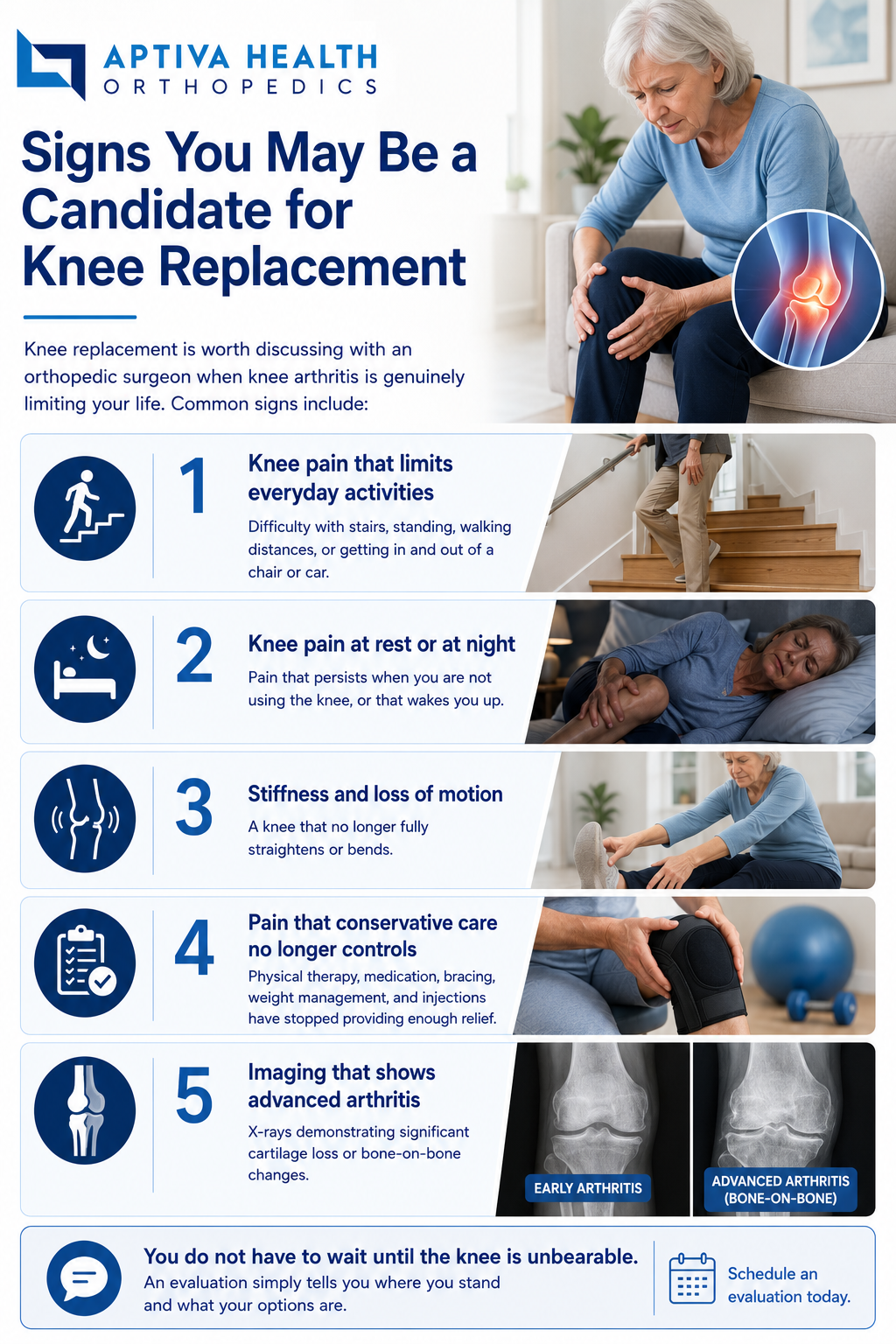
Signs You May Be a Candidate for Knee Replacement
Knee replacement is worth discussing with an orthopedic surgeon when knee arthritis is genuinely limiting your life. Common signs include:
Knee pain that limits everyday activities — difficulty with stairs, standing, walking distances, or getting in and out of a chair or car.
Knee pain at rest or at night — pain that persists when you are not using the knee, or that wakes you up.
Stiffness and loss of motion — a knee that no longer fully straightens or bends.
Pain that conservative care no longer controls — physical therapy, medication, bracing, weight management, and injections have stopped providing enough relief.
Imaging that shows advanced arthritis — X-rays demonstrating significant cartilage loss or bone-on-bone changes.
You do not have to wait until the knee is unbearable. An evaluation simply tells you where you stand and what your options are.
Schedule your appointment today!
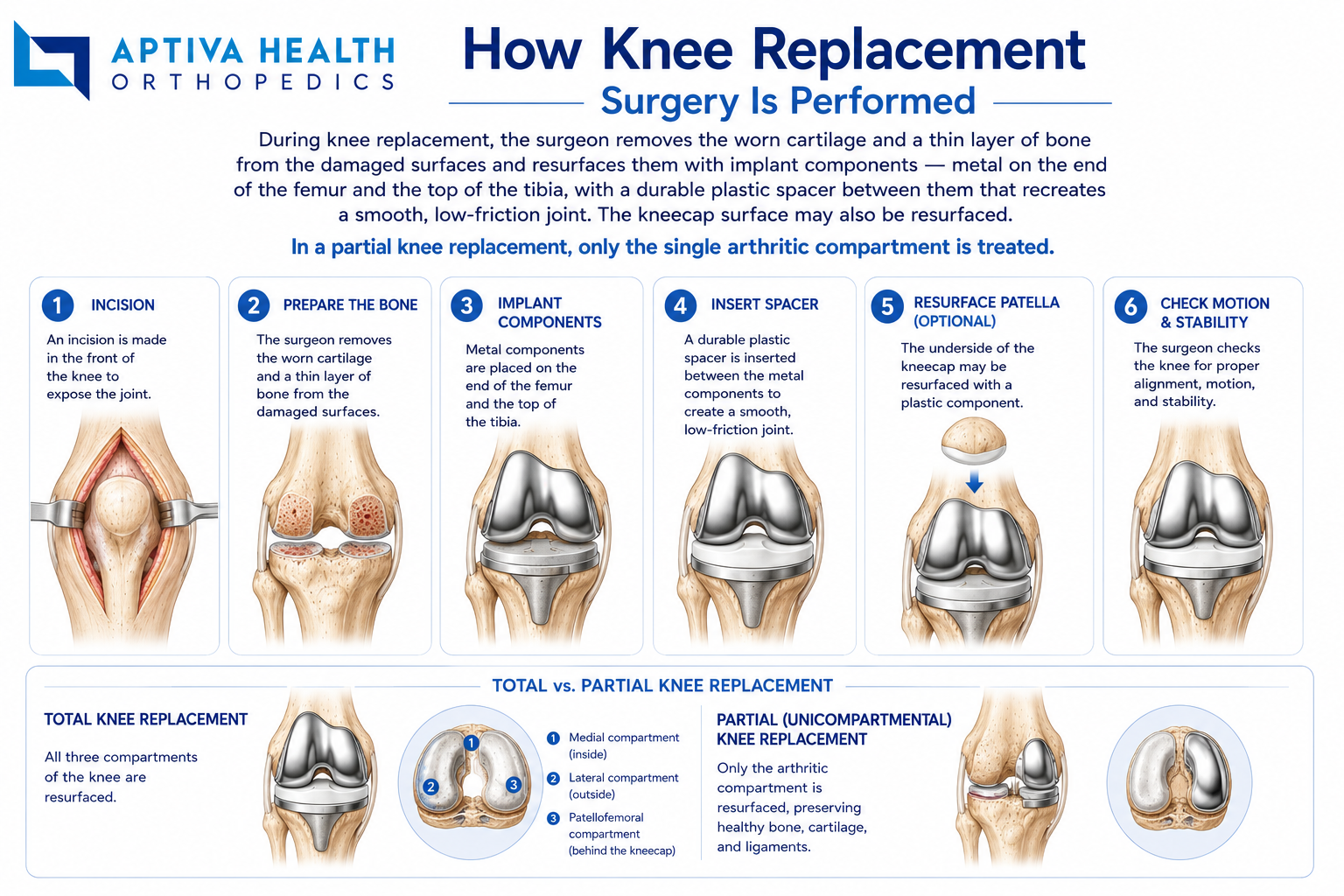
How Knee Replacement Surgery Is Performed
During knee replacement, the surgeon removes the worn cartilage and a thin layer of bone from the damaged surfaces and resurfaces them with implant components — metal on the end of the femur and the top of the tibia, with a durable plastic spacer between them that recreates a smooth, low-friction joint. The kneecap surface may also be resurfaced. In a partial knee replacement, only the single arthritic compartment is treated.
Most knee replacements are performed on an outpatient or short-stay basis at the appropriate surgical center. Aptiva Health uses minimally invasive techniques whenever the anatomy allows.
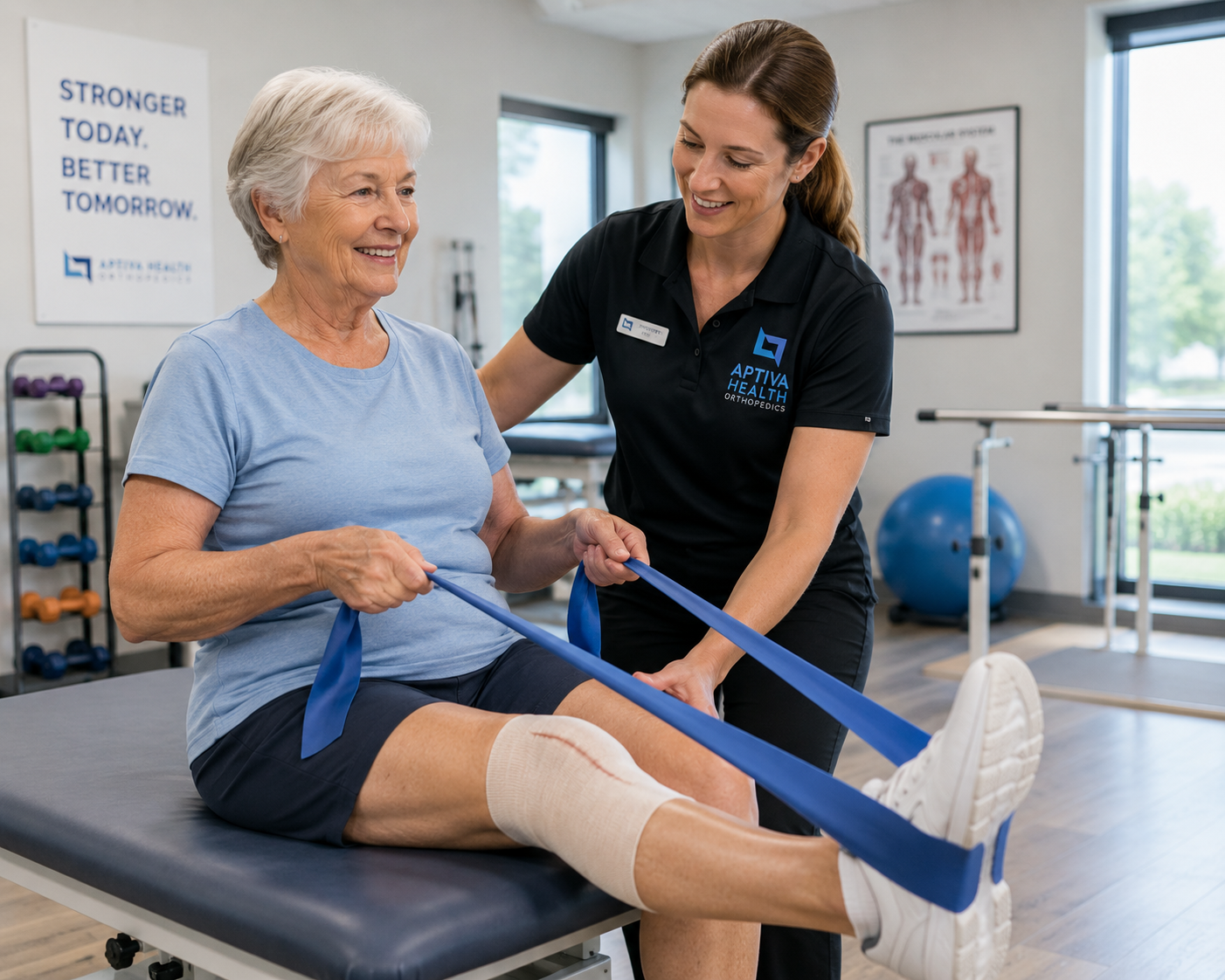
Recovery After Knee Replacement
Recovery from knee replacement is an active process, and physical therapy is central to the result.
Most patients are walking with assistance the same day or the day after surgery. Over the following weeks, patients progress off a walker and then a cane, regain motion, and rebuild strength. Substantial recovery takes about three months, with strength, endurance, and motion continuing to improve for up to a year. Partial knee replacement generally recovers faster than total knee replacement.
Aptiva Health coordinates post-operative physical therapy in-house, so the surgical team and the therapy team share the same plan — which keeps rehabilitation on track and recovery moving.
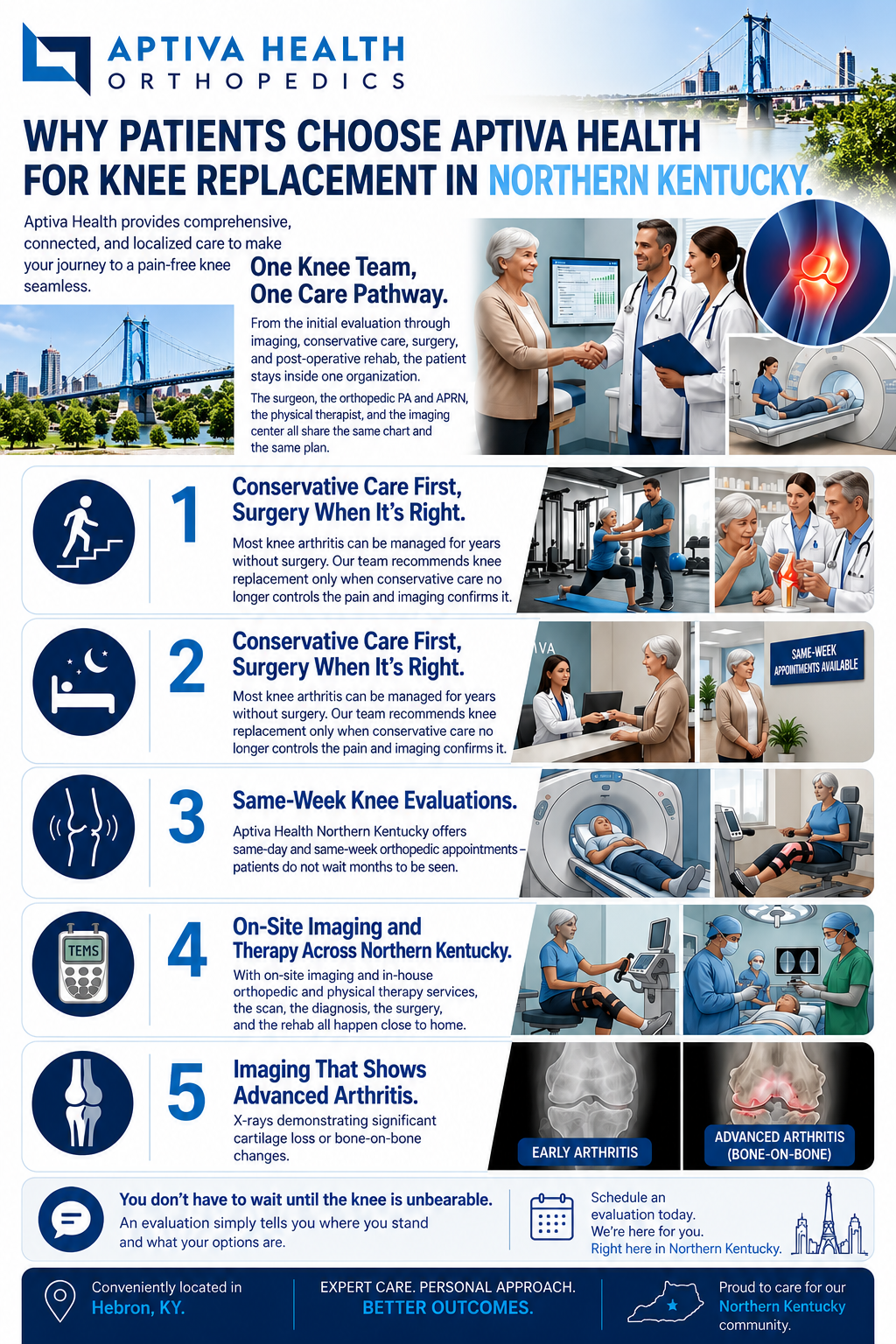
Why Patients Choose Aptiva Health for Knee Replacement in Northern Kentucky
One knee team, one care pathway. From the initial evaluation through imaging, conservative care, surgery, and post-operative rehab, the patient stays inside one organization. The surgeon, the orthopedic PA and APRN, the physical therapist, and the imaging center all share the same chart and the same plan.
Conservative care first, surgery when it's right. Most knee arthritis can be managed for years without surgery. Our team recommends knee replacement only when conservative care no longer controls the pain and imaging confirms it.
Same-week knee evaluations. Aptiva Health Lexington offers same-day and same-week orthopedic appointments — patients do not wait months to be seen.
On-site imaging and therapy across Lexington. With on-site imaging and in-house orthopedic and physical therapy services, the scan, the diagnosis, the surgery, and the rehab all happen close to home.

When to See a Doctor - Call Now!
You should be evaluated by an orthopedic specialist if you have:
Knee pain that has limited your daily activities for months
Knee pain at rest or at night
Stiffness that keeps the knee from fully straightening or bending
Knee arthritis that conservative care no longer controls
A prior knee surgery or injury and a knee that has gradually worsened
For non-emergency knee evaluation, Aptiva Health Lexington offers same-week appointments — patients do not wait months to be seen.
Meet the Northern Kentucky Knee Replacement Team

D. Philip Stickney, MD - Orthopedic Surgeon
Dr. D. Philip Stickney, MD, a board -certified orthopedic surgeon, has been providing general orthopedic care for over 25 years. He received his medical degree from Case Western Reserve University in Cleveland, Ohio with orthopedic surgery training at Mt. Sinai in Cleveland and Akron General Medical Center in Akron, Ohio. He treats a variety of conditions from arthritis to sports medicine and occupational injuries. As former team physician for Hiram College in Ohio, he has a breadth of experience treating non-operative and operative conditions including:

Schedule a Knee Replacement Consultation in Northern Kentucky — Schedule Now
Aptiva Health – Northern Kentucky: 2093 Medical Arts Drive, Hebron, KY 41048
Drive times:
5 minutes from CVG (Cincinnati/Northern Kentucky International Airport)
10 minutes from Florence, KY via I-71/75
12 minutes from Burlington and Union via KY-237
15 minutes from downtown Cincinnati via I-275 East
18 minutes from Covington and Newport
20 minutes from Anderson Township and Mt. Washington (OH)
25 minutes from Price Hill, Westwood, and Delhi Township
30 minutes from Florence Mall and the Boone County line south
Communities we routinely serve: Hebron, Florence, Burlington, Union, Walton, Erlanger, Edgewood, Crestview Hills, Fort Mitchell, Fort Wright, Independence, Covington, Newport, Fort Thomas, Cold Spring, Alexandria, Highland Heights, and across the river in Cincinnati, Anderson Township, Delhi Township, Cheviot, Price Hill, and Westwood.
Hours: Monday–Friday, 8:00 AM – 5:00 PM. Walk-in injury care availability may vary; call ahead to confirm.
Insurance accepted: Most major medical insurance, Medicare, Medicare Advantage, most Kentucky Medicaid plans, workers' compensation, auto injury coverage (PIP and MedPay), and cash-pay.
Frequently Asked Questions About Knee Replacement in Northern Kentucky
How do I know if I need a knee replacement?
Knee replacement may be considered when knee arthritis causes ongoing pain, stiffness, or loss of mobility that interferes with everyday activities and has not improved enough with non-surgical treatment. Your Aptiva Health orthopedic surgeon will review your symptoms, physical exam, imaging, and response to previous treatments to determine whether knee replacement may be an appropriate next step.
What is the difference between partial and total knee replacement?
A total knee replacement addresses multiple areas of the knee joint affected by arthritis. A partial, or unicompartmental, knee replacement treats only the portion of the knee where arthritis is concentrated while preserving healthy areas of the joint when appropriate. Not every patient is a candidate for partial knee replacement. Your surgeon will review your imaging, symptoms, and examination to determine which options may be appropriate for you.
How long does a knee replacement last?
Knee replacement implants are designed for long-term use, but how long an implant lasts varies from patient to patient. Factors such as activity level, overall health, body weight, and the type of implant can affect longevity. Your Aptiva Health orthopedic surgeon can discuss what to expect based on your individual circumstances.
Am I too young for a knee replacement?
Age alone does not determine whether knee replacement is appropriate. Your orthopedic surgeon considers the severity of your arthritis, how much your symptoms affect your daily life, your response to non-surgical treatment, your activity goals, and your imaging. Aptiva Health focuses on finding an appropriate treatment plan for each patient rather than using age alone to guide the decision.
How long is recovery after knee replacement surgery?
Recovery after knee replacement varies based on the procedure, the individual patient, and progress during rehabilitation. Patients typically follow a gradual recovery plan focused on mobility, strength, and returning to daily activities. Your Aptiva Health surgical and rehabilitation teams will provide guidance based on your procedure and progress. Physical therapy is also available through Aptiva Health to support recovery.
Is knee replacement an outpatient surgery?
Some knee replacement procedures may be performed on an outpatient or short-stay basis for appropriate patients. Whether same-day discharge is an option depends on factors such as your overall health, the procedure being performed, and the support available during recovery. Your Aptiva Health surgical team will discuss what to expect before surgery.
Can I avoid or delay a knee replacement?
Many patients with knee arthritis begin with non-surgical treatment before considering replacement. Depending on the patient, options may include physical therapy, activity modification, medication, bracing, weight-management support, or targeted injections. Aptiva Health's orthopedic approach focuses on exploring appropriate conservative options before surgery when possible.
Who performs knee replacement surgery at Aptiva Health Northern Kentucky?
Orthopedic care at Aptiva Health Northern Kentucky is provided by Dr. D. Philip Stickney, a board-certified orthopedic surgeon with extensive experience treating knee conditions. Dr. Stickney evaluates both surgical and non-surgical treatment options and works with Aptiva Health's imaging and physical therapy teams to provide coordinated orthopedic care.
Does Medicare and insurance cover knee replacement?
Coverage for knee replacement depends on your individual insurance plan, benefits, and medical necessity. Aptiva Health works with many major commercial insurance plans, Medicare, Medicare Advantage, Kentucky Medicaid plans, workers' compensation, and auto-injury coverage. The Aptiva Health team can help verify benefits and discuss coverage before treatment.
What are the risks of knee replacement surgery?
Like any surgical procedure, knee replacement has potential risks and benefits. Your orthopedic surgeon will review these with you before surgery and discuss factors specific to your health, procedure, and recovery. This gives you an opportunity to ask questions and make an informed decision about your care.
Can I get a second opinion before knee replacement surgery?
Yes. Aptiva Health Northern Kentucky welcomes patients seeking a second opinion about knee replacement. If you have already been evaluated elsewhere, bringing prior X-rays, MRI images, reports, and relevant physician notes can help your orthopedic surgeon review your condition and discuss available treatment options.
How quickly can I be seen for a knee replacement consultation in Northern Kentucky?
Aptiva Health Northern Kentucky offers convenient orthopedic appointment availability for patients experiencing knee pain or considering knee replacement. Patients with existing imaging are encouraged to bring their records to the appointment. Aptiva Health also provides access to imaging and physical therapy within the organization, helping coordinate evaluation, diagnosis, treatment planning, and rehabilitation.
Aptiva Health Northern Kentucky is located at 2093 Medical Arts Drive, Hebron, KY 41048, serving patients throughout Hebron, Florence, Burlington, Union, Erlanger, Covington, and the surrounding Northern Kentucky region.