

Knee Meniscus Surgery - Northern Kentucky

Aptiva Health provides comprehensive meniscus care in Northern Kentucky — from the first evaluation through imaging, conservative treatment, surgery, and rehabilitation — anchored by board-certified orthopedic surgeons and a team of orthopedic advanced practice providers. We treat every type of meniscus tear, prioritizing conservative care first and offering minimally invasive arthroscopic meniscus repair and meniscectomy when surgery becomes the right answer. With on-site MRI, on-site physical therapy, and an in-house orthopedic and sports medicine team, the entire meniscus care pathway happens under one roof.
Medically reviewed by D. Philip Stickney, MD. Last reviewed: May 2026.
Schedule your appointment today!
What is a Knee Meniscus?
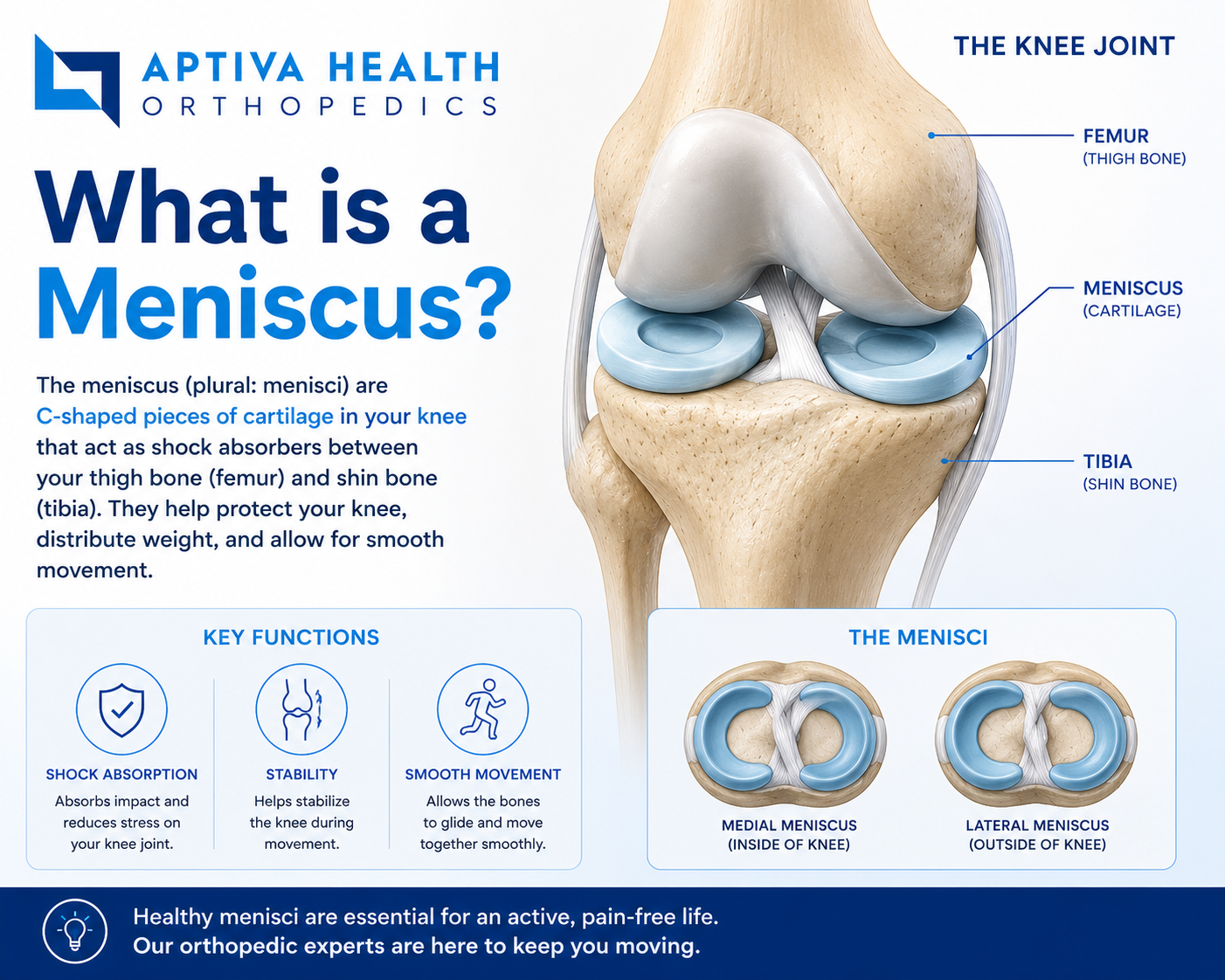
A knee meniscus (plural: menisci) is a C-shaped piece of tough, rubbery cartilage that acts as a shock absorber between your thighbone (femur) and shinbone (tibia).
Each of your knees has two menisci:
Medial Meniscus: Located on the inner side of the knee.
Lateral Meniscus: Located on the outer side of the knee.
Think of them as the knee's built-in cushions and stabilizers.
What Does the Meniscus Do?
The meniscus plays a few critical roles in keeping your knees happy and functioning smoothly:
Shock Absorption: Every time you walk, run, or jump, the menisci absorb the impact, protecting the bones from grinding against each other.
Weight Distribution: They spread the weight of your body evenly across the knee joint so one specific area doesn't take all the heat.
Joint Stability: They act like wedges to help the rounded end of the thighbone fit snugly into the flat top of the shinbone.
Lubrication: They help circulate synovial fluid (the joint’s natural lubricant) to keep the joint moving smoothly.
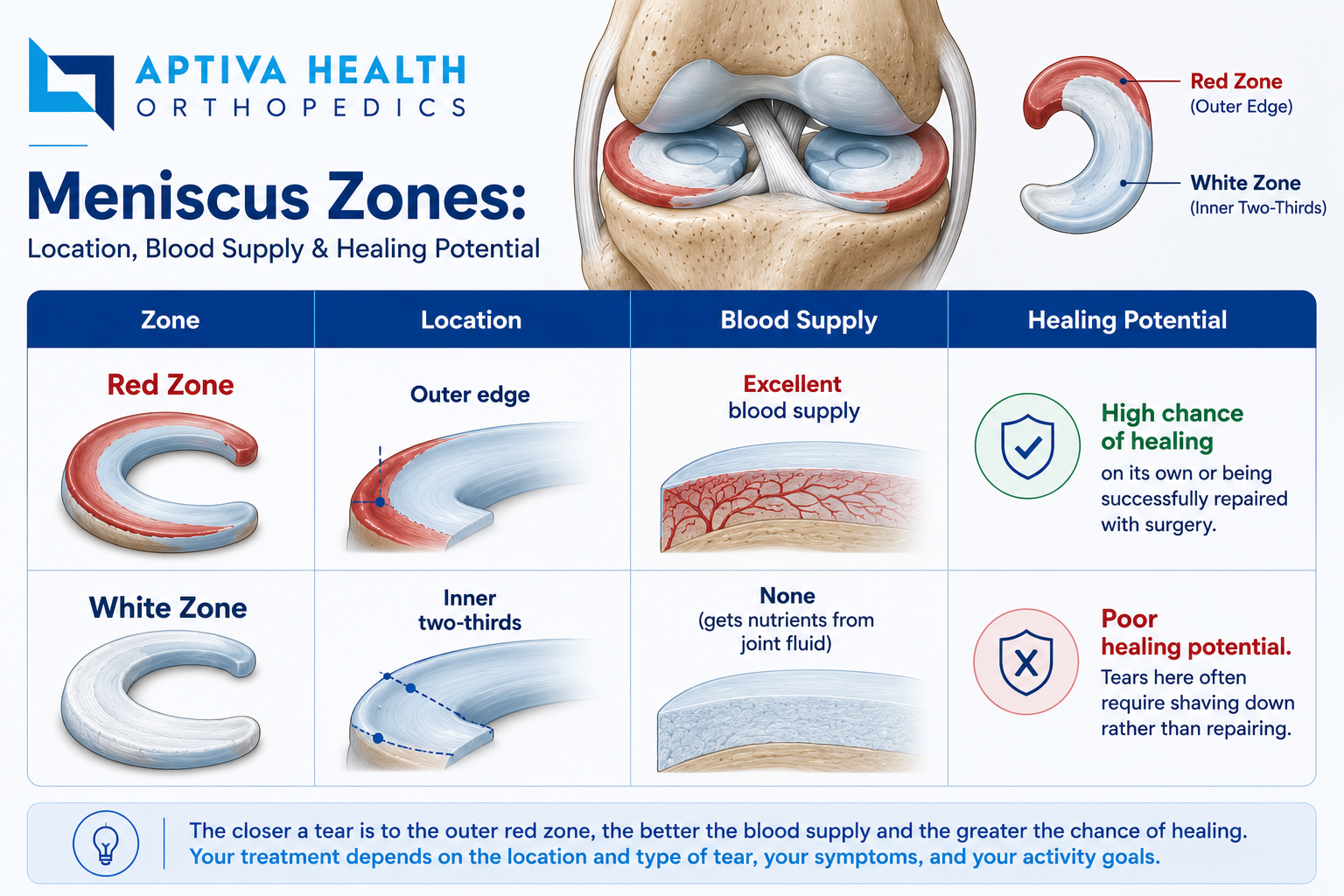
The "Red Zone" vs. "White Zone"
Understanding the anatomy of a meniscus is incredibly important when it comes to healing, because it has a very unique blood supply:
What Is a Meniscus Tear?
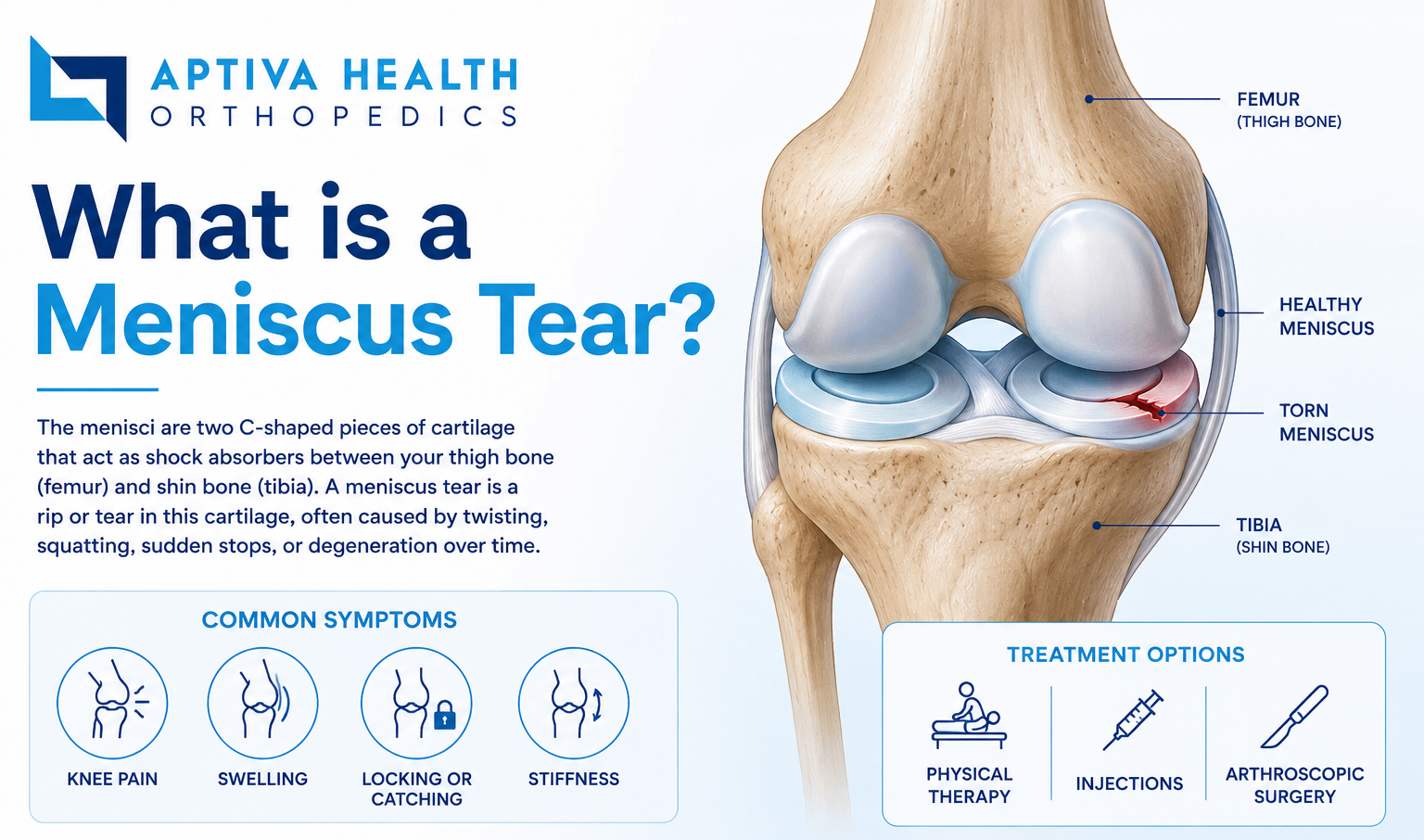
Each knee has two menisci — C-shaped wedges of tough cartilage that sit between the thighbone (femur) and the shinbone (tibia), one on the inner side of the knee and one on the outer side. They act as shock absorbers, spreading load across the joint and protecting the smooth cartilage that caps the ends of the bones.
A meniscus tear is a tear in one of these cartilage wedges. It can happen suddenly — a twisting injury with the foot planted — or gradually, as the meniscus weakens and frays with age.
Whether a tear can heal depends heavily on where it is. The outer rim of the meniscus has a good blood supply and is sometimes called the "red zone"; tears there have the potential to heal or be repaired. The inner two-thirds has little or no blood supply — the "white zone" — and tears there generally do not heal on their own. Blood supply to the meniscus also decreases with age, which is why tear patterns and treatment differ between a young athlete and an older adult.

Types of Meniscus Tears
Meniscus tears are classified by their shape and pattern, which guides whether the tear can be repaired, trimmed, or managed without surgery:
Radial tear — a tear running from the inner edge outward. Location determines whether repair is possible.
Horizontal tear — a tear that splits the meniscus into top and bottom layers.
Longitudinal (vertical) tear — a tear running along the length of the meniscus; often repairable when it is in the outer, vascular zone.
Bucket-handle tear — a large longitudinal tear in which a segment of meniscus displaces into the joint and can block the knee from straightening. These often need prompt surgery.
Flap tear — a torn piece of meniscus that catches in the joint and causes locking or catching.
Complex tear — a tear with multiple patterns at once; usually not repairable, often treated by trimming the damaged tissue.
Degenerative tear — age-related fraying and tearing of a weakened meniscus, common after 40 and frequently managed without surgery.
Intrasubstance / incomplete tear — a tear contained within the meniscus that does not reach the surface; a common MRI finding that often does not require surgery.

Symptoms of a Meniscus Tear
A meniscus tear is likely if you have experienced some combination of the following:
Pain along the joint line — tenderness on the inner or outer side of the knee, often worse with twisting or squatting.
Swelling — gradual swelling over 24 to 48 hours rather than immediately.
Locking or catching — the knee getting stuck, clicking, or failing to fully straighten.
A feeling that the knee "gives way" — buckling or instability with walking, stairs, or pivots.
Stiffness and reduced range of motion — difficulty fully bending or straightening the knee.
A pop at the moment of injury — common with a sudden twisting meniscus tear.
A locked knee — one that physically cannot straighten after an injury — should be evaluated promptly.
How a Meniscus Tear Happens
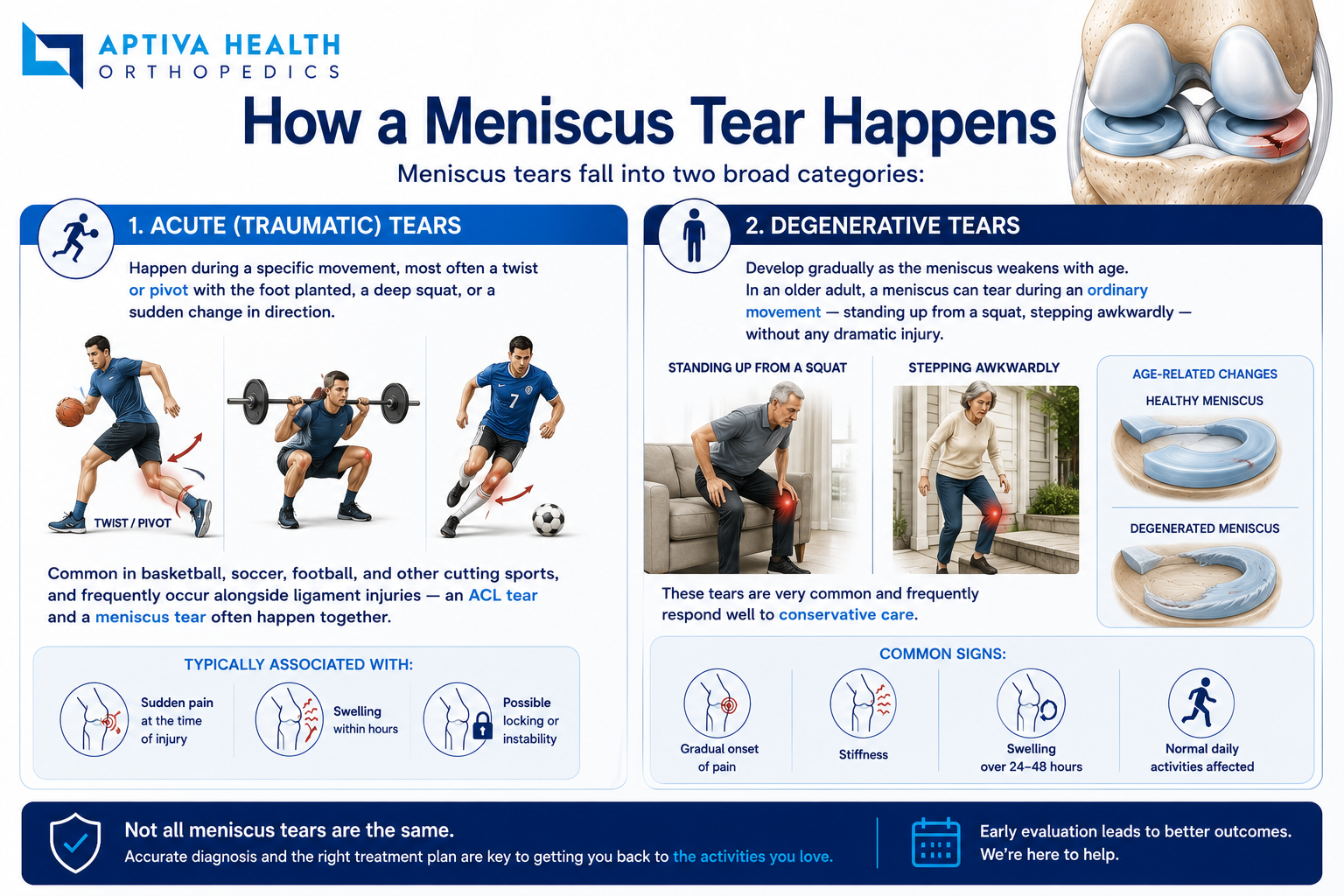
Meniscus tears fall into two broad categories:
Acute (traumatic) tears happen during a specific movement, most often a twist or pivot with the foot planted, a deep squat, or a sudden change in direction. They are common in basketball, soccer, football, and other cutting sports, and frequently occur alongside ligament injuries — an ACL tear and a meniscus tear often happen together.
Degenerative tears develop gradually as the meniscus weakens with age. In an older adult, a meniscus can tear during an ordinary movement — standing up from a squat, stepping awkwardly — without any dramatic injury. These tears are very common and frequently respond well to conservative care.
How a Meniscus Tear Is Diagnosed
At Aptiva Health, diagnosing a meniscus tear usually takes a single visit:
History. Your provider asks how the knee was injured, where it hurts, whether it locks or catches, and how the symptoms have behaved since.
Physical examination. Joint-line tenderness and meniscus-specific maneuvers such as the McMurray test help identify a meniscus tear and distinguish it from ligament or cartilage problems.
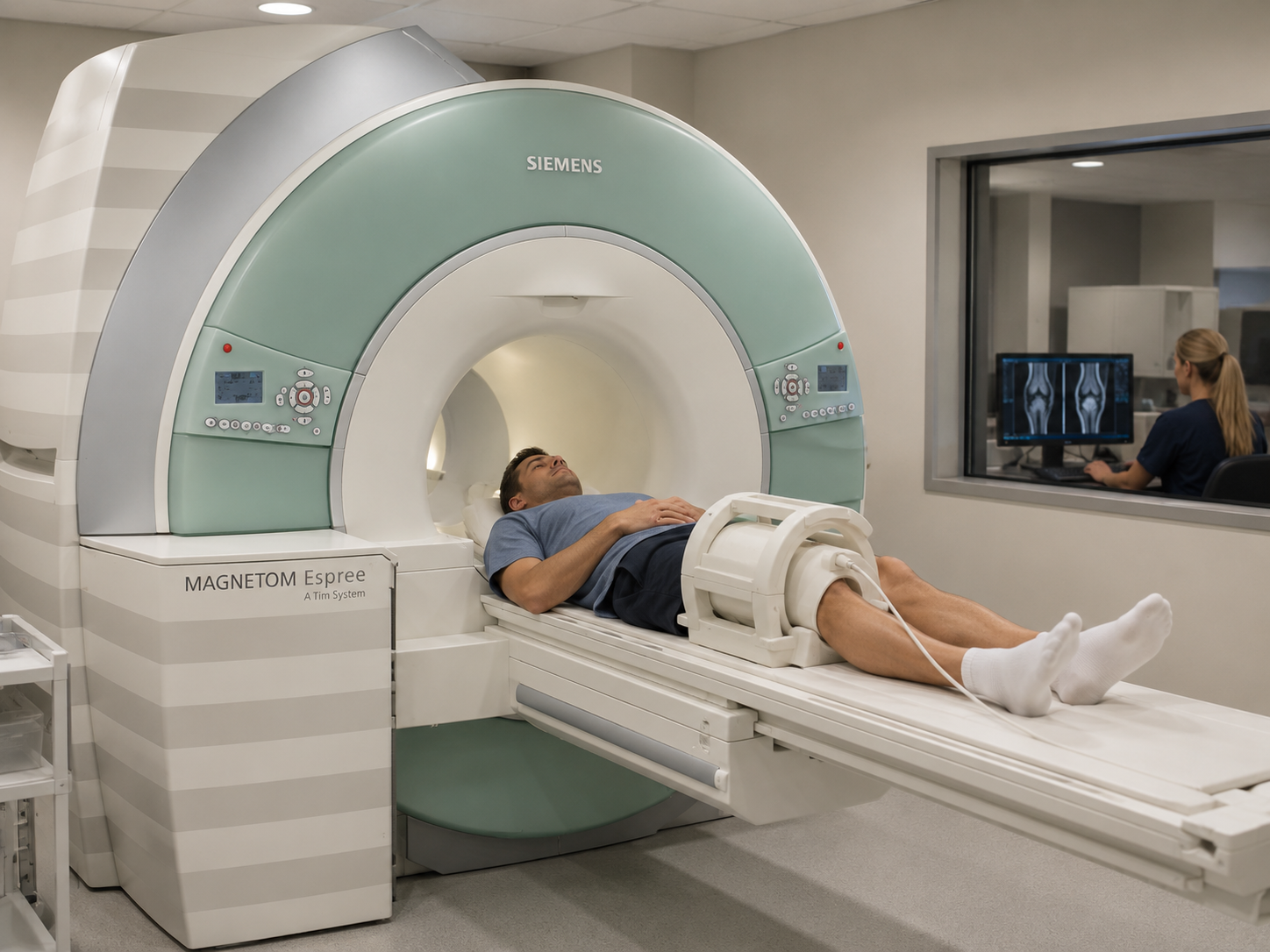
Imaging. An MRI confirms the tear, shows its type and location, and identifies associated injuries to the ligaments or cartilage. Aptiva Health operates its own MRI imaging centers, so most patients can get same-week MRI scheduling without the multi-week wait that hospital-based imaging typically requires.
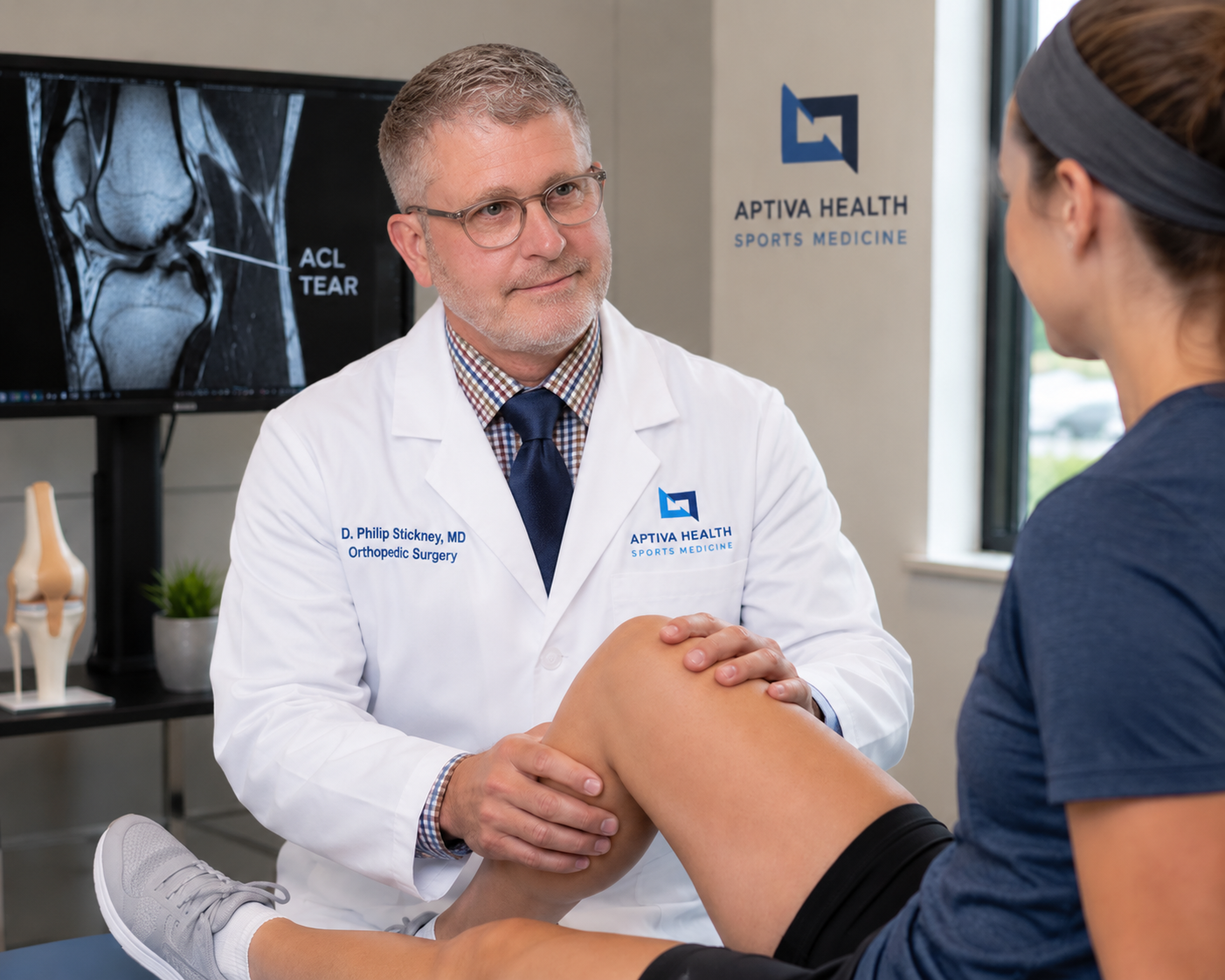
Treatment plan. After the exam and imaging, your provider walks you through the diagnosis, the surgical and non-surgical options, and the recovery timeline. You leave with a written plan.
Treatment for a Meniscus Tear
The right treatment depends on the tear's type, size, and location, the patient's age and activity level, and whether the knee is locking or unstable.
Non-surgical treatment
Many meniscus tears — particularly degenerative tears and small tears without mechanical symptoms — are managed without surgery. Conservative care includes physical therapy to rebuild strength and motion, activity modification, anti-inflammatory medication, bracing, and targeted knee injections when appropriate. Many patients improve and never need an operation.
Surgical treatment
When a tear locks or catches the knee, is large or displaced, or has not improved with conservative care, arthroscopic surgery is the next step. Meniscus surgery is minimally invasive — the surgeon works through small incisions using a tiny camera and instruments:
Meniscus repair — the torn cartilage is stitched back together so it can heal. Repair preserves the meniscus and is preferred whenever the tear's location and blood supply allow, because keeping the meniscus protects the knee against future arthritis.
Partial meniscectomy — only the damaged portion of the meniscus is trimmed away, preserving as much healthy cartilage as possible. This is used when the tear pattern cannot be repaired.
Total meniscectomy — removal of the entire meniscus, used rarely and only when no other option exists.
Meniscal transplant — for select younger patients who have lost a meniscus to prior surgery and developed pain, a donor meniscus can be transplanted to cushion the joint.
Learn more about meniscus surgery procedures →
Meniscus repair vs. meniscectomy
The single most important surgical decision is whether the tear can be repaired or must be trimmed. Repair keeps the meniscus intact and gives the best long-term joint protection, but it has a longer recovery because the cartilage has to heal. Meniscectomy has a faster recovery but removes tissue. Aptiva's sports orthopedic surgeons repair the meniscus whenever the tear pattern allows it, and reserve trimming for tears that genuinely cannot be repaired.
Recovery after meniscus surgery
After a partial meniscectomy, most patients return to non-strenuous activity within two to four weeks. After a meniscus repair, recovery is longer — often three to six months — with restricted weight-bearing and motion early on while the repair heals. Aptiva Health coordinates post-operative physical therapy in-house, which keeps rehabilitation on schedule.

Why Patients Choose Aptiva Health for Meniscus Care in Northern Kentucky
One knee team, one care pathway. From the initial evaluation through MRI, conservative care, surgery, and post-operative rehab, the patient stays inside one organization. The surgeon, the orthopedic PA and APRN, the physical therapist, and the imaging center all share the same chart and the same plan — no chasing referrals across four separate practices.
Conservative care first, surgery when it's right. Most meniscus tears do not require surgery. Our knee team starts every patient with the least-invasive treatment likely to work and recommends surgery only when symptoms and imaging both indicate it.
Same-week knee evaluations. Aptiva Health Northern Kentucky offers same-day and same-week orthopedic appointments — patients do not wait months for a first visit. Acute knee injuries can be seen right away through our Immediate Injury Care walk-in clinic.
On-site imaging and therapy across Northern Kentucky. With on-site MRI imaging and in-house orthopedic, sports medicine, and physical therapy services, the scan, the diagnosis, the surgery, and the rehab all happen close to home.
Schedule your appointment today!
When to See a Doctor
You should be evaluated by an orthopedic specialist if you experience:
A knee that locks, catches, or cannot fully straighten
Knee pain along the joint line that has not improved after two to four weeks
Swelling that develops after an injury or recurs without a clear cause
A knee that gives way or feels unstable
A twisting knee injury from sports, a fall, or a work or auto accident
Get to an emergency room or urgent care immediately if you have an obvious knee deformity after an injury, cannot bear any weight on the leg, or have a knee that is hot, red, and severely swollen with fever.
For non-emergency knee evaluation, Aptiva Health Louisville offers same-day and same-week appointments.
Meet the Northern Kentucky Knee Team

D. Philip Stickney, MD - Orthopedic Surgeon
Dr. D. Philip Stickney, MD, a board -certified orthopedic surgeon, has been providing general orthopedic care for over 25 years. He received his medical degree from Case Western Reserve University in Cleveland, Ohio with orthopedic surgery training at Mt. Sinai in Cleveland and Akron General Medical Center in Akron, Ohio. He treats a variety of conditions from arthritis to sports medicine and occupational injuries. As former team physician for Hiram College in Ohio, he has a breadth of experience treating non-operative and operative conditions including:
Frequently Asked Questions About Meniscus Surgery in Northern Kentucky
Do I need surgery for a meniscus tear?
Not always. Many meniscus tears can improve with non-surgical care such as physical therapy, activity modification, medication, and targeted injections when appropriate. Surgery may be considered when the knee continues to lock or catch, the tear is large or displaced, or conservative treatment has not provided enough relief. Your Aptiva Health orthopedic surgeon can review your symptoms, exam, and imaging to recommend an appropriate treatment plan.
What is the difference between meniscus repair and meniscectomy?
A meniscus repair preserves the damaged cartilage by stitching the tear together so it can heal. When the tear pattern and location make repair possible, preserving the meniscus may help protect the knee joint over time.
A partial meniscectomy removes only the damaged portion of the meniscus when the tear cannot be repaired. Recovery timelines differ between the two procedures because a repaired meniscus needs time to heal. Your surgeon will recommend an approach based on the location, type, and severity of the tear.
How long is recovery after meniscus surgery?
Recovery depends on the procedure and the individual patient. Recovery after a partial meniscectomy is generally shorter than recovery after a meniscus repair. Patients who undergo a repair typically follow a more gradual rehabilitation plan while the tissue heals.
Your Aptiva Health orthopedic team will provide recovery and activity guidelines based on your procedure and progress. Physical therapy is also available through Aptiva Health to support rehabilitation after surgery.
Can a meniscus tear heal without surgery?
Some meniscus tears can improve without surgery. The location and type of the tear, your symptoms, activity level, and overall knee health can all affect treatment recommendations.
Some patients experience significant symptom improvement with physical therapy and other conservative treatments even when the tear itself remains visible on imaging. An orthopedic evaluation and MRI, when appropriate, can help determine which treatment options may be best for you.
What is a bucket-handle meniscus tear and is it urgent?
A bucket-handle tear is a type of meniscus tear in which a portion of the cartilage becomes displaced within the knee joint. In some cases, this can prevent the knee from fully straightening and cause a sensation of locking.
Because a displaced tear may require more timely treatment, patients who cannot fully straighten their knee after an injury should seek an orthopedic evaluation promptly.
How is a meniscus tear diagnosed?
Meniscus injuries are typically evaluated through a discussion of how the injury occurred, a physical examination, and imaging when appropriate. Your orthopedic provider may perform specific movements and tests to evaluate the knee and determine whether the meniscus or other structures may be involved.
MRI can provide detailed images of the meniscus, ligaments, cartilage, and other soft tissues within the knee. Aptiva Health Northern Kentucky offers access to advanced imaging as part of its coordinated orthopedic care.
How quickly can I be seen for a knee injury in Northern Kentucky?
Aptiva Health Northern Kentucky offers convenient orthopedic appointments for new and existing knee injuries. Patients with an acute injury, ongoing knee pain, or an existing diagnosis can contact the Northern Kentucky team to schedule an evaluation.
For more urgent orthopedic concerns, Aptiva Health also offers Immediate Injury Care. Patients who already have X-rays, MRI images, or previous medical records are encouraged to bring them to their appointment.
Who performs meniscus surgery at Aptiva Health Northern Kentucky?
Orthopedic care at Aptiva Health Northern Kentucky is provided by Dr. D. Philip Stickney, a board-certified orthopedic surgeon with extensive experience treating knee conditions and injuries.
Dr. Stickney evaluates both surgical and non-surgical treatment options and performs arthroscopic knee procedures, including meniscus surgery. Aptiva Health's coordinated approach also provides access to imaging and physical therapy to support patients throughout their treatment and recovery.
Is meniscus surgery an outpatient procedure?
Meniscus surgery is commonly performed arthroscopically using small incisions, and many patients are able to return home the same day. The specific procedure and recovery plan depend on the type of tear and the treatment being performed. Your Aptiva Health surgical team will review what to expect before your procedure.
What happens if a meniscus tear is left untreated?
The effects of an untreated meniscus tear vary depending on the type of tear and the symptoms it causes. Some tears can be managed successfully with conservative treatment, while others may continue to cause pain, swelling, catching, locking, or instability.
If knee symptoms are persistent or interfere with daily activities, sports, or work, an orthopedic evaluation can help determine whether additional treatment is appropriate.
Does insurance cover meniscus surgery?
Insurance coverage for meniscus evaluation and surgery depends on your individual plan, benefits, and medical necessity. Aptiva Health works with many major insurance plans as well as Medicare, Medicaid, workers' compensation, and auto-injury coverage.
Meniscus injuries related to a work injury or auto accident may also be treated through the appropriate coverage. Aptiva Health can help verify benefits before treatment.

Schedule a Meniscus Consultation in Northern Kentucky — Schedule Now
Aptiva Health – Northern Kentucky: 2093 Medical Arts Drive, Hebron, KY 41048
Drive times:
5 minutes from CVG (Cincinnati/Northern Kentucky International Airport)
10 minutes from Florence, KY via I-71/75
12 minutes from Burlington and Union via KY-237
15 minutes from downtown Cincinnati via I-275 East
18 minutes from Covington and Newport
20 minutes from Anderson Township and Mt. Washington (OH)
25 minutes from Price Hill, Westwood, and Delhi Township
30 minutes from Florence Mall and the Boone County line south
Communities we routinely serve: Hebron, Florence, Burlington, Union, Walton, Erlanger, Edgewood, Crestview Hills, Fort Mitchell, Fort Wright, Independence, Covington, Newport, Fort Thomas, Cold Spring, Alexandria, Highland Heights, and across the river in Cincinnati, Anderson Township, Delhi Township, Cheviot, Price Hill, and Westwood.
Hours: Monday–Friday, 8:00 AM – 5:00 PM. Walk-in injury care availability may vary; call ahead to confirm.
Insurance accepted: Most major medical insurance, Medicare, Medicare Advantage, most Kentucky Medicaid plans, workers' compensation, auto injury coverage (PIP and MedPay), and cash-pay.