

Rotator Cuff Repair in Louisville, Kentucky

Aptiva Health provides comprehensive rotator cuff care in Louisville — from the first evaluation through imaging, conservative treatment, surgery, and rehabilitation — anchored by board-certified orthopedic surgeons and a team of orthopedic advanced practice providers. We treat every type of rotator cuff tear, prioritizing conservative care first and offering minimally invasive arthroscopic rotator cuff repair when surgery becomes the right answer. With on-site MRI, on-site physical therapy, and an in-house orthopedic and sports medicine team, the entire rotator cuff care pathway happens under one roof.
Medically reviewed by J. Steve Smith, MD and Shawn Price, MD. Last reviewed: May 2026.
Schedule your appointment today!

What Is a Rotator Cuff Tear?
The rotator cuff is a group of four muscles and their tendons that wrap around the shoulder joint. Together they hold the ball of the upper arm bone (the humeral head) centered in the shoulder socket and power the shoulder as you lift, reach, and rotate your arm.
A rotator cuff tear is a tear in one or more of these tendons. The supraspinatus — the tendon at the top of the shoulder — is the one most commonly torn. A tear can happen suddenly during an injury, or it can develop gradually as the tendon wears down with age and use.
Rotator cuff tears do not reattach to the bone on their own — once a tendon tears away from its attachment, the gap cannot close without surgical repair. The symptoms of many tears can still be managed without surgery, but understanding the tear is the first step in choosing the right treatment.

Types of Rotator Cuff Tears
Rotator cuff tears are classified in two important ways:
By depth:
Partial-thickness tear — the tendon is damaged and frayed but not torn all the way through.
Full-thickness tear — the tear goes completely through the tendon, creating a hole that can range from small to massive.
By cause:
Acute tear — a tear from a specific injury, such as a fall onto an outstretched arm or lifting something heavy with a sudden jerk.
Degenerative tear — a tear that develops gradually from years of wear, repetitive overhead use, and the natural decline in tendon blood supply with age. Degenerative tears are common after age 40 and become more common with each decade.
The depth, size, and cause of the tear — along with the patient's age and activity level — all shape whether the tear should be repaired or managed without surgery.

Symptoms of a Rotator Cuff Tear
A rotator cuff tear is likely if you have experienced some combination of the following:
Shoulder pain with overhead activity — pain when reaching up, lifting, or working with the arm away from the body.
Night pain — pain that worsens at night and makes it hard to sleep on the affected side.
Weakness — difficulty lifting or rotating the arm; a large tear can make it hard to raise the arm at all.
Difficulty with everyday reaching — trouble reaching overhead, behind the back, or across the body.
Cracking or popping — a catching, clicking, or grinding sensation with certain shoulder movements.
Pain that is mild at first but steadily worsening, especially with night pain and weakness, is a common rotator cuff pattern.
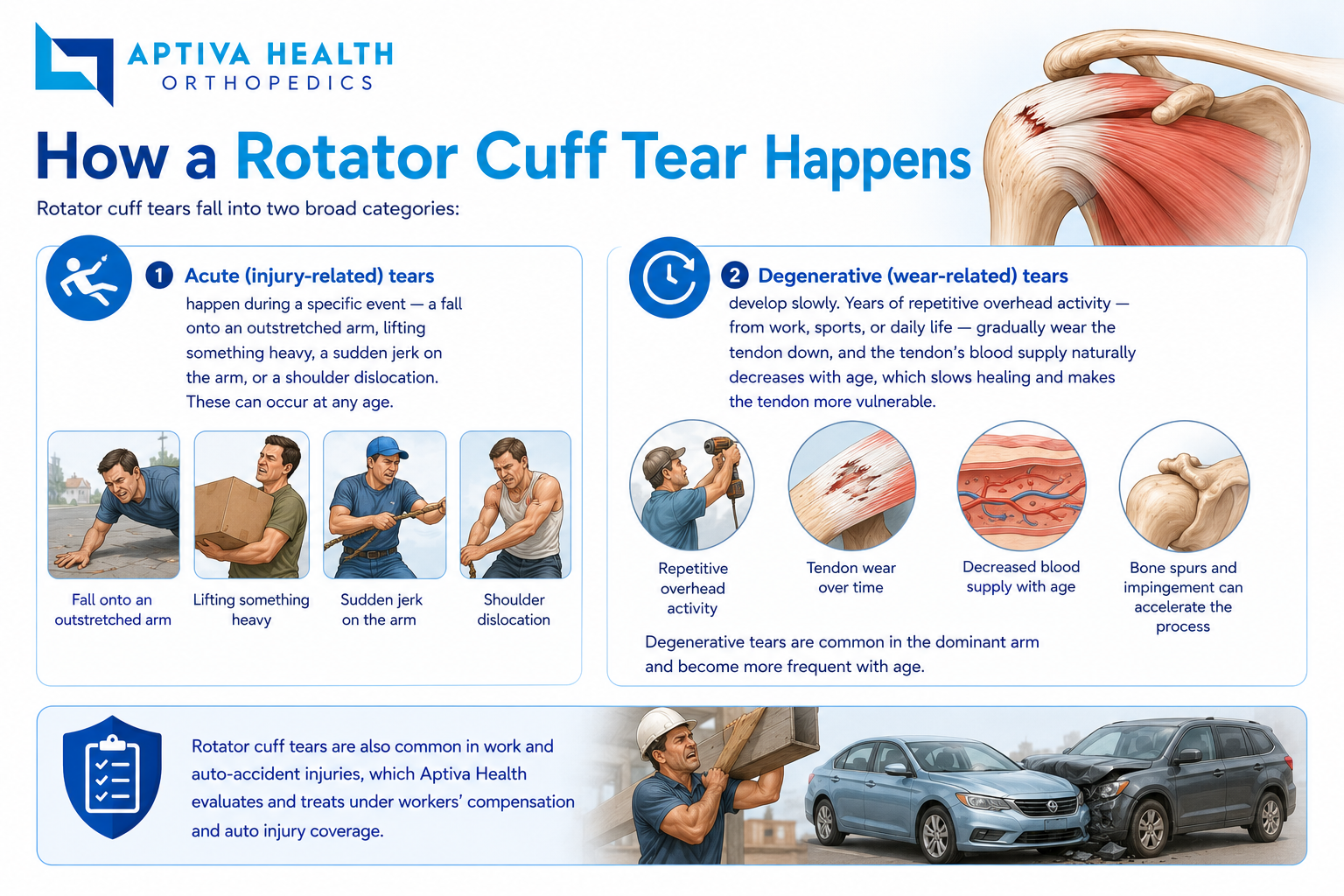
How a Rotator Cuff Tear Happens
Rotator cuff tears fall into two broad categories:
Acute (injury-related) tears happen during a specific event — a fall onto an outstretched arm, lifting something heavy, a sudden jerk on the arm, or a shoulder dislocation. These can occur at any age.
Degenerative (wear-related) tears develop slowly. Years of repetitive overhead activity — from work, sports, or daily life — gradually wear the tendon down, and the tendon's blood supply naturally decreases with age, which slows healing and makes the tendon more vulnerable. Bone spurs and shoulder impingement can accelerate the process by rubbing against the tendon. Degenerative tears are common in the dominant arm and become more frequent with age.
Rotator cuff tears are also common in work and auto-accident injuries, which Aptiva Health evaluates and treats under workers' compensation and auto injury coverage.
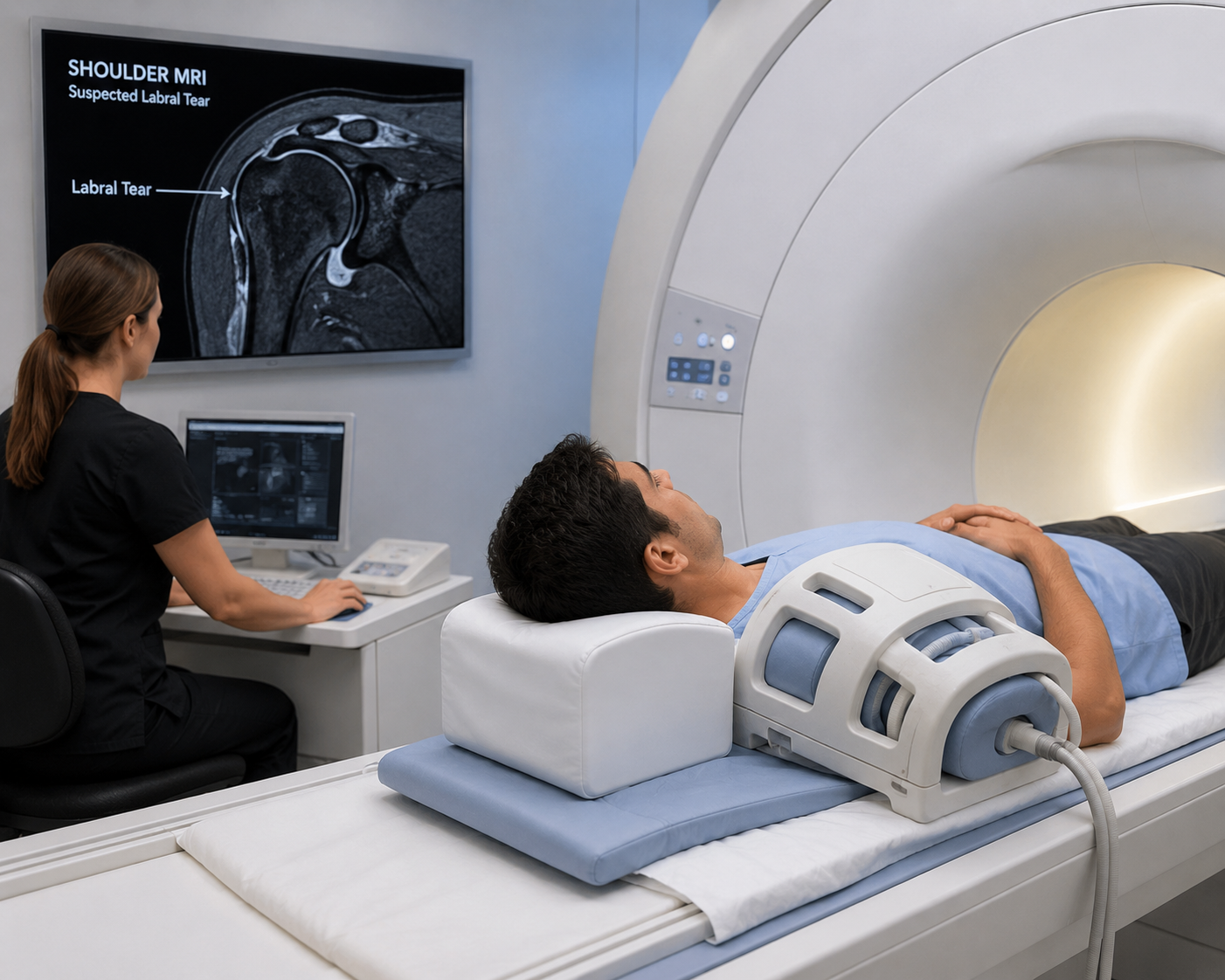
How a Rotator Cuff Tear Is Diagnosed
At Aptiva Health, diagnosing a rotator cuff tear usually takes a single visit:
History. Your provider asks about your symptoms, any injury, night pain, and how the shoulder is limiting you.
Physical examination. Strength testing and rotator cuff-specific maneuvers identify which tendon is involved and how much function has been lost.
Imaging. An X-ray checks for arthritis and bone spurs. An MRI confirms the tear, shows its size, and assesses the quality of the tendon and muscle — information that is essential for deciding whether the tear can be repaired. Aptiva Health operates its own MRI imaging centers, so most patients can get same-week MRI scheduling without the multi-week wait that hospital-based imaging typically requires.
Treatment plan. After the exam and imaging, your provider walks you through the diagnosis, the surgical and non-surgical options, and the recovery timeline. You leave with a written plan.
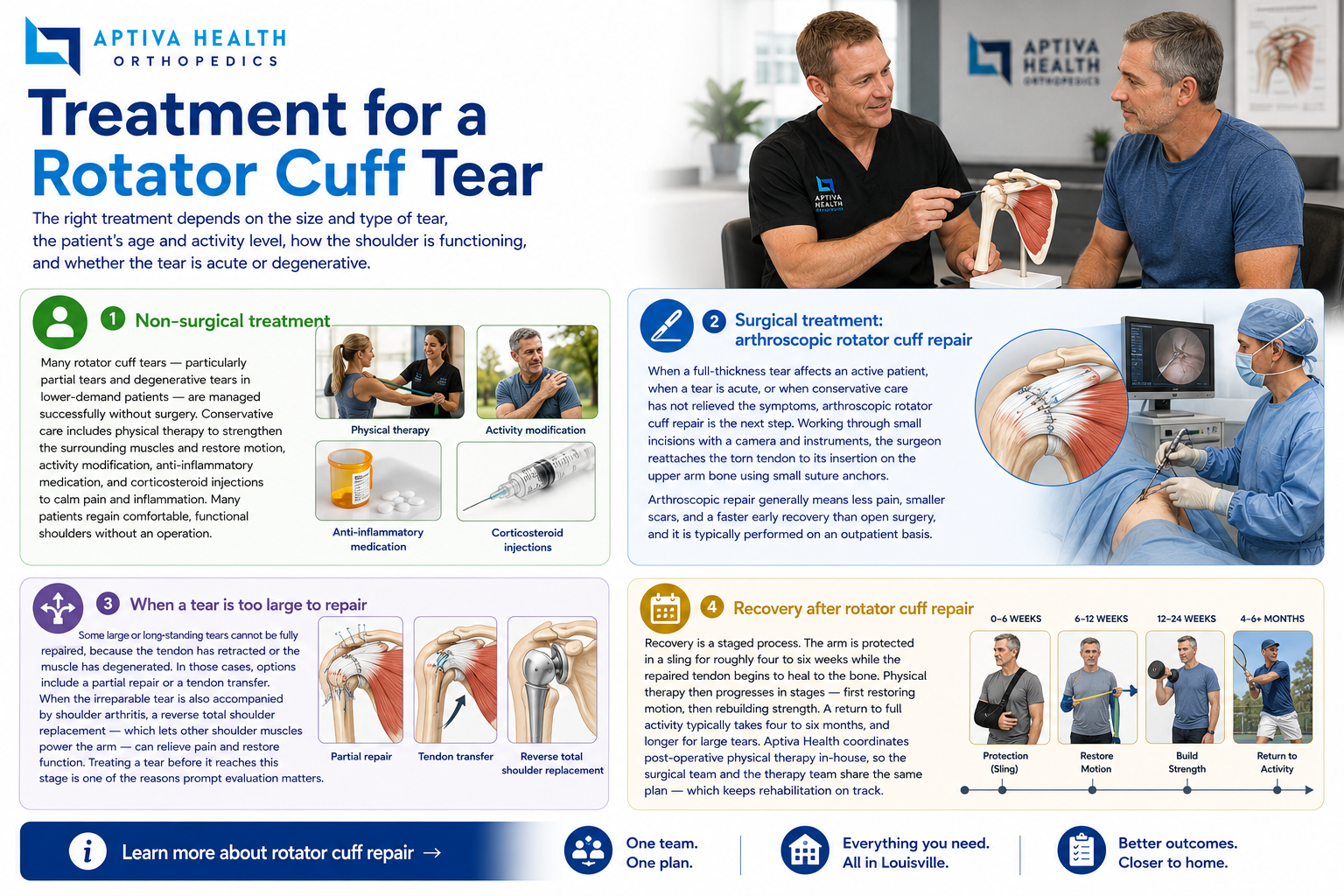
Treatment for a Rotator Cuff Tear
The right treatment depends on the size and type of tear, the patient's age and activity level, how the shoulder is functioning, and whether the tear is acute or degenerative.
Non-surgical treatment
Many rotator cuff tears — particularly partial tears and degenerative tears in lower-demand patients — are managed successfully without surgery. Conservative care includes physical therapy to strengthen the surrounding muscles and restore motion, activity modification, anti-inflammatory medication, and corticosteroid injections to calm pain and inflammation. Many patients regain comfortable, functional shoulders without an operation.
Surgical treatment: arthroscopic rotator cuff repair
When a full-thickness tear affects an active patient, when a tear is acute, or when conservative care has not relieved the symptoms, arthroscopic rotator cuff repair is the next step. Working through small incisions with a camera and instruments, the surgeon reattaches the torn tendon to its insertion on the upper arm bone using small suture anchors. Arthroscopic repair generally means less pain, smaller scars, and a faster early recovery than open surgery, and it is typically performed on an outpatient basis.
Learn more about rotator cuff repair →
When a tear is too large to repair
Some large or long-standing tears cannot be fully repaired, because the tendon has retracted or the muscle has degenerated. In those cases, options include a partial repair or a tendon transfer. When the irreparable tear is also accompanied by shoulder arthritis, a reverse total shoulder replacement — which lets other shoulder muscles power the arm — can relieve pain and restore function. Treating a tear before it reaches this stage is one of the reasons prompt evaluation matters.
Recovery after rotator cuff repair
Recovery is a staged process. The arm is protected in a sling for roughly four to six weeks while the repaired tendon begins to heal to the bone. Physical therapy then progresses in stages — first restoring motion, then rebuilding strength. A return to full activity typically takes four to six months, and longer for large tears. Aptiva Health coordinates post-operative physical therapy in-house, so the surgical team and the therapy team share the same plan — which keeps rehabilitation on track.
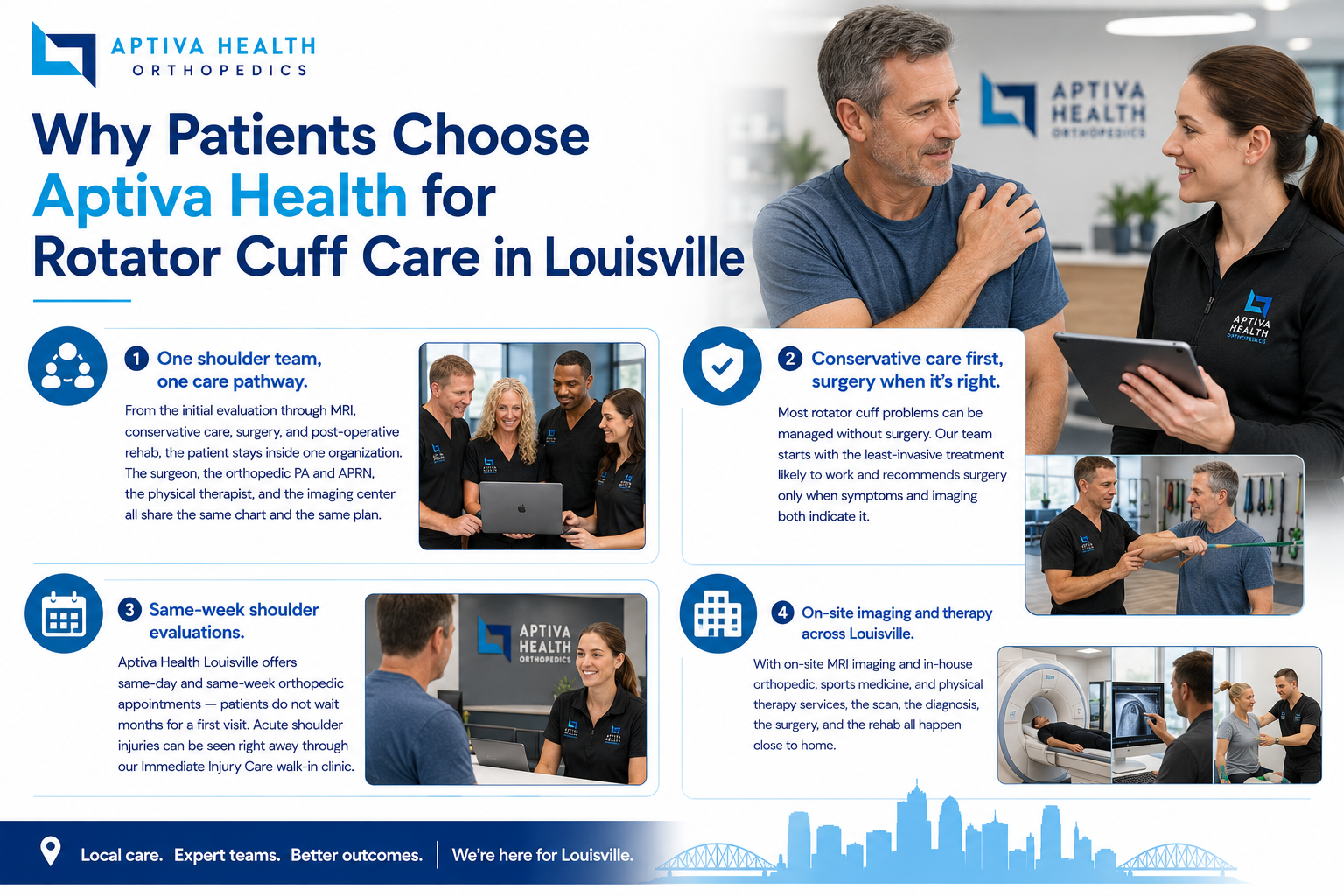
Why Patients Choose Aptiva Health for Rotator Cuff Care in Louisville
One shoulder team, one care pathway.
From the initial evaluation through MRI, conservative care, surgery, and post-operative rehab, the patient stays inside one organization. The surgeon, the orthopedic PA and APRN, the physical therapist, and the imaging center all share the same chart and the same plan.
Conservative care first, surgery when it's right.
Most rotator cuff problems can be managed without surgery. Our team starts with the least-invasive treatment likely to work and recommends surgery only when symptoms and imaging both indicate it.
Same-week shoulder evaluations.
Aptiva Health Louisville offers same-day and same-week orthopedic appointments — patients do not wait months for a first visit. Acute shoulder injuries can be seen right away through our Immediate Injury Care walk-in clinic.
On-site imaging and therapy across Louisville.
With on-site MRI imaging and in-house orthopedic, sports medicine, and physical therapy services, the scan, the diagnosis, the surgery, and the rehab all happen close to home.
Schedule your appointment!

When to See a Doctor
You should be evaluated by an orthopedic specialist if you have:
Shoulder pain that has not improved after four to six weeks of rest and conservative care
Weakness lifting or reaching with the arm
Shoulder pain that worsens at night or makes it hard to sleep on that side
A shoulder injury from a fall, lifting, sports, or a work or auto accident
A shoulder that is becoming progressively weaker or stiffer
Get to an emergency room or urgent care immediately if you cannot move the arm after an injury, have an obvious shoulder deformity, or have numbness or loss of circulation in the arm or hand — these can indicate a fracture, dislocation, or nerve or vascular injury.
For non-emergency shoulder evaluation, Aptiva Health Louisville offers same-day and same-week appointments.
Meet the Louisville Shoulder Team
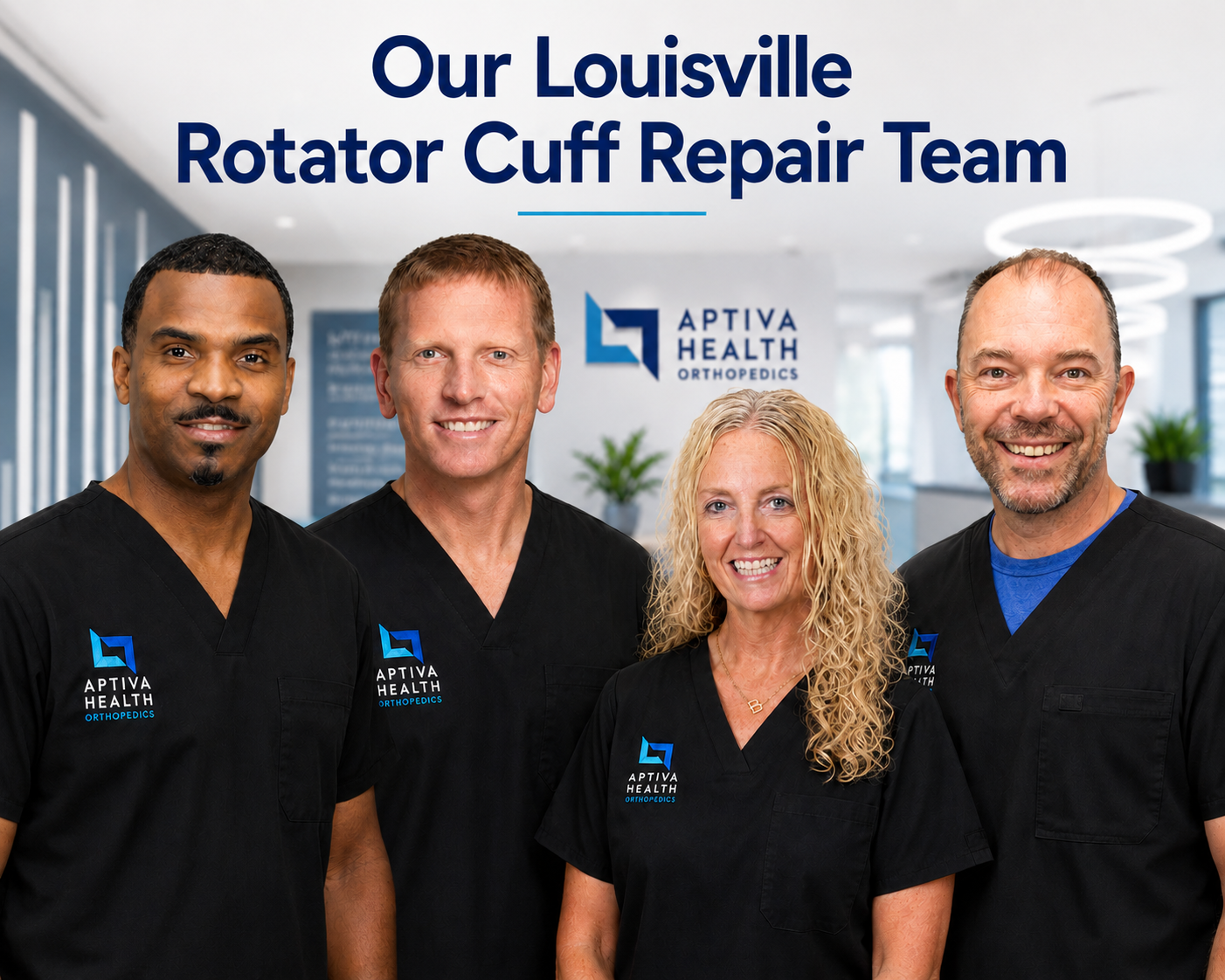

J. Steve Smith, MD — Director of Orthopedic Surgery & Sports Medicine Dr. Steve Smith is the Director of Orthopedic Surgery & Sports Medicine at Aptiva Health and a board-certified orthopedic surgeon. He graduated from the University of Kentucky College of Medicine, trained at the University of Rochester, and completed a sports medicine fellowship at the renowned Kerlan-Jobe Institute in Los Angeles, where he served on the medical staff for the Los Angeles Lakers, the Los Angeles Dodgers, and the Anaheim Ducks. He has performed thousands of orthopedic procedures and treats the full range of shoulder conditions, including rotator cuff tears and arthroscopic rotator cuff repair.

See Dr. Price’s Bio
Shawn Price, MD — Board-Certified Orthopedic Surgeon Dr. Shawn Price is a board-certified orthopedic surgeon whose clinical focus includes total joint replacement and minimally invasive joint surgery. For shoulder patients, Dr. Price evaluates and treats shoulder arthritis and performs total and reverse shoulder replacement — including for patients whose rotator cuff tear is too large to repair and is accompanied by arthritis. He completed his Sarcoma Advanced Research and Clinical Fellowship at the University of Utah Huntsman Cancer Institute.
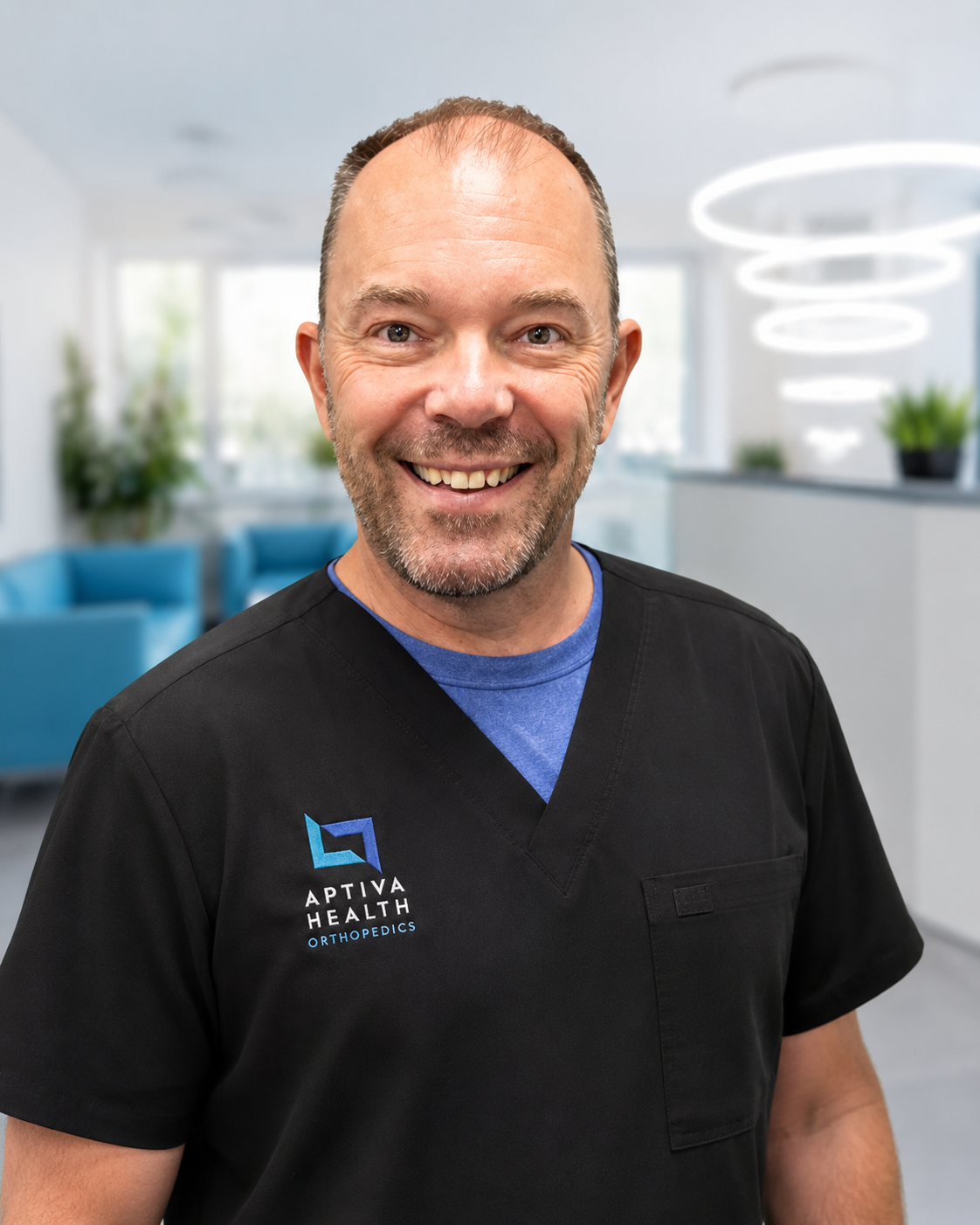
Michael Gilbert, PA-C — Orthopedic Physician Assistant Orthopedic physician assistant for 30 years. For shoulder patients, Michael provides same-week new-patient evaluations, conservative-care coordination, shoulder injections, and post-operative follow-up.

Becky Kostyo, APRN — Orthopedic Nurse Practitioner Advanced practice registered nurse who works directly with the Aptiva Health shoulder team to evaluate, diagnose, and manage shoulder conditions, including conservative care, shoulder injections, and pre- and post-operative coordination.

Locations Where Aptiva Health Treats Rotator Cuff Injuries
Louisville locations serving shoulder patients:
Louisville East — 10100 Linn Station Road, Suite 1A, Louisville, KY 40223 — Tel: 502-909-0772
Louisville Downtown — 300 South 13th Street, Louisville, KY 40203 — Tel: 502-909-0772
Louisville Imaging — 3615 Newburg Road, Suite 106, Louisville, KY 40218 — Tel: 502-909-0772
Louisville Middletown — 401 N English Station Road, Suite 1A, Louisville, KY 40223 — Tel: 502-290-2717
Concussion & Sports Medicine Institute (on-site MRI) — 3611 Newburg Road, Louisville, KY 40218 — Tel: 502-909-0772
Elizabethtown and Mt. Washington locations also serve orthopedic patients:
Aptiva Health Orthopedics — Elizabethtown — 529 Westport Road, Suite 2, Elizabethtown, KY 42701 — Tel: 270-506-4888
Aptiva Health Orthopedics — Mt. Washington — 737 N Hwy 31e Bypass, Suite 2, Mt. Washington, KY 40047 — Tel: 502-909-0772
Insurance accepted: Most major medical insurance, Medicare, Medicare Advantage, most Kentucky Medicaid plans, workers' compensation, auto injury coverage (PIP and MedPay), and cash-pay.
Frequently Asked Questions About Rotator Cuff Repair in Louisville
What is the rotator cuff?
The rotator cuff is a group of four muscles and their tendons that surround the shoulder joint. Together they hold the ball of the upper arm bone in the shoulder socket and power the shoulder as you lift and rotate your arm. A rotator cuff tear is a tear in one or more of these tendons, most often the supraspinatus tendon at the top of the shoulder.
Do all rotator cuff tears need surgery?
No. Many rotator cuff tears — particularly partial tears and degenerative tears in lower-demand patients — are managed successfully without surgery using physical therapy, activity modification, anti-inflammatory medication, and corticosteroid injections. Surgery is recommended for full-thickness tears in active patients, acute tears, and tears that have not improved with conservative care. Your Aptiva Health surgeon reviews your exam and MRI to recommend the right path.
Can a rotator cuff tear heal on its own?
A torn rotator cuff tendon does not reattach to the bone on its own — the tendon ends cannot bridge the gap without surgical repair. However, the symptoms of many rotator cuff tears can be managed effectively without surgery through physical therapy and other conservative care. Whether a tear needs to be repaired depends on its size, the patient's activity level, and how the shoulder is functioning.
What is the difference between a partial and full-thickness rotator cuff tear?
A partial-thickness tear damages part of the tendon but does not tear all the way through it. A full-thickness tear goes completely through the tendon, creating a hole that can range from small to massive. Full-thickness tears are more likely to need surgical repair, particularly in active patients, while many partial tears are managed without surgery. An MRI shows which type of tear is present and how large it is.
How is rotator cuff repair surgery performed?
Rotator cuff repair is most often performed arthroscopically, through small incisions, using a small camera and instruments. The surgeon reattaches the torn tendon to its insertion on the upper arm bone using small suture anchors. Arthroscopic repair generally means less pain, smaller scars, and a faster early recovery than open surgery. It is typically performed on an outpatient basis.
How long is recovery after rotator cuff repair?
Recovery after rotator cuff repair is a staged process. The arm is protected in a sling for roughly four to six weeks while the repaired tendon begins to heal, followed by a progressive physical therapy program to restore motion and then strength. A return to full activity typically takes four to six months, and longer for large tears. Aptiva Health coordinates post-operative physical therapy in-house, which keeps rehabilitation on schedule.
What happens if a rotator cuff tear is left untreated?
Rotator cuff tears do not heal on their own and can enlarge over time. As a tear gets bigger, the tendon can retract and the muscle can weaken and develop fatty changes, which can make the tear harder or impossible to repair later. Some tears remain stable and are reasonable to manage without surgery, but a tear causing significant pain or weakness should be evaluated so the timing of treatment is right.
What if my rotator cuff tear is too large to repair?
Some large or long-standing rotator cuff tears cannot be fully repaired because the tendon has retracted or the muscle has degenerated. In those cases, options include a partial repair or a tendon transfer, and — when the tear is accompanied by shoulder arthritis — a reverse total shoulder replacement, which lets other muscles power the arm. At Aptiva Health Louisville, Dr. Shawn Price evaluates and performs reverse shoulder replacement for these patients.
How is a rotator cuff tear diagnosed?
A rotator cuff tear is diagnosed through a history of the symptoms and any injury, a physical examination that tests shoulder strength and uses rotator cuff-specific maneuvers, an X-ray to check for arthritis and bone spurs, and an MRI that confirms the tear, shows its size, and assesses the quality of the tendon and muscle. Aptiva Health operates its own MRI imaging centers, so most patients can get same-week MRI scheduling.
Who performs rotator cuff repair at Aptiva Health Louisville?
Rotator cuff repair at Aptiva Health Louisville is performed by board-certified sports medicine orthopedic surgeon Dr. J. Steve Smith, Director of Orthopedic Surgery & Sports Medicine. For tears too large to repair that also involve shoulder arthritis, Dr. Shawn Price performs reverse total shoulder replacement. Conservative care, shoulder injections, and pre- and post-operative management are provided by orthopedic physician assistant Michael Gilbert, PA-C, and orthopedic nurse practitioner Becky Kostyo, APRN.
How quickly can I be seen for a shoulder injury in Louisville?
Aptiva Health Louisville offers same-day and same-week orthopedic appointments. New patients with imaging in hand can often be evaluated within the same week of calling. For an acute shoulder injury, the Immediate Injury Care walk-in clinic can evaluate the shoulder right away, including on-site X-ray.
Does insurance cover rotator cuff surgery?
Rotator cuff repair is covered by most major medical insurance plans, Medicare, Medicare Advantage, and Kentucky Medicaid plans. Rotator cuff injuries from a work or auto accident are commonly covered under workers' compensation or auto injury coverage (PIP and MedPay). Aptiva Health verifies benefits before your visit.