

ACL Reconstruction in Louisville, KY
Anterior Cruciate Ligament (ACL)
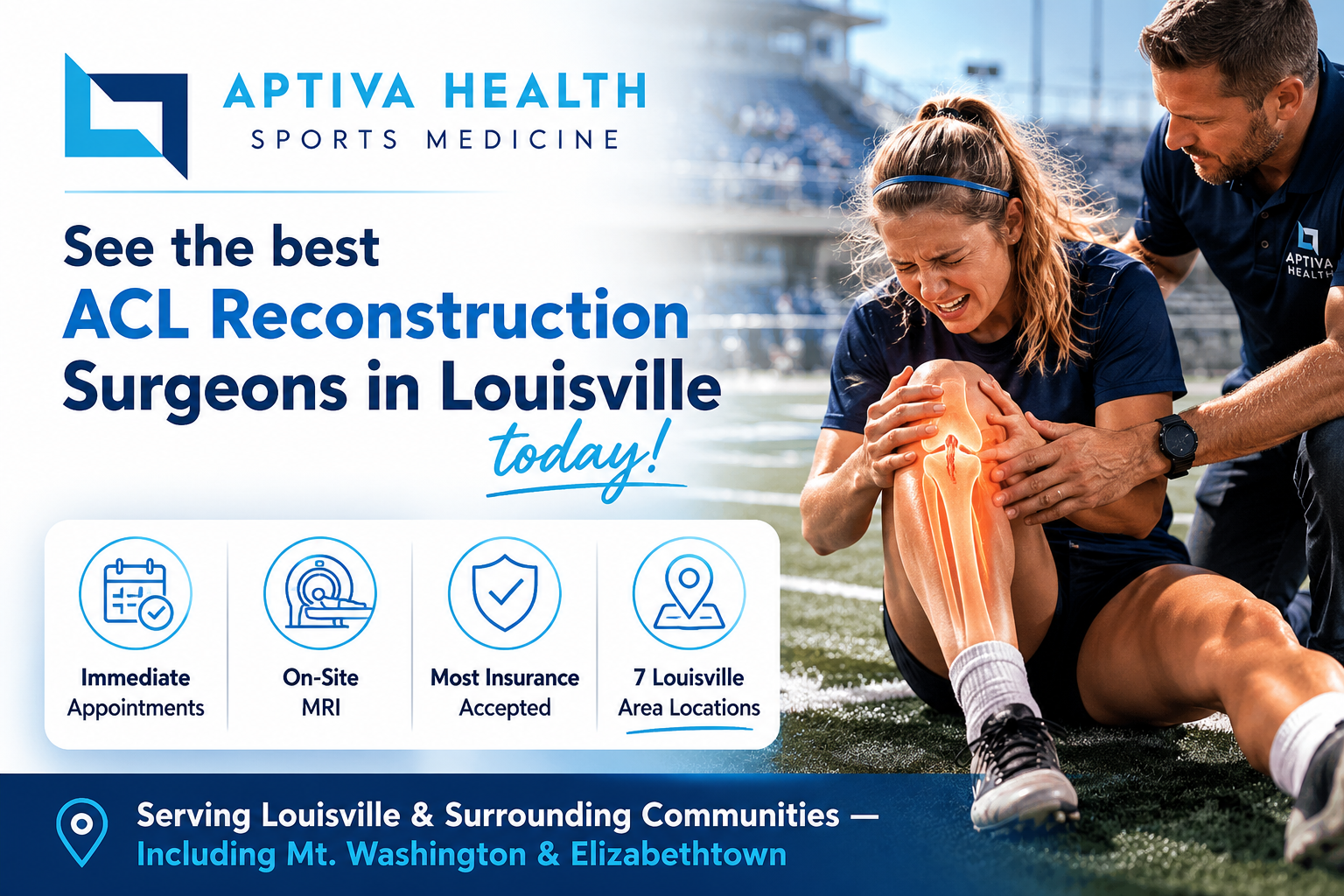
The anterior cruciate ligament (ACL) is located toward the front of the knee. It is the most common ligament to be injured. The ACL is often stretched and/or torn during a sudden twisting motion (when the feet stay planted one way, but the knees turn the other way). Skiing, basketball, and football are sports that have a higher risk of ACL injuries.
Medically reviewed by J. Steve Smith, MD, Timothy Wilson, MD, and D. Philip Stickney, MD - May 2026.
Get an immediate appointment at the Concussion & Sports Medicine Institute — 3611 Newburg Road, Louisville, KY 40218.
Tel: 502-909-0772.
Voted best Medical Center of 2026 in Louisville, KY 40218!
Schedule your appointment today!
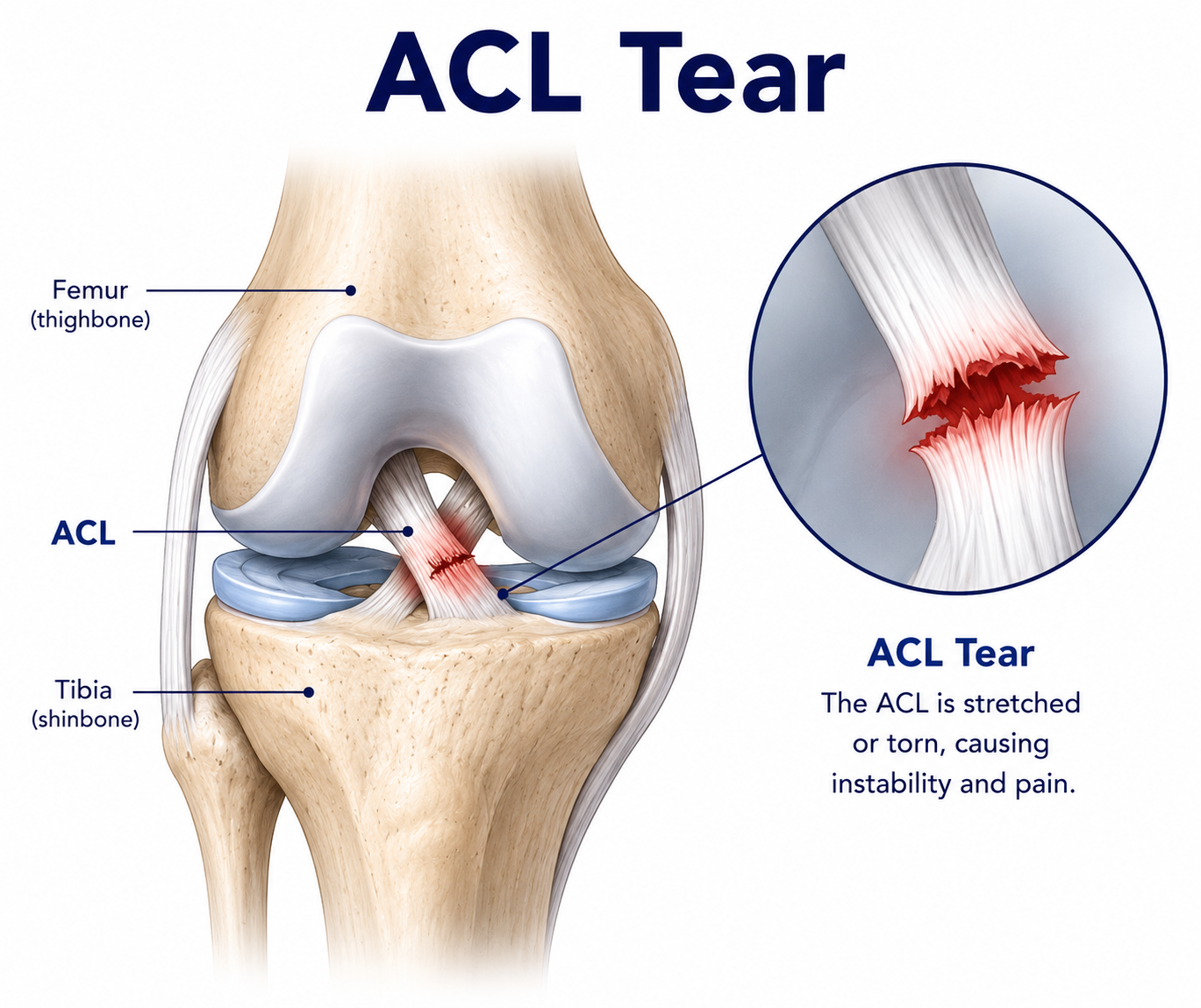
What is an ACL Tear?
The anterior cruciate ligament — the ACL — is one of four major ligaments that stabilize the knee. It runs diagonally through the middle of the joint, connecting the femur (thighbone) to the tibia (shinbone), and its job is to keep the knee from sliding forward or rotating out of place during movement.
When the ACL tears, the knee loses that stabilizing tether. Most patients describe feeling or hearing a pop at the moment of injury, followed by swelling within a few hours and a sense that the knee "isn't right" — that it shifts, gives out, or can't be trusted on a pivot or a stair.
ACL tears do not heal on their own. The ligament has a poor blood supply, and a complete tear leaves the two ends of the ligament unable to reconnect. In active patients, the standard of care is ACL reconstruction surgery — replacing the torn ligament with a graft that the body rebuilds into a new, functional ACL over four to six months.

Types of ACL Injuries
ACL injuries are diagnosed through clinical examination and MRI, and can be classified by the amount of damage to the ligament (partial or complete disruption). Injury to the ACL is usually a complete disruption, classifying it as a Grade III complete tear.
Grade I Sprain - There is some stretching and micro-tearing of the ligament, but the ligament is intact and the joint remains stable. These injuries rarely require surgery.
Grade II Sprain (Partial Disruption) - There is some tearing and separation of the ligament fibers and the ligament is partially disrupted. The joint is moderately unstable. Depending on the activity level of the patient and the degree of instability, these tears may or may not require surgery.
Grade III Sprain (Complete Disruption) - There is total rupture of the ligament fibers. The ligament is completely disrupted and the joint is unstable. Surgery is usually recommended in young or athletic people who engage in sports that involve cutting or pivoting.

Symptoms of an ACL Tear
If you've recently injured your knee, an ACL tear is likely if you experienced any of the following:
A "pop" at the moment of injury. Most patients hear or feel a distinct pop. About 50% of ACL tears are accompanied by an audible pop loud enough that other people nearby can hear it.
Sudden knee swelling within hours. Significant swelling within the first 6–24 hours is a hallmark of an ACL tear, caused by bleeding inside the joint (hemarthrosis).
Inability to continue the activity. Most patients cannot return to their game, practice, run, or activity. The knee feels unstable or unsafe to put weight on.
A feeling that the knee is "giving out." Even days or weeks after the initial injury, the knee buckles or shifts unexpectedly during walking, stairs, or pivots.
Loss of full range of motion. The knee may feel stiff, locked, or unable to fully straighten or bend.
Pain along the joint line and deep inside the knee. Tenderness is usually inside the joint rather than along the kneecap or below the knee.
Discomfort walking on uneven surfaces. Patients often describe stairs, hills, and grass as feeling unsafe.

How an ACL Tear Happens
The ACL can tear in several common ways. About 70% of ACL tears are non-contact injuries — they happen without anyone touching the knee:
Changing direction rapidly (cutting, pivoting)
Landing awkwardly from a jump
Stopping suddenly while running
Twisting with the foot planted (the classic "knee turned one way, foot stayed the other")
Direct contact or collision — football tackles, soccer slide tackles, skiing falls
The sports with the highest ACL injury rates are basketball, soccer, football, skiing, gymnastics, lacrosse, volleyball, and cheerleading.
Female athletes tear their ACLs at 2–8 times the rate of male athletes in the same sports. Several factors contribute: differences in hip-to-knee alignment, neuromuscular control, hamstring-to-quadriceps strength ratio, and the way the ACL behaves under hormonal cycles. Targeted neuromuscular training programs can cut female ACL injury risk significantly, and Aptiva's sports medicine and physical therapy teams provide ACL injury prevention training for athletes and teams.

How an ACL Tear Is Diagnosed
At Aptiva Health, an ACL tear diagnosis usually takes a single visit:
History. Your surgeon will ask about the mechanism of injury — what you were doing, whether you felt a pop, how quickly the knee swelled, and whether the knee has felt unstable since.
Physical examination. Specific tests — the Lachman test, the anterior drawer test, and the pivot-shift test — are highly accurate for identifying an ACL tear, often within minutes.
Imaging. An MRI confirms the diagnosis, shows the location of the tear, and identifies associated injuries (the meniscus, the cartilage, the MCL, or bone bruising) that are present in roughly half of ACL tears. Aptiva Health operates its own MRI imaging centers, so most patients can get same-week MRI scheduling without the multi-week wait that hospital-based imaging typically requires.
Treatment plan. After the exam and imaging, your surgeon will walk you through the diagnosis, the associated injuries, the surgical and non-surgical options, and the recovery timeline. You leave the visit with a written plan.
Treatment for an ACL Tear
ACL tear treatment depends on the patient's age, activity level, sport, work demands, and whether other knee structures (meniscus, cartilage, other ligaments) are also injured.
Non-surgical treatment
A complete ACL tear will not heal on its own, but some patients — typically older, lower-activity, or unwilling to undergo surgery — can manage a torn ACL with bracing, physical therapy, activity modification, and quad/hamstring strengthening. This approach trades knee stability for avoidance of surgery, and it works best for patients who don't need to cut, pivot, or land at speed.
Surgical treatment: ACL reconstruction
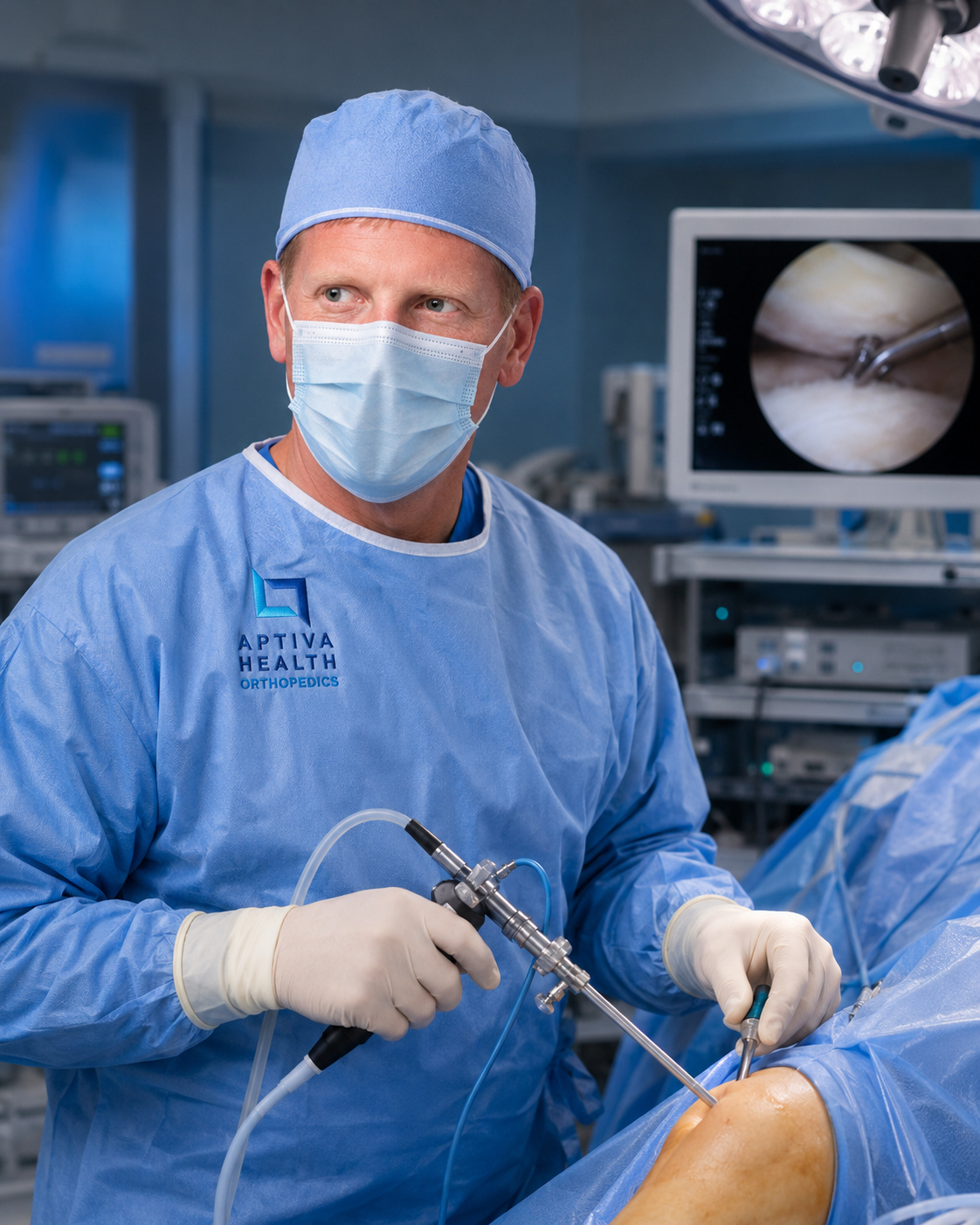
For the majority of patients — anyone who wants to return to sports, agility-based work, or an active lifestyle — the standard of care is ACL reconstruction surgery. The torn ligament is replaced with a graft (most often the patient's own patellar tendon, hamstring tendon, or quadriceps tendon; sometimes a cadaver allograft), and the new ligament is anchored in tunnels drilled into the femur and tibia. Over four to six months, the body remodels the graft into a functional ACL.
Learn more about ACL reconstruction surgery →
What if other parts of the knee are also injured?
Roughly half of ACL tears come with a meniscus tear, cartilage injury, MCL sprain, or bone bruise. Aptiva's sports orthopedic surgeons routinely address these in the same operation as the ACL reconstruction — repairing the meniscus, smoothing or restoring damaged cartilage, and managing concurrent ligament injuries — so the patient heals from one surgery rather than several.

When to See a Doctor
You should be evaluated by a sports orthopedic surgeon promptly — within days, not weeks — if you experienced any of the following:
A "pop" in your knee during sports or a fall, followed by swelling
Inability to bear weight on the knee
A feeling that the knee is unstable or "gives out"
Swelling that won't resolve
Significant pain inside the knee with movement
Delaying evaluation can let secondary injuries worsen — particularly meniscus tears, which become harder to repair the longer they go untreated. Aptiva Health offers same-day and next-day evaluations for new knee injuries; in many cases, a patient can be seen, examined, scheduled for MRI, and walking out with a treatment plan within 48 hours of the injury.
Schedule your appointment today!
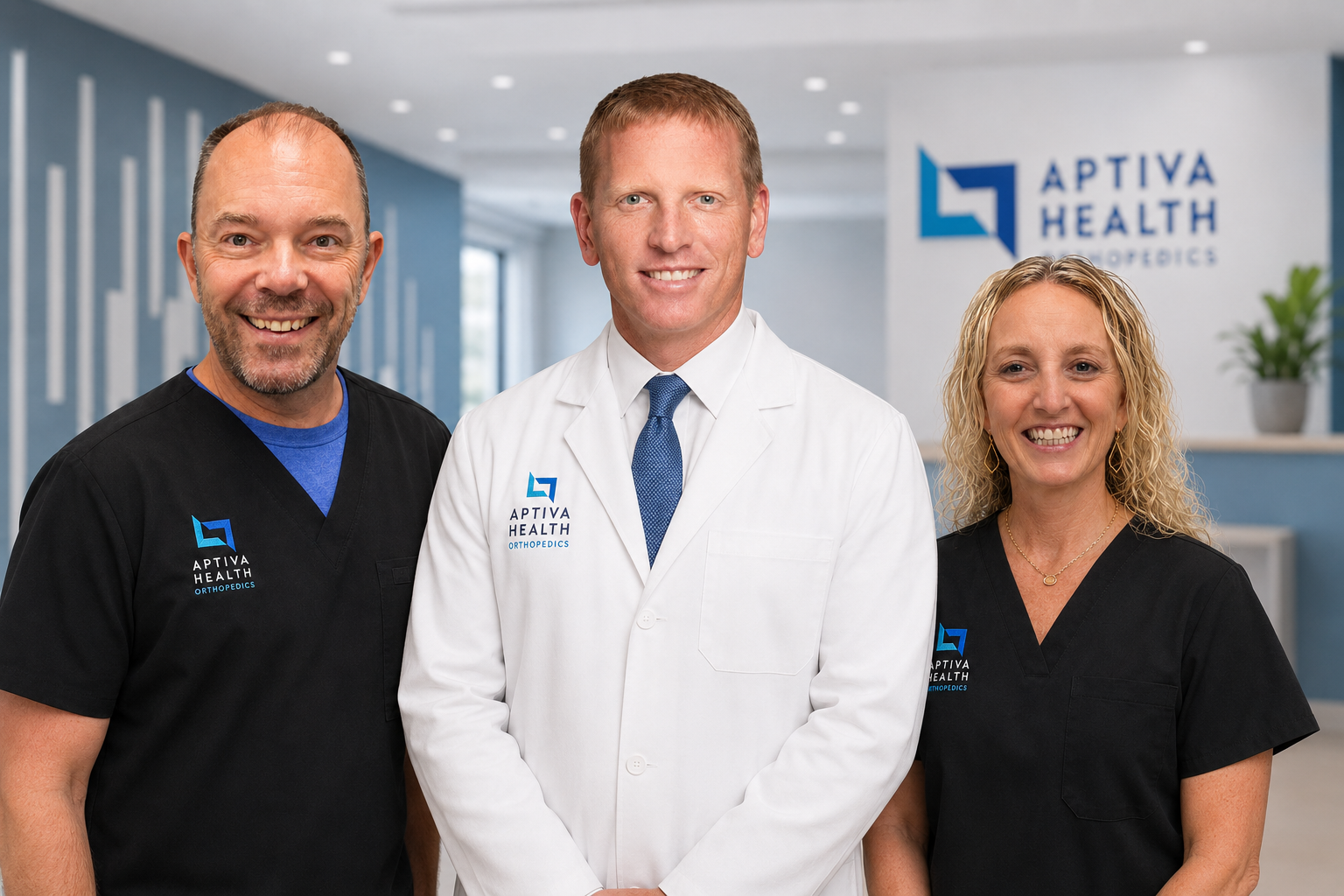
Our ACL Surgery Team - Louisville, KY

J. Steve Smith, MD - Director of Orthopedic Surgery & Sports Medicine
Dr. Steve Smith is the Director of Orthopedic Surgery & Sports Medicine at Aptiva Health and a board-certified orthopedic surgeon. He graduated from the University of Kentucky College of Medicine, trained at the University of Rochester, and completed a sports medicine fellowship at the renowned Kerlan-Jobe Institute in Los Angeles, where he served on the medical staff for the Los Angeles Lakers, the Los Angeles Dodgers, and the Anaheim Ducks. He has performed thousands of orthopedic procedures on patients and athletes of all ages and treats the full range of knee conditions, from sports injuries and meniscus and ligament tears to knee arthritis and knee replacement. He has been nominated as the best orthopedic surgeon in Kentucky in 2026.
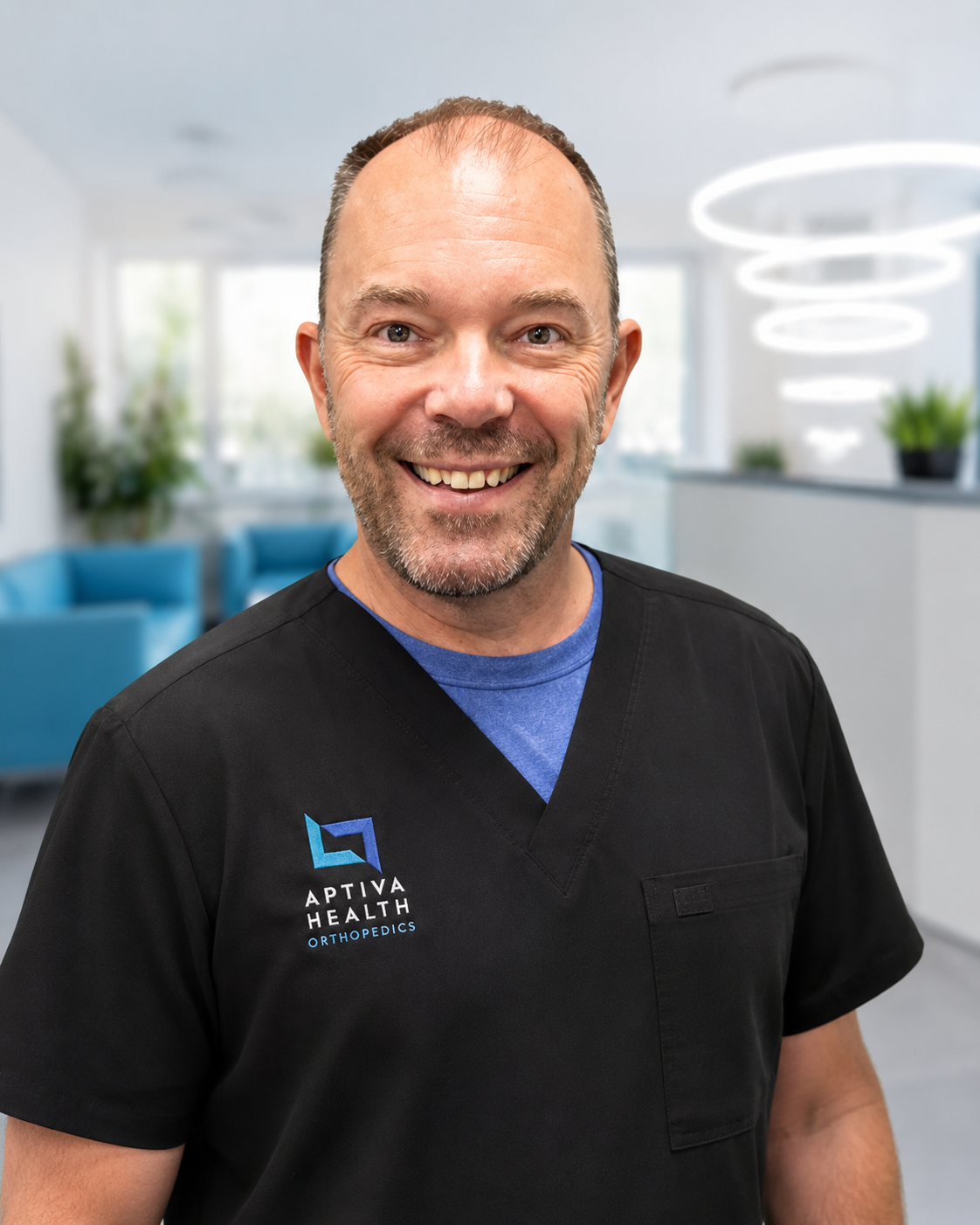
Michael Gilbert, PA-C Orthopedic Physician Assistant
Michael Gilbert has been an orthopedic physician assistant for 30 years, with experience across general orthopedics, sports orthopedics, and orthopedic spine. For knee patients, Michael provides same-week new-patient evaluations, conservative-care coordination, knee injections, and post-operative follow-up — making sure imaging, bracing, therapy, and pre-operative planning happen on schedule. Michael currently serves as a Lieutenant Colonel in the Kentucky Army National Guard as Chief Surgeon. He is the first physician assistant in the history of the Kentucky Army National Guard to hold this esteemed position.
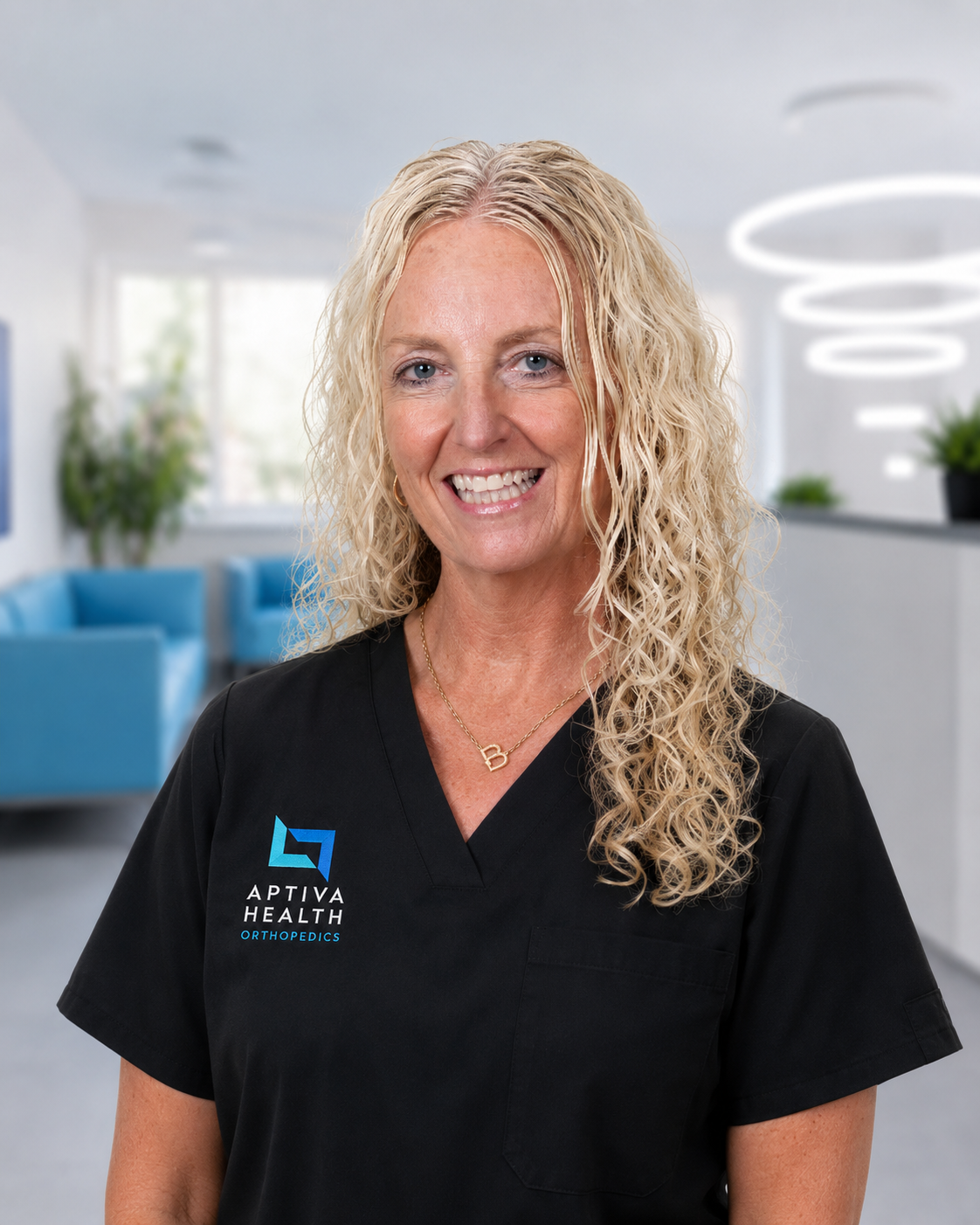
Becky Kostyo, APRN - Orthopedic Nurse Practitioner
Becky Kostyo is an advanced practice registered nurse who works directly with the Aptiva Health knee team to evaluate, diagnose, and manage knee conditions. She provides conservative care, administers knee injections, and coordinates pre- and post-operative care — for many knee patients, Becky is the clinical contact who guides them through non-surgical treatment and recovery. Becky has worked with Dr. J. Steve Smith for more than a decade and is intimately familiar with his processes, protocols, and countless patient success stories.
Schedule an ACL Consultation in Louisville — Schedule Now
Louisville locations serving ACL and knee patients:
Louisville East — 10100 Linn Station Road, Suite 1A, Louisville, KY 40223 — Tel: 502-909-0772
Louisville Downtown — 300 South 13th Street, Louisville, KY 40203 — Tel: 502-909-0772
Louisville Imaging — 3615 Newburg Road, Suite 106, Louisville, KY 40218 — Tel: 502-909-0772
Louisville Middletown — 401 N English Station Road, Suite 1A, Louisville, KY 40223 — Tel: 502-290-2717
Concussion & Sports Medicine Institute (on-site MRI) — 3611 Newburg Road, Louisville, KY 40218 — Tel: 502-909-0772
Elizabethtown and Mt. Washington locations also serve orthopedic patients:
Aptiva Health Orthopedics — Elizabethtown — 529 Westport Road, Suite 2, Elizabethtown, KY 42701 — Tel: 270-506-4888
Aptiva Health Orthopedics — Mt. Washington — 737 N Hwy 31e Bypass, Suite 2, Mt. Washington, KY 40047 — Tel: 502-909-0772
Insurance accepted: Most major medical insurance, Medicare, Medicare Advantage, most Kentucky Medicaid plans, workers' compensation, auto injury coverage (PIP and MedPay), and cash-pay.
Frequently Asked Questions About ACL Reconstruction in Louisville
Do I need surgery for an ACL tear?
It depends on your activity level. A complete ACL tear will not heal on its own. Active patients who want to return to sports, agility-based work, or a physically demanding lifestyle are usually candidates for ACL reconstruction. Some older or lower-activity patients can manage a torn ACL non-surgically with bracing, physical therapy, and strengthening. Your Aptiva Health surgeon reviews your exam, imaging, and goals to recommend the right path.
How long is recovery after ACL reconstruction surgery?
The graft is rebuilt by the body into a functional ligament over four to six months, and a full return to cutting and pivoting sports typically takes six to nine months. Recovery depends on the graft type, any associated injuries repaired in the same surgery, and progress in physical therapy. Aptiva Health coordinates post-operative physical therapy in-house, which keeps rehab on schedule.
What graft is used for ACL reconstruction?
ACL reconstruction replaces the torn ligament with a graft, most often the patient's own patellar tendon, hamstring tendon, or quadriceps tendon. A cadaver allograft is used in some cases. Your surgeon recommends the graft based on your age, sport, activity level, and prior knee surgery.
Can the meniscus be repaired during ACL surgery?
Yes. Roughly half of ACL tears come with a meniscus tear, cartilage injury, MCL sprain, or bone bruise. Aptiva Health's sports orthopedic surgeons routinely address these in the same operation as the ACL reconstruction, so the patient heals from one surgery rather than several.
How quickly can I be seen for an ACL injury in Louisville?
Aptiva Health Louisville offers same-day and next-day evaluations for new knee injuries. In many cases a patient can be seen, examined, scheduled for MRI, and given a written treatment plan within 48 hours of the injury. Because Aptiva operates its own MRI imaging centers, most patients avoid the multi-week wait that hospital-based imaging typically requires.
What happens if an ACL tear is left untreated?
An untreated complete ACL tear leaves the knee unstable, which can cause it to give out during walking, stairs, or pivots. Continued instability also raises the risk of secondary damage — particularly meniscus tears, which become harder to repair the longer they go untreated, and earlier cartilage wear. Prompt evaluation lets the surgeon protect the rest of the knee.
Is ACL reconstruction an outpatient surgery?
ACL reconstruction is typically performed on an outpatient basis, meaning most patients go home the same day. Your Aptiva Health surgical team reviews your specific procedure, any concurrent repairs, and your recovery plan before surgery.
Who performs ACL surgery at Aptiva Health Louisville?
ACL reconstruction at Aptiva Health Louisville is performed by board-certified orthopedic surgeons, led by Dr. J. Steve Smith, Director of Orthopedic Surgery & Sports Medicine. Conservative care, knee injections, and pre- and post-operative management are provided by orthopedic physician assistant Michael Gilbert, PA-C, and orthopedic nurse practitioner Becky Kostyo, APRN, who work directly with the surgical team.
Does insurance cover ACL reconstruction surgery?
ACL reconstruction is covered by most major medical insurance plans, Medicare, Medicare Advantage, and Kentucky Medicaid plans. ACL injuries from a work or auto accident are commonly covered under workers' compensation or auto injury coverage (PIP and MedPay). Aptiva Health verifies benefits before your visit.
Why do female athletes tear their ACLs more often?
Female athletes tear their ACLs at two to eight times the rate of male athletes in the same sports. Contributing factors include differences in hip-to-knee alignment, neuromuscular control, hamstring-to-quadriceps strength ratio, and hormonal effects on the ligament. Targeted neuromuscular training can significantly reduce this risk, and Aptiva's sports medicine and physical therapy teams provide ACL injury prevention training for athletes and teams.