

Spine Surgery in Louisville, Kentucky
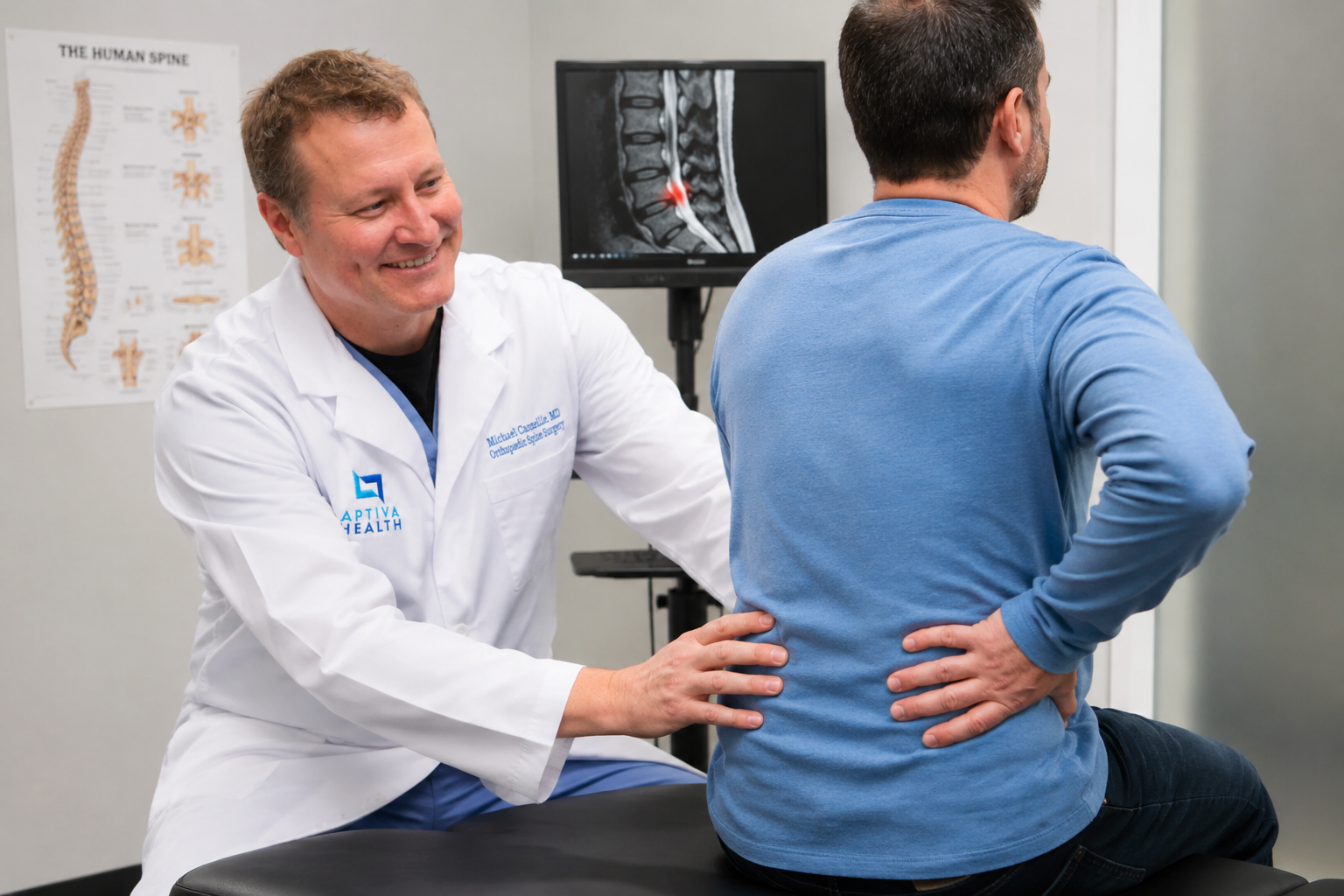
Spine Surgery in Louisville, Kentucky
Aptiva Health operates the Spine Center of Excellence at 3615 Newburg Road in Louisville — a dedicated multidisciplinary spine practice anchored by board-certified orthopedic spine surgeons Dr. Michael Casnellie and Dr. David McConda, double board-certified physical medicine and interventional pain management physician Dr. Steven Ganzel, and a team of advanced practice providers who collectively evaluate, treat, and manage spine patients from initial visit through post-operative recovery. We treat the full spectrum of cervical (neck), thoracic (mid-back), and lumbar (lower back) conditions, prioritizing conservative care first — physical therapy, injections, and non-surgical pain management — and offering minimally invasive surgical options including ACDF, cervical disc replacement, lumbar decompression, MAS TLIF lumbar fusion, SI joint fusion, and laminectomy when surgery becomes the right answer. With on-site MRI, on-site physical therapy, and an in-house interventional pain management practice, the entire spine care pathway happens under one roof.
Medically reviewed by Michael Casnellie, MD, David McConda, MD, and Steven Ganzel, DO. Last reviewed: May 2026.
Why Patients Choose Aptiva Health for Spine Care in Louisville
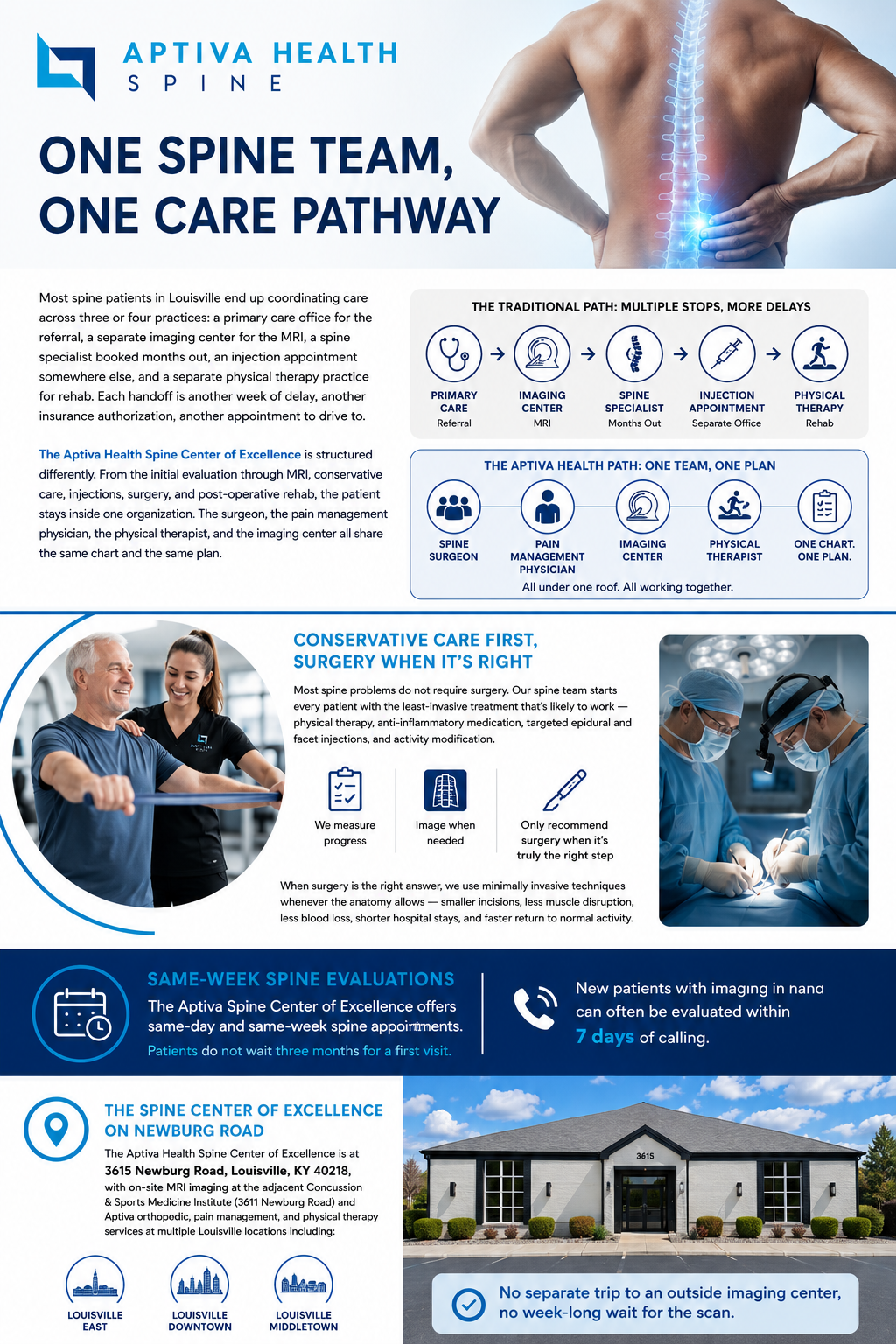
One Spine Team, One Care Pathway
Most spine patients in Louisville end up coordinating care across three or four practices: a primary care office for the referral, a separate imaging center for the MRI, a spine specialist booked months out, an injection appointment somewhere else, and a separate physical therapy practice for rehab. Each handoff is another week of delay, another insurance authorization, another appointment to drive to.
The Aptiva Health Spine Center of Excellence is structured differently. From the initial evaluation through MRI, conservative care, injections, surgery, and post-operative rehab, the patient stays inside one organization. The surgeon, the pain management physician, the physical therapist, and the imaging center all share the same chart and the same plan.
Conservative Care First, Surgery When It's Right
Most spine problems do not require surgery. Our spine team starts every patient with the least-invasive treatment that's likely to work — physical therapy, anti-inflammatory medication, targeted epidural and facet injections, and activity modification. We measure progress, image when needed, and only recommend surgery when the patient's symptoms and imaging both indicate it's the right step.
When surgery is the right answer, we use minimally invasive techniques whenever the anatomy allows — smaller incisions, less muscle disruption, less blood loss, shorter hospital stays, and faster return to normal activity.
Same-Week Spine Evaluations
The Aptiva Spine Center of Excellence offers same-day and same-week spine appointments. Patients do not wait three months for a first visit. New patients with imaging in hand can often be evaluated within 7 days of calling.
The Spine Center of Excellence on Newburg Road
The Aptiva Health Spine Center of Excellence is at 3615 Newburg Road, Louisville, KY 40218, with on-site MRI imaging at the adjacent Concussion & Sports Medicine Institute (3611 Newburg Road) and Aptiva orthopedic, pain management, and physical therapy services at multiple Louisville locations including Louisville East, Louisville Downtown, and Louisville Middletown. No separate trip to an outside imaging center, no week-long wait for the scan.
Schedule your appointment today!
Meet the Louisville Spine Team
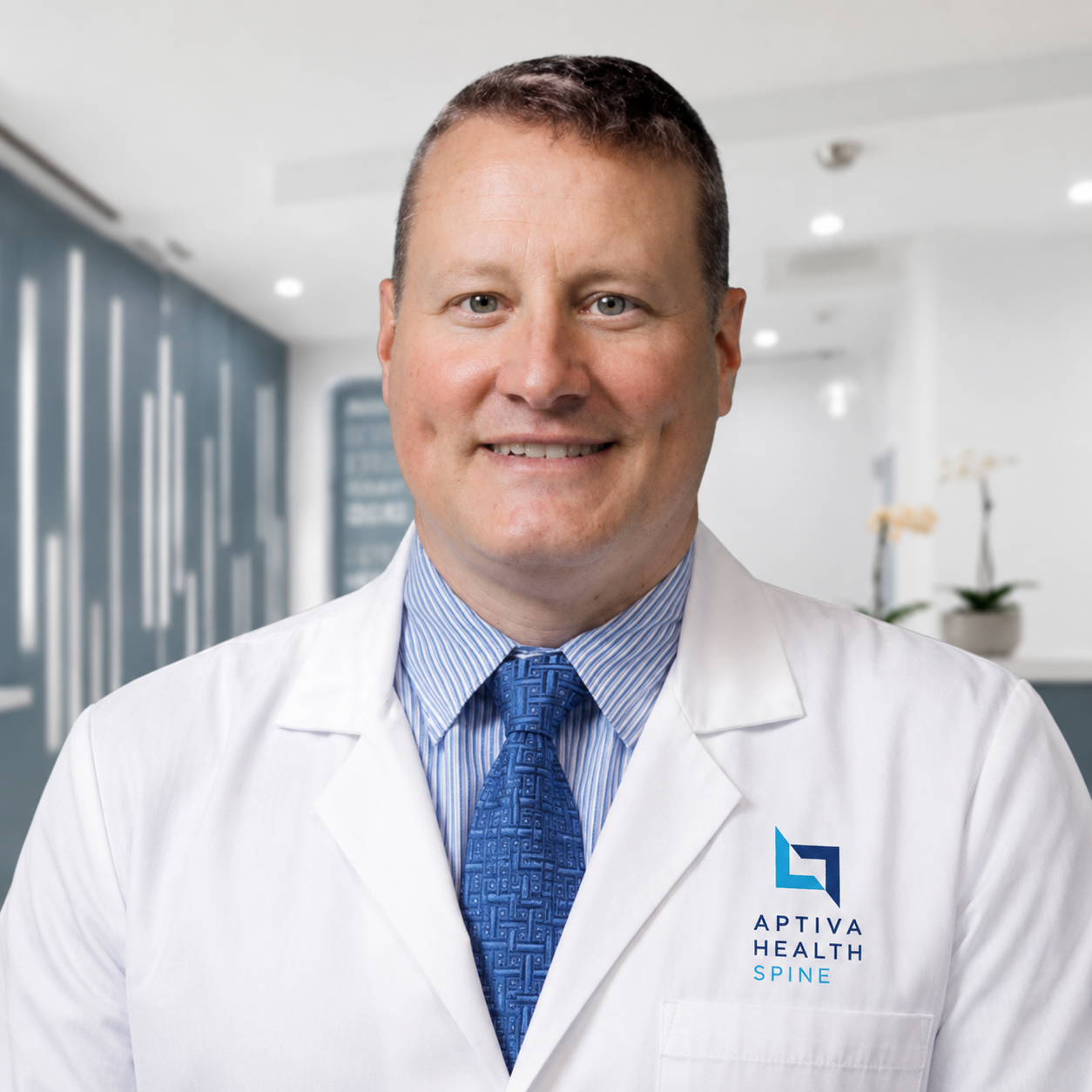
Michael Casnellie, MD - Board-Certified Orthopedic Spine Surgeon
Dr. Casnellie is a board-certified orthopedic spine surgeon who specializes in minimally invasive neck and back surgery and SI joint dysfunction. He has built a reputation in Louisville for thorough patient evaluations, clear communication about whether surgery is the right answer, and skilled minimally invasive surgical technique. Patients consistently rate him among Louisville's top spine surgeons.
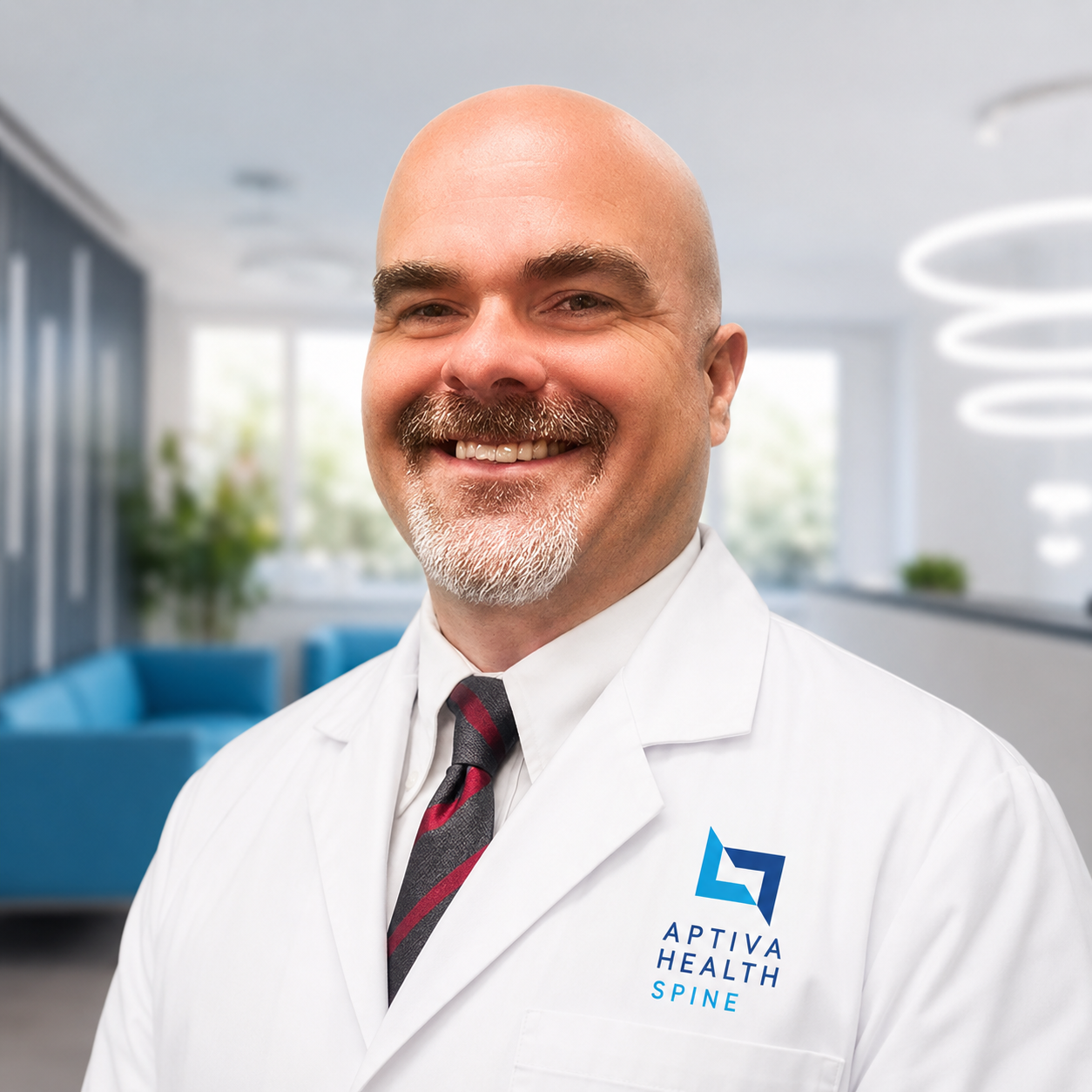
David McConda, MD - Board-Certified Orthopedic Spine Surgeon
Dr. McConda is a board-certified orthopedic spine surgeon who specializes in minimally invasive neck surgery, minimally invasive lumbar fusion, and SI joint fusion. His practice is built around helping patients understand whether they actually need surgery — many do not — and, when they do, getting them through the most minimally invasive procedure that will solve the problem and let them get back to normal life.
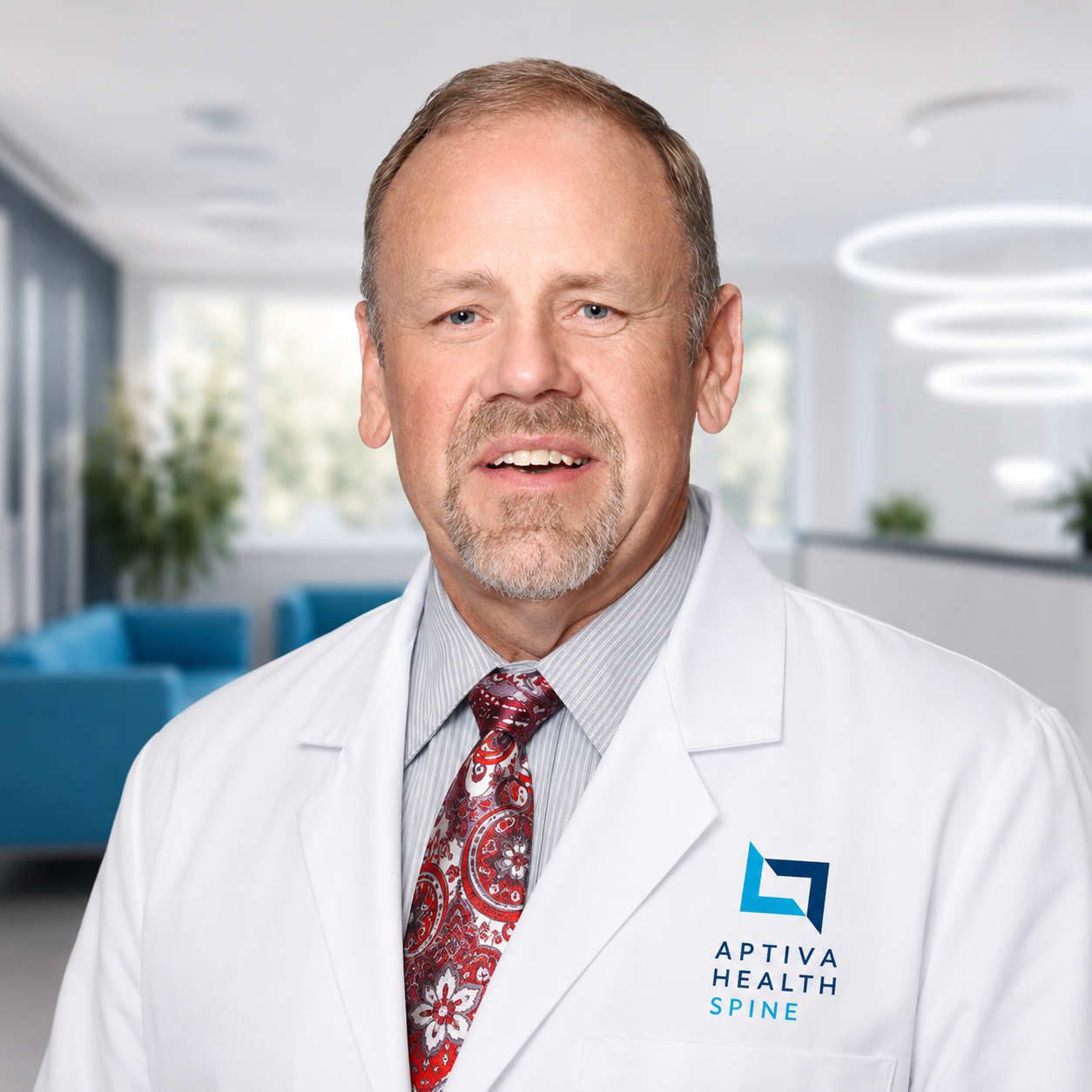
Steven Ganzel, DO - Physical Medicine & Rehabilitation, Interventional Pain Management
Dr. Ganzel is double board-certified in Physical Medicine & Rehabilitation and Interventional Pain Management. For the Aptiva Health Spine Team, he performs fluoroscopy-guided epidural steroid injections, facet joint injections, medial branch blocks, radiofrequency ablation, and other interventional pain procedures for patients — many of which provide lasting relief and prevent the need for surgical intervention.
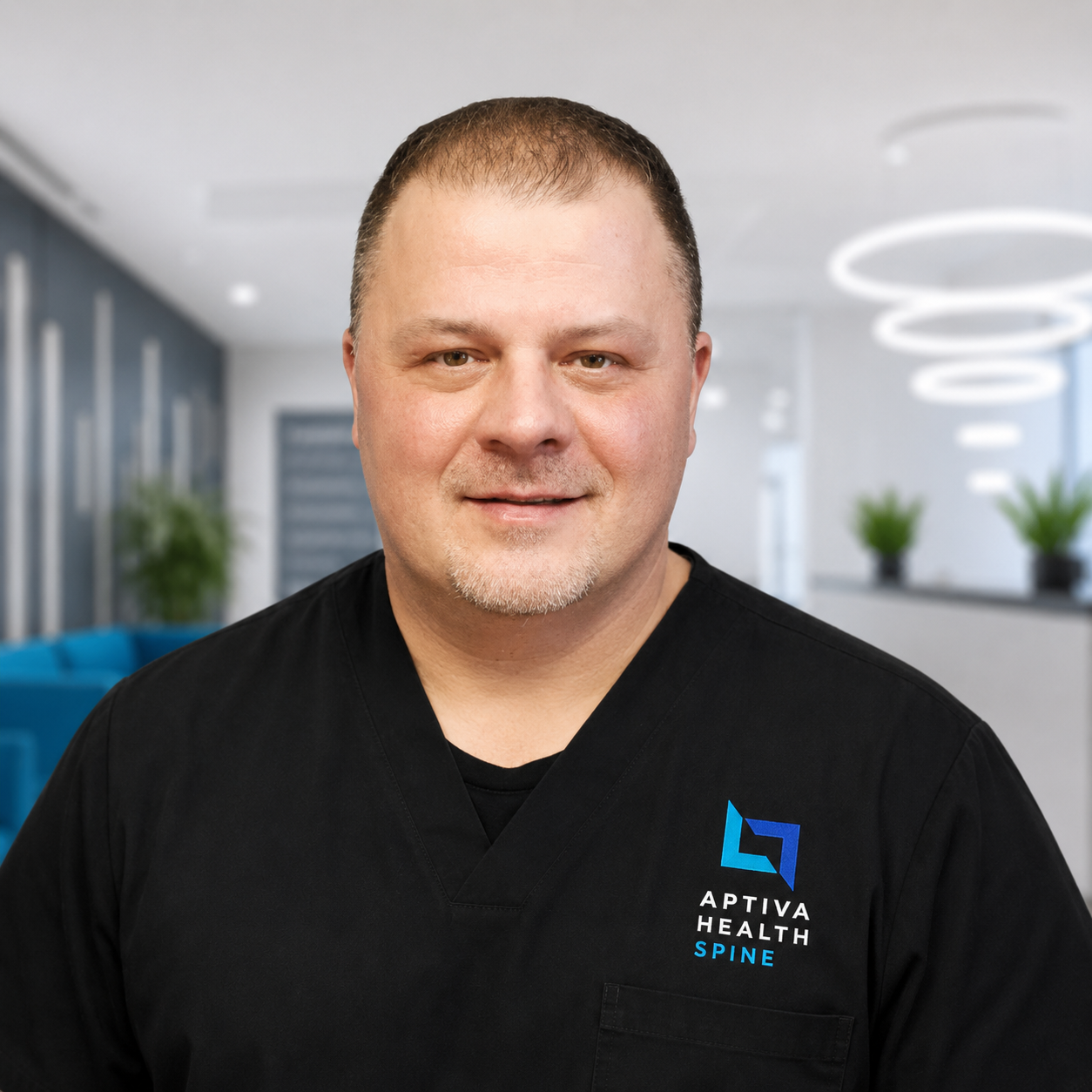
David Koonce, DNP - Doctor of Nursing Practice - Orthopedic Spine
David Koonce holds a doctorate of nursing practice and works directly with Dr. Casnellie to evaluate, diagnose, and treat patients with painful spine conditions, diseases, and injuries. For many spine patients, David is the clinical contact who makes sure imaging, injections, and pre-operative planning happen on schedule.
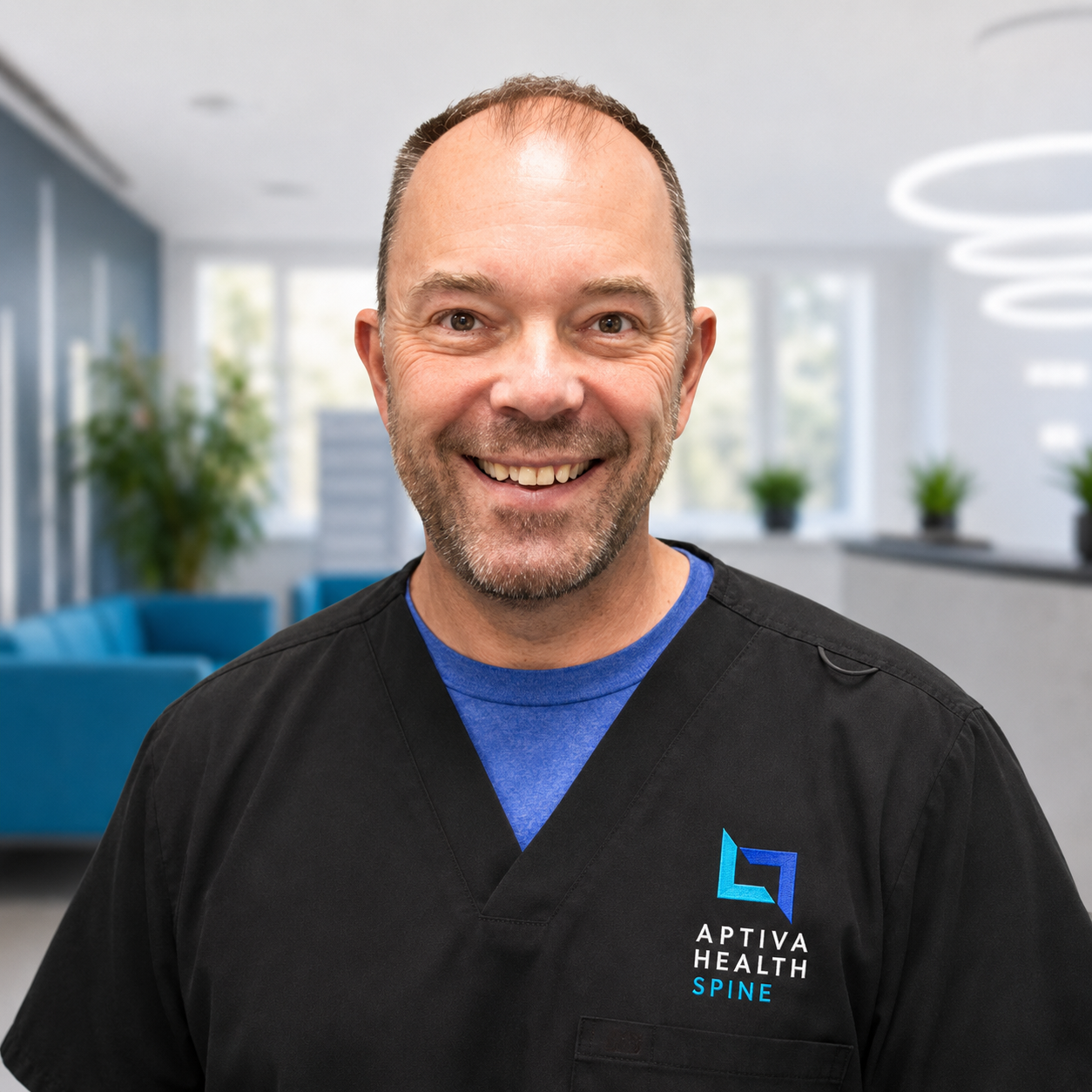
Michael Gilbert, PA-C Physician Assistant — General Orthopedics & Orthopedic Spine
Michael Gilbert has been a general orthopedic and orthopedic spine physician assistant for 30 years. He works across multiple Aptiva Health departments and provides spine patients with same-week new-patient evaluations, post-operative follow-up, and conservative-care coordination.

Kayla Troutman, PA-C Physician Assistant — General Orthopedics & Orthopedic Spine
Kayla Troutman is a former Division 1 College Women’s Basketball Player. She became a physician assistant in 2018 and has worked in emergency medicine, regenerative orthopedic medicine, orthopedic spine patient evaluations, and returned to Sullivan as an assistant professor.
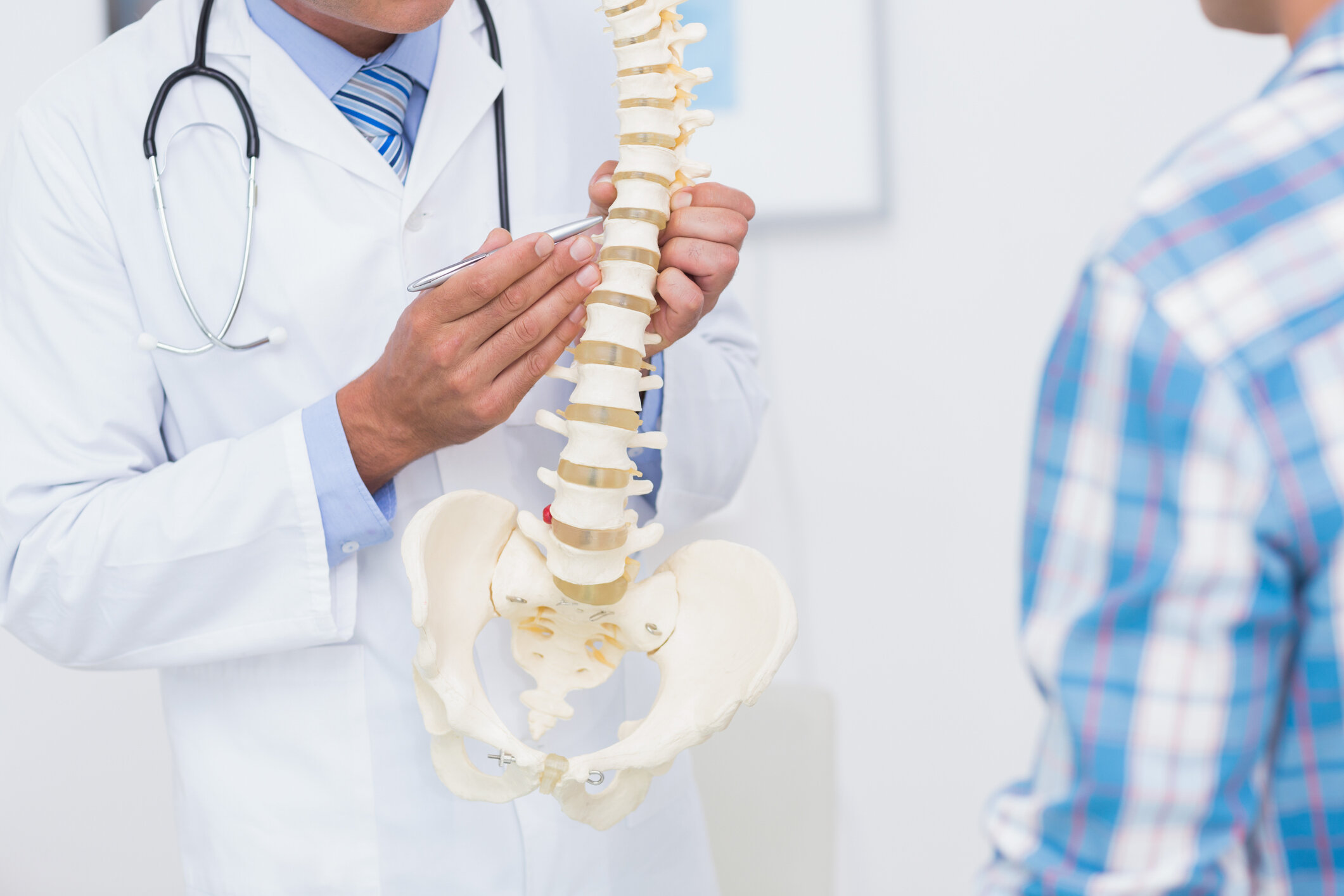
Spine Conditions We Treat in Louisville
Our Indianapolis spine team evaluates and treats the full range of cervical, thoracic, and lumbar spine conditions:
Herniated disc (cervical, thoracic, lumbar) — soft inner disc material pushing through the outer wall and pressing on a nerve root.
Spinal stenosis — narrowing of the spinal canal that causes leg pain with walking (neurogenic claudication) or arm/hand symptoms in cervical stenosis.
Sciatica — radiating leg pain from a pinched lumbar nerve root.
SI joint dysfunction — pain originating from the sacroiliac joint that mimics low back pain.
Degenerative disc disease — age-related disc wear that produces chronic back or neck pain.
Spondylolisthesis — one vertebra slipping forward over the one below it, often at L4–L5.
Spondylosis — age-related arthritis of the spine.
Radiculopathy — nerve root irritation producing pain, numbness, weakness, or tingling in the arm or leg.
Myelopathy — spinal cord dysfunction, most commonly in the cervical spine, causing hand clumsiness, balance problems, and progressive weakness.
Neck pain — acute and chronic.
Back pain — acute and chronic.
Failed back surgery syndrome — patients with persistent symptoms after prior spine surgery elsewhere who need re-evaluation.
Work-related and auto-accident spine injuries — see our Indianapolis work injury and Indianapolis auto injury pages.
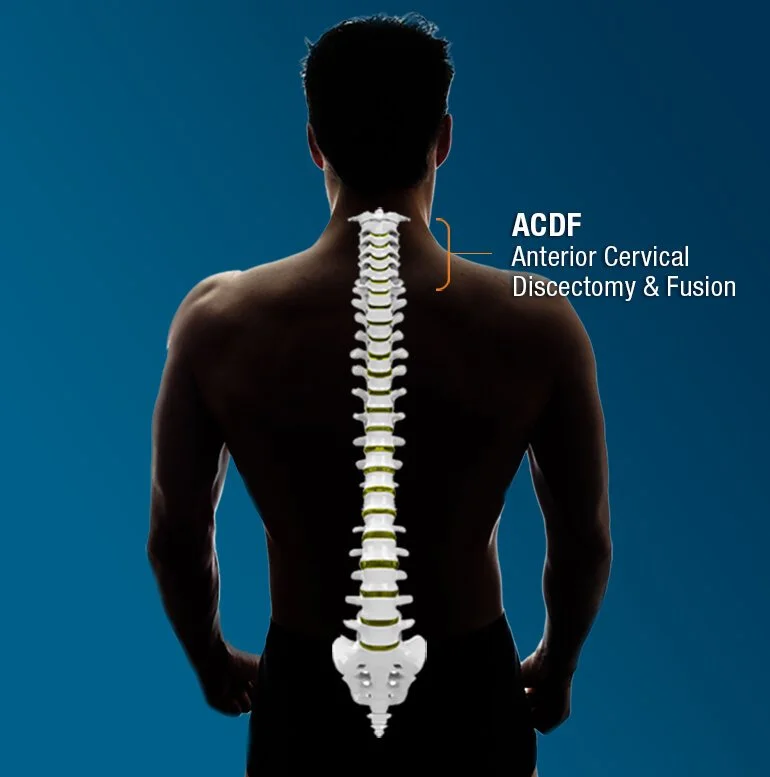
Spine Surgeries Performed in Indianapolis
When conservative care has not provided sufficient relief, our Indianapolis spine team performs the full range of minimally invasive and open spine surgeries. Most are performed on an outpatient or short-stay basis at the appropriate surgical center.
Cervical (neck) spine surgery
Anterior Cervical Discectomy and Fusion (ACDF) — removes a herniated or degenerated cervical disc and fuses the adjacent vertebrae. The most established surgery for cervical disc problems with neurological symptoms.
Cervical disc replacement (cervical disc arthroplasty) — a motion-preserving alternative to ACDF for select patients. Replaces the diseased disc with an artificial disc that preserves cervical motion at that level.
Cervical decompression / discectomy — removes the disc material causing nerve compression without fusion when anatomy allows.
Cervical laminectomy and laminoplasty — for cervical spinal stenosis or myelopathy. Laminoplasty preserves more of the spine's structure than traditional laminectomy.
Lumbar (lower back) spine surgery
Lumbar decompression / discectomy — removes the herniated disc material pressing on a lumbar nerve root. The most common lumbar spine surgery.
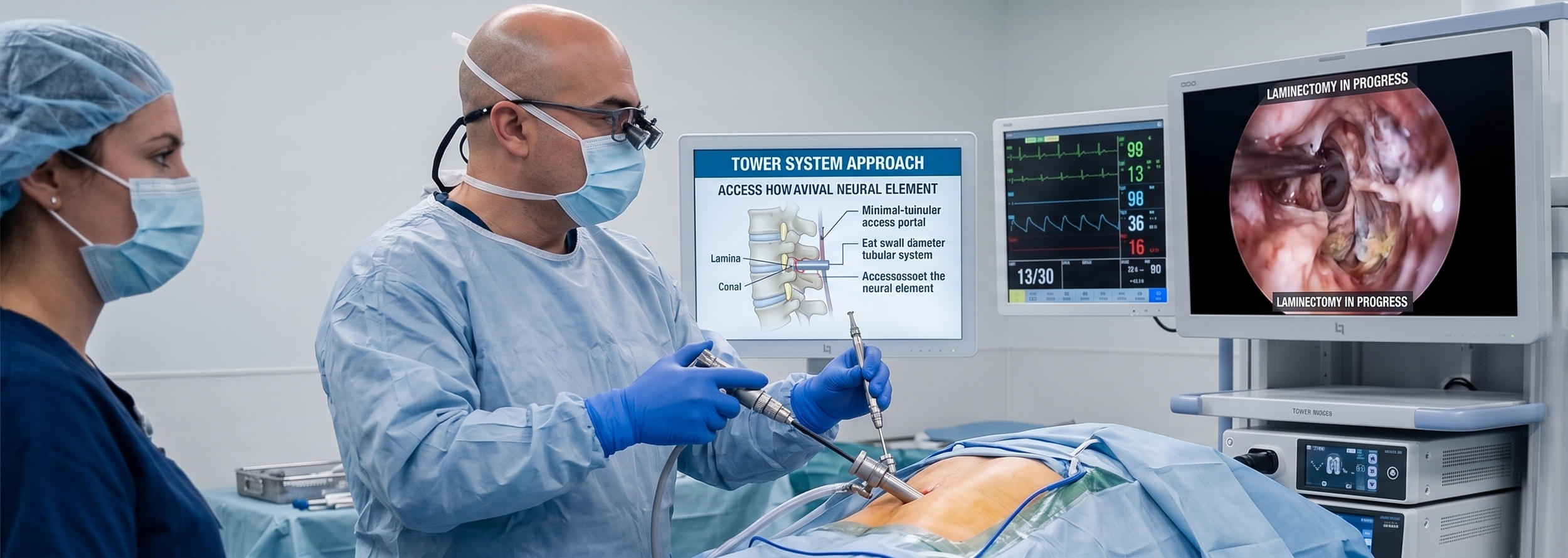
Lumbar laminectomy — removes part of the lamina to relieve pressure on the spinal cord or nerves. The most common surgery for symptomatic lumbar spinal stenosis.
Minimally Invasive Lumbar Fusion (MAS TLIF) — used when stenosis is combined with spinal instability or significant spondylolisthesis. The Minimal Access Surgery (MAS) TLIF approach splits the back muscles rather than cutting through them, which reduces blood loss, post-operative pain, scarring, and recovery time compared with traditional fusion.
Sacroiliac (SI) joint surgery
Minimally invasive SI joint fusion — for patients with confirmed SI joint dysfunction who have not responded to physical therapy, injections, and conservative care. Performed through a small incision with implants that stabilize the joint.
Pain management procedures (often non-surgical alternatives)
Performed by Dr. Steven Ganzel under live fluoroscopic guidance, these procedures let many spine patients avoid surgery entirely:
Radiofrequency ablation (rhizotomy) — for facet-joint pain; can provide six to twelve months of relief.
Permanent spinal cord stimulator placement — for chronic neuropathic pain that has not responded to other treatments.
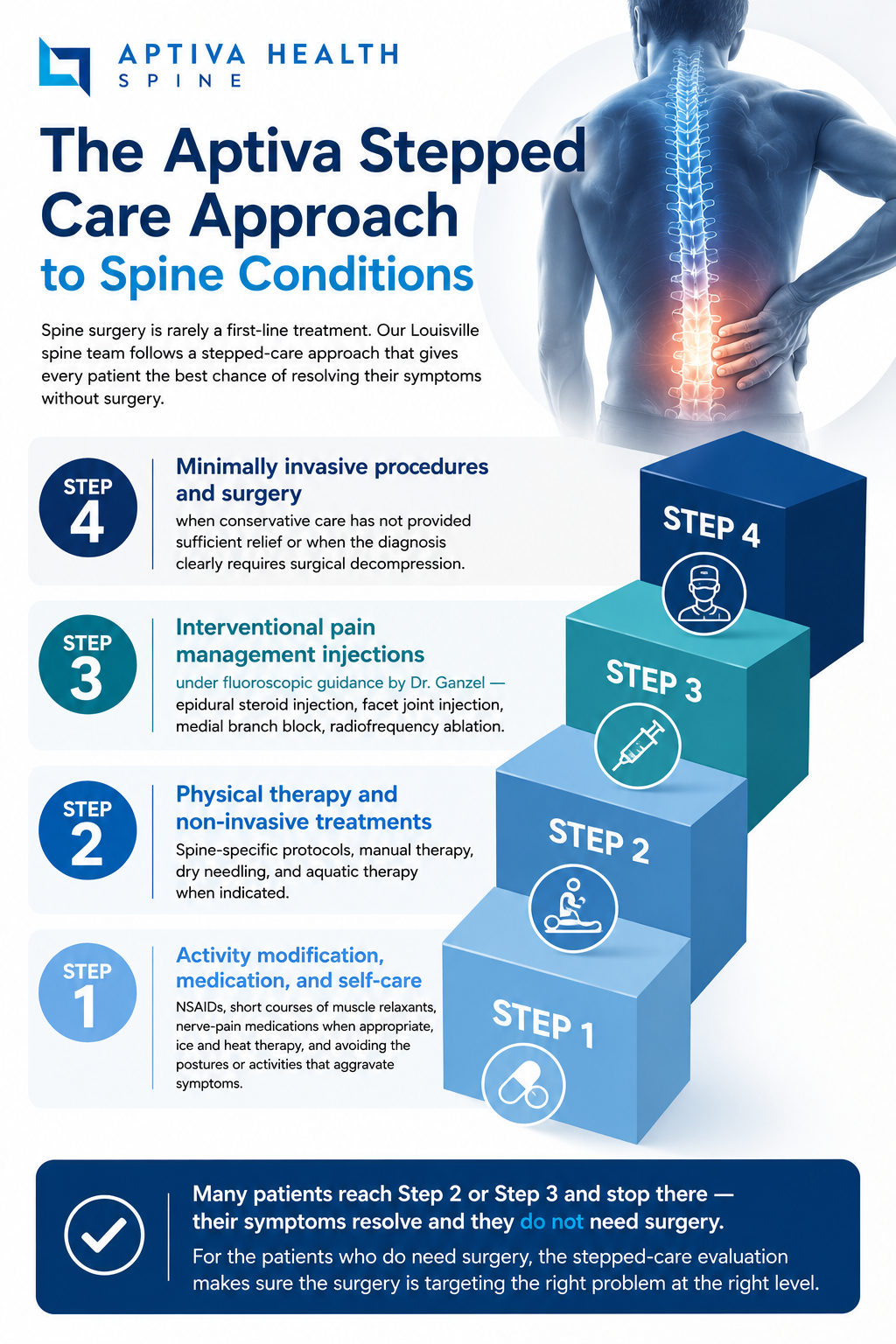
The Aptiva Stepped Care Approach to Spine Conditions
Spine surgery is rarely a first-line treatment. Our Louisville spine team follows a stepped-care approach that gives every patient the best chance of resolving their symptoms without surgery.
Step 1 — Activity modification, medication, and self-care. NSAIDs, short courses of muscle relaxants, nerve-pain medications when appropriate, ice and heat therapy, and avoiding the postures or activities that aggravate symptoms.
Step 2 — Physical therapy and non-invasive treatments. Spine-specific protocols, manual therapy, dry needling, and aquatic therapy when indicated.
Step 3 — Interventional pain management injections under fluoroscopic guidance by Dr. Ganzel — epidural steroid injection, facet joint injection, medial branch block, radiofrequency ablation.
Step 4 — Minimally invasive procedures and surgery when conservative care has not provided sufficient relief or when the diagnosis clearly requires surgical decompression.
Many patients reach Step 2 or Step 3 and stop there — their symptoms resolve and they do not need surgery. For the patients who do need surgery, the stepped-care evaluation makes sure the surgery is targeting the right problem at the right level.
When Should You See an Aptiva Spine Surgeon in Louisville?
Most spine pain comes on gradually and resolves with conservative care. Certain patterns warrant prompt evaluation by a spine specialist:
Back or neck pain that has not improved after 4–6 weeks of rest, activity modification, over-the-counter anti-inflammatories, and basic stretching.
Pain radiating into the leg or arm that follows a specific nerve pattern.
Numbness, tingling, or weakness in an arm or leg.
Pain that worsens at night or wakes you up.
Difficulty walking long distances because of leg pain that improves with sitting (a classic sign of lumbar spinal stenosis).
Neck pain combined with hand clumsiness or balance problems — can be a sign of cervical myelopathy.
A prior spine surgery that did not provide the relief expected.
Spine pain following a fall, accident, or work injury.
Get to an emergency room immediately if you experience: sudden loss of bladder or bowel control, sudden severe weakness in both legs or both arms, saddle anesthesia (numbness in the area that would touch a saddle), or symptoms following a high-energy injury. These can indicate severe spinal cord or cauda equina compression, which is a surgical emergency.
For non-emergency spine evaluation, Aptiva Health Louisville offers same-day and same-week appointments — patients do not wait months for an evaluation.
Schedule a Spine Consultation in Louisville
Aptiva Health — Spine Center of Excellence 3615 Newburg Road, Suite 101, Louisville, KY 40218 Phone: 1-844-999-3627 | Direct: 502-909-0772
Additional Louisville locations also serving spine patients:
Louisville East — 10100 Linn Station Road, Suite 1A, Louisville, KY 40223 — Tel: 502-909-0772
Louisville Downtown — 300 South 13th Street, Louisville, KY 40203 — Tel: 502-909-0772
Louisville Imaging — 3615 Newburg Road, Suite 106, Louisville, KY 40218 — Tel: 502-909-0772
Louisville Middletown — 401 N English Station Road, Suite 1A, Louisville, KY 40223 — Tel: 502-290-2717
Concussion & Sports Medicine Institute (on-site MRI) — 3611 Newburg Road, Louisville, KY 40218 — Tel: 502-909-0772
Elizabethtown location serving spine patients:
Aptiva Health Orthopedics — Elizabethtown — 529 Westport Road, Suite 2, Elizabethtown, KY 42701 — Tel: 270-506-4888
Mt. Washington location serving spine patients:
Aptiva Health Orthopedics — Mt. Washington — 737 N Hwy 31e Bypass, Suite 2, Mt. Washington, KY 40047 — Tel: 502-909-0772
Insurance accepted: Most major medical insurance, Medicare, Medicare Advantage, Kentucky Medicaid plans, workers' compensation, auto injury coverage (PIP and MedPay), and cash-pay.
Schedule your appointment now!
Patients in Louisville, Kentucky Trust Aptiva Health with their Spine Care

“Dr. Casnellie, Simon and Tori gave my life back to me after suffering from chronic SI pain for a year following a car accident. 12 months post op, my husband and I celebrated by going dog sledding in Alaska. None of this would’ve been possible without the team at Aptiva. ❤️ THANK YOU APTIVA!”
“Dr. Casnellie and staff, I want to thank you from the bottom of my heart for all your help and continued help this year! I know I have a very hard road but with your help the road seems easier! Thank you so much!”
“After pushing through tremendous lower back pain for a few years, went to see Dr. McConda. After a thorough examination and an MRI he found the culprit- a herniated disc. We discussed various treatment options and landed on an epidural injection as our first defense. I was little nervous about the procedure, but the Doc walked me through it and it was a breeze. I felt instant relief and now three years later I’m still pretty much pain free. Life altering is how I would describe the experience as prior to my time with Dr. McConda I was in daily pain and limited in regards to movement and strength. My days were a constant struggle to lift/carrry/bend/twist, etc. Today I’m very active, I can work-out, practice yoga, golf, hold my kiddos, and even wrestle alligators if need be. I’m a new dude. If you are in the Louisville area and are experiencing any kind of back pain go see Dr. McConda STAT!”
“Dr. McConda is the best Orthopedic Spine Surgeon in Kentucky. While his medical knowledge of the spine and back are superior to others, I have never been around a doctor with such great bedside manner. He took time to explain what was happening to me, why it was happening, and the various options to correct it. I never felt rushed or pushed in a certain direction. I would highly recommend Dr. McConda (and his staff) for any back or spine issue.”
“So impressed with Dr. Ganzel. I was incredibly nervous to do the procedure without sedation, but he explained everything, and it was near next to painless! 100% recommend for any epidural/steroid injections.”
“Excellent MD very caring knowledgeable and helpful. I went into Dr Ganzel expecting the worst case scenario, as I have never had a good experience with a PMR doctor. This whole situation turned out far better than what I could have hoped for . I’m now not in pain and very grateful for this physician and the injections I was able to receive.”
Frequently Asked Questions About Spine Surgery in Louisville
Who are the spine surgeons at Aptiva Health Louisville?
Aptiva Health Louisville's spine team is led by board-certified orthopedic spine surgeons Dr. Michael Casnellie and Dr. David McConda, with double board-certified pain management physician Dr. Steven Ganzel performing interventional injections, and advanced practice providers David Koonce, DNP, Kayla Troutman, PA-C and Michael Gilbert, PA-C, coordinating patient evaluations and follow-up care. The spine team is based at the Spine Center of Excellence at 3615 Newburg Road.
Where is the Aptiva Spine Center of Excellence?
The Aptiva Health Spine Center of Excellence is at 3615 Newburg Road in Louisville, Kentucky. On-site MRI imaging is at the adjacent Concussion & Sports Medicine Institute at 3611 Newburg Road, and additional spine care is available at Aptiva's other Louisville locations including East, Downtown, and Middletown.
Do I need spine surgery?
Most spine pain does not require surgery. At Aptiva Health Louisville, we start every patient with conservative care — physical therapy, anti-inflammatory medication, and targeted injections when appropriate — and only recommend surgery when symptoms and imaging both clearly indicate it. Many patients resolve their symptoms without ever needing surgery. For patients who do need surgery, our spine surgeons use minimally invasive techniques whenever the anatomy allows.
What is minimally invasive spine surgery?
Minimally invasive spine surgery uses smaller incisions, specialized retractors that split rather than cut through muscle, and advanced imaging guidance to access the spine. The result is less blood loss, less post-operative pain, shorter hospital stays, smaller scars, and faster return to normal activity compared with traditional open spine surgery. Aptiva Health Louisville surgeons perform minimally invasive cervical decompression, lumbar decompression, MAS TLIF lumbar fusion, and SI joint fusion.
What is the difference between ACDF and cervical disc replacement?
ACDF (Anterior Cervical Discectomy and Fusion) removes a damaged cervical disc and fuses the two adjacent vertebrae together — the most established surgery for cervical disc problems with decades of long-term outcome data. Cervical disc replacement removes the same damaged disc but replaces it with an artificial disc that preserves motion at that level. Disc replacement is appropriate for select patients with single-level disease and good adjacent disc health. Your surgeon will discuss which option fits your specific situation.
How long is recovery after spine surgery?
Recovery depends on the specific procedure. Most patients are walking the day of minimally invasive lumbar decompression and return to non-strenuous work in 2 to 4 weeks. ACDF and lumbar fusion recovery is somewhat longer — typically 4 to 6 weeks before return to non-strenuous work and 3 to 6 months before full activity. Aptiva Health Louisville coordinates post-operative physical therapy in-house, which speeds recovery and reduces the chance of recurrent symptoms.
Can I avoid spine surgery?
Many patients can. Most spine pain resolves with physical therapy, activity modification, anti-inflammatory medication, and targeted injections from Aptiva's interventional pain management team. Aptiva Health Louisville's spine team is structured around finding the least-invasive treatment that will solve the problem. We only recommend surgery when conservative care has not worked and imaging confirms the surgical indication. Some conditions — severe spinal cord compression, progressive neurological deficits, cauda equina syndrome — do require surgery to prevent permanent damage.
When should I see a spine surgeon vs. my primary care doctor in Louisville?
Many patients start with primary care doctor for new-onset back or neck pain, but at Aptiva Health, we offer patients direct access to our spine team. You can schedule an immediate appointment or be evaluated in our Immediate Injury Care Center for sudden or acute neck or back pain. If your condition has not improved after 4 to 6 weeks of conservative care, if pain radiates into a leg or arm, if you have numbness or weakness, or if you have difficulty walking long distances because of leg pain, you should consult with a spine surgeon. Spine specialists do not require a referral for most patients — you can schedule directly with Aptiva Health Louisville.
Does Aptiva Health Louisville perform second-opinion spine consultations?
Yes. Many of our spine patients come to us for a second opinion after being told they need surgery somewhere else. Bringing your prior imaging (MRI, X-ray, CT) and any prior physician notes makes the consultation most useful. Our team will review the imaging, perform an independent exam, and give you a clear recommendation — sometimes confirming the surgical plan, sometimes suggesting non-surgical alternatives or a different procedure.
How quickly can I be seen for a spine evaluation at Aptiva Health Louisville?
The Aptiva Health Spine Center of Excellence offers same-day and same-week spine appointments at 3615 Newburg Road. New patients with imaging in hand can often be seen within the same week of calling. For urgent symptoms — progressive weakness, severe radiating pain, or post-injury spine pain — same-day appointments are typically available.
What insurance does Aptiva Health Louisville accept for spine surgery?
Aptiva Health Louisville accepts most major medical insurance plans, Medicare, Medicare Advantage, Kentucky Medicaid plans, workers' compensation, auto accident coverage (PIP and MedPay), and cash-pay arrangements. Our team verifies benefits before your visit.
Does Aptiva Health Louisville treat work-related and auto-accident spine injuries?
Yes. Many spine patients at Aptiva Health Louisville are being treated under workers' compensation or auto injury coverage. We work directly with employers, third-party administrators, attorneys, and adjusters, and our surgeons handle Kentucky workers' compensation documentation including Form 107, Form 113, and AMA Guides 5th Edition impairment ratings when applicable.