

Knee Replacement in Indianapolis, IN
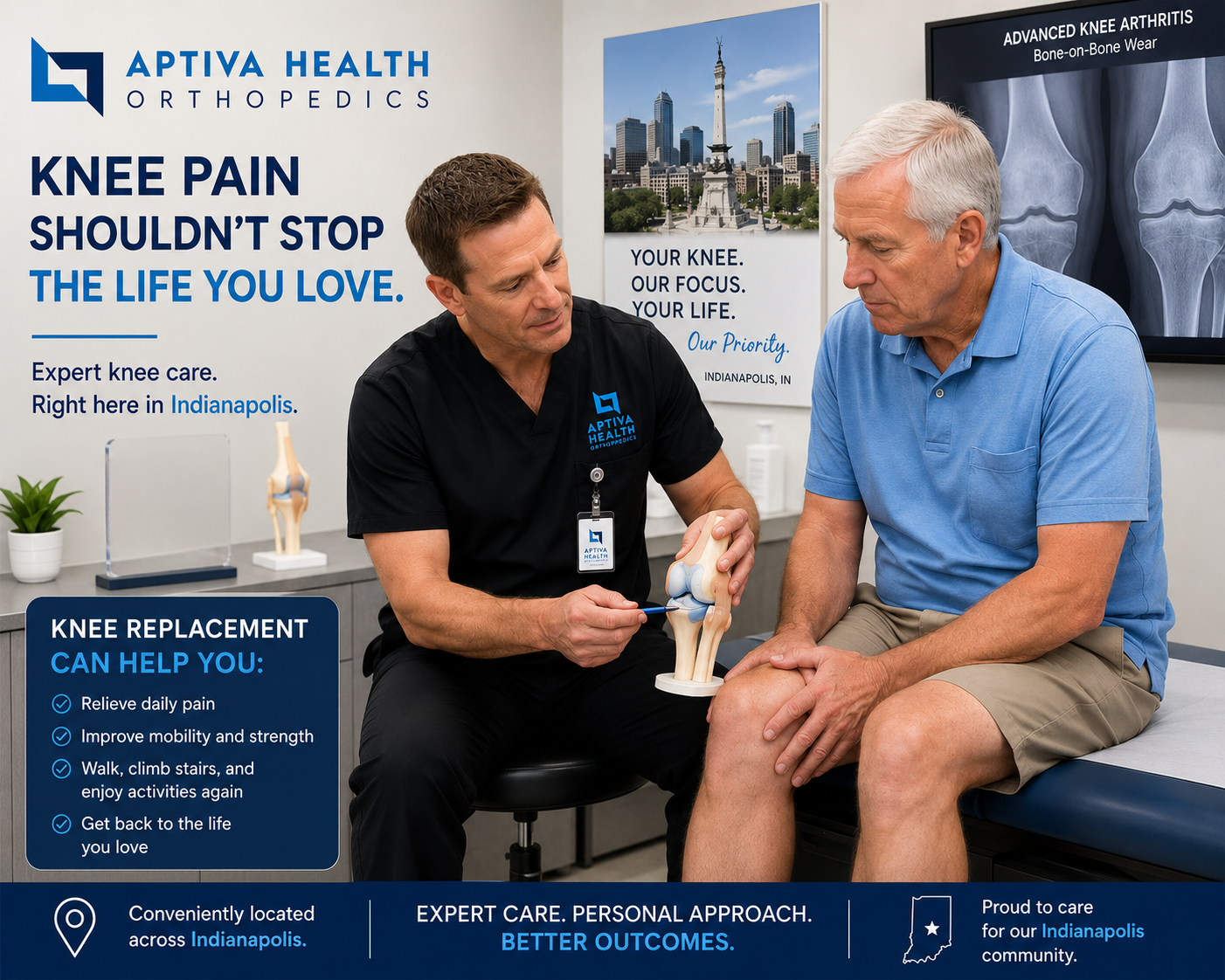
Knee Replacement Surgery in Indianapolis, IN
Aptiva Health provides comprehensive knee replacement care in Louisville — from the first evaluation through imaging, conservative treatment, surgery, and rehabilitation — anchored by board-certified orthopedic surgeons and a team of orthopedic advanced practice providers. We treat knee arthritis at every stage, prioritizing conservative care first and offering both partial and total knee replacement when joint replacement becomes the right answer. With on-site imaging, on-site physical therapy, and an in-house orthopedic team, the entire knee replacement pathway happens under one roof.
Medically reviewed by Jason May, MD and D. Philip Stickney, MD. Last reviewed: July 2026.
Schedule your appointment today!

What Is Knee Replacement Surgery?
Knee replacement surgery — also called knee arthroplasty — resurfaces a knee joint worn down by arthritis. When the smooth cartilage that caps the ends of the bones wears away, bone rubs against bone, producing pain, stiffness, and lost mobility. Knee replacement removes the damaged surfaces and replaces them with precisely fitted metal and plastic implant components that restore a smooth, gliding joint.
There are two main types:
Total knee replacement resurfaces all three compartments of the knee joint. It is the right choice when arthritis is widespread across the knee.
Partial (unicompartmental) knee replacement resurfaces only the single compartment damaged by arthritis, preserving the healthy ligaments and cartilage. It is an option for select patients whose arthritis is confined to one part of the knee.
Both procedures are performed using minimally invasive techniques whenever the anatomy allows — approaches that aim for smaller incisions, less tissue disruption, and a faster return to normal activity.
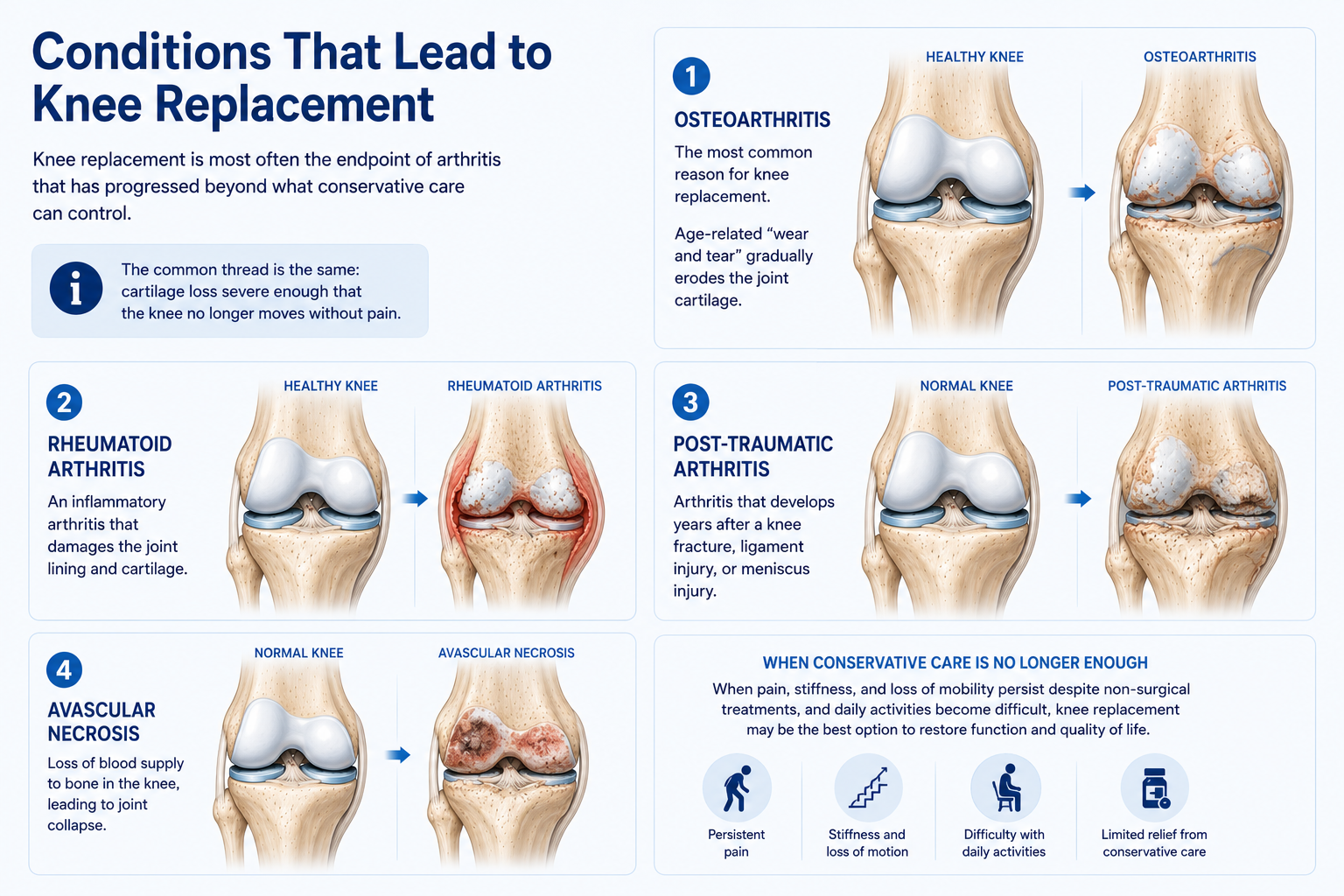
Conditions That Lead to Knee Replacement
Knee replacement is most often the endpoint of arthritis that has progressed beyond what conservative care can control:
Osteoarthritis — the most common reason for knee replacement. Age-related "wear and tear" gradually erodes the joint cartilage.
Rheumatoid arthritis — an inflammatory arthritis that damages the joint lining and cartilage.
Post-traumatic arthritis — arthritis that develops years after a knee fracture, ligament injury, or meniscus injury.
Avascular necrosis — loss of blood supply to bone in the knee, leading to joint collapse.
The common thread is the same: cartilage loss severe enough that the knee no longer moves without pain.
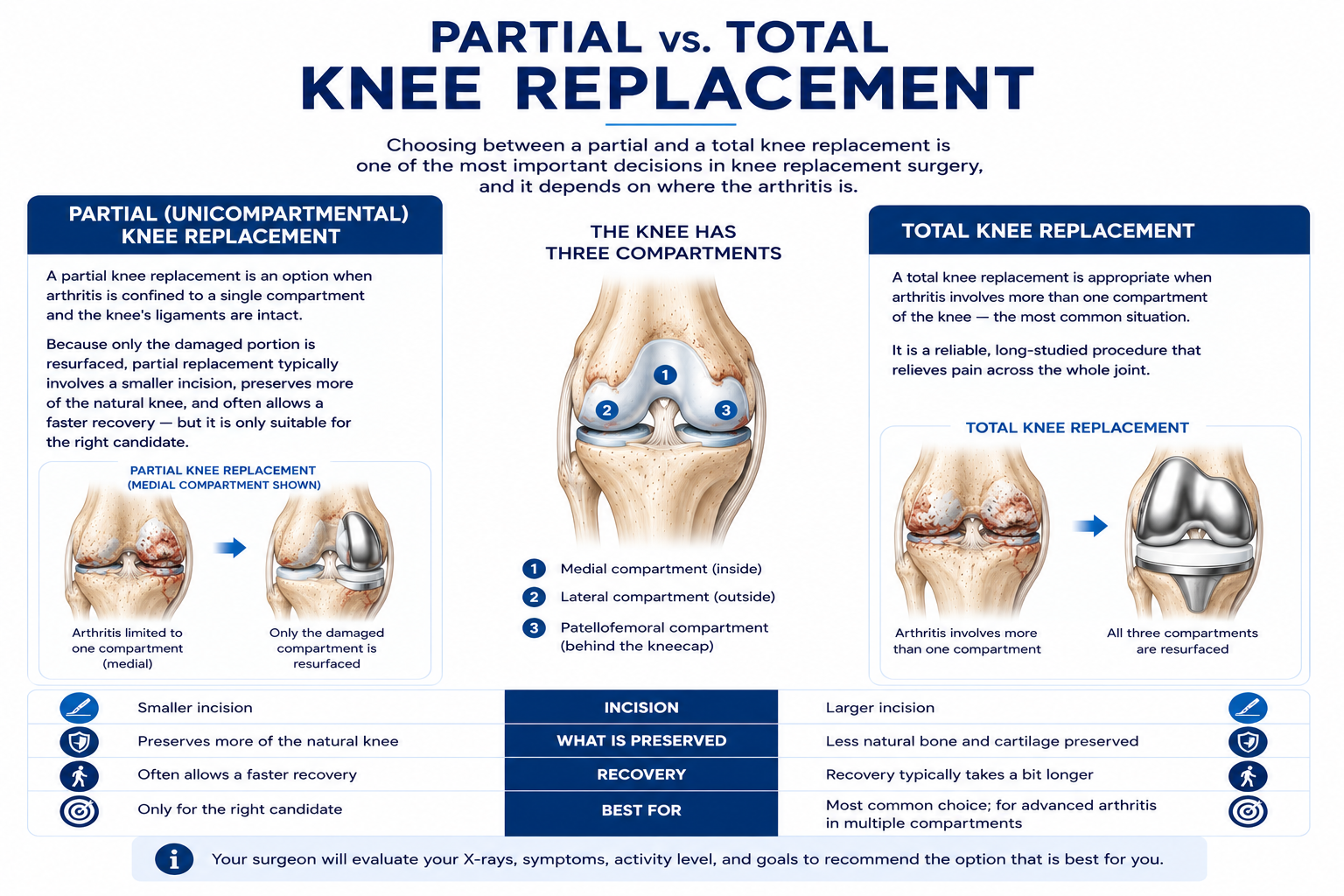
Partial vs. Total Knee Replacement
Choosing between a partial and a total knee replacement is one of the most important decisions in knee replacement surgery, and it depends on where the arthritis is.
A total knee replacement is appropriate when arthritis involves more than one compartment of the knee — the most common situation. It is a reliable, long-studied procedure that relieves pain across the whole joint.
A partial knee replacement is an option when arthritis is confined to a single compartment and the knee's ligaments are intact. Because only the damaged portion is resurfaced, partial replacement typically involves a smaller incision, preserves more of the natural knee, and often allows a faster recovery — but it is only suitable for the right candidate.
At Aptiva Health, your surgeon reviews your X-rays, MRI, and physical exam to recommend the procedure that fits your knee, rather than applying a one-size-fits-all approach.
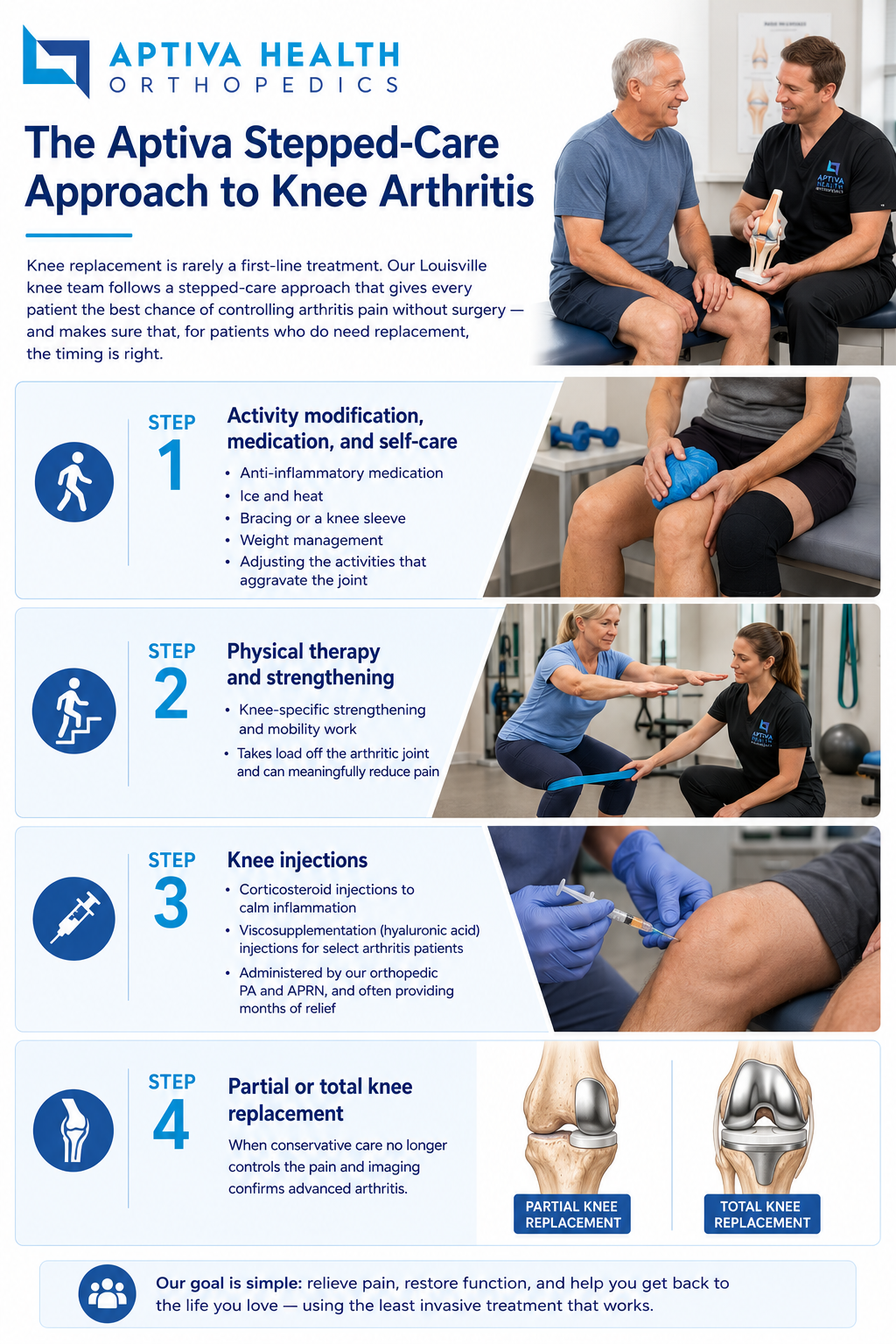
The Aptiva Stepped-Care Approach to Knee Arthritis
Knee replacement is rarely a first-line treatment. Our Louisville knee team follows a stepped-care approach that gives every patient the best chance of controlling arthritis pain without surgery — and makes sure that, for patients who do need replacement, the timing is right.
Step 1 — Activity modification, medication, and self-care. Anti-inflammatory medication, ice and heat, bracing or a knee sleeve, weight management, and adjusting the activities that aggravate the joint.
Step 2 — Physical therapy and strengthening. Knee-specific strengthening and mobility work that takes load off the arthritic joint and can meaningfully reduce pain.
Step 3 — Knee injections. Corticosteroid injections to calm inflammation, and viscosupplementation (hyaluronic acid) injections for select arthritis patients — administered by our orthopedic PA and APRN, and often providing months of relief.
Step 4 — Partial or total knee replacement when conservative care no longer controls the pain and imaging confirms advanced arthritis.
Many patients control their symptoms at Step 2 or Step 3 for years. For the patients who do reach Step 4, the stepped-care evaluation confirms that replacement is the right answer.
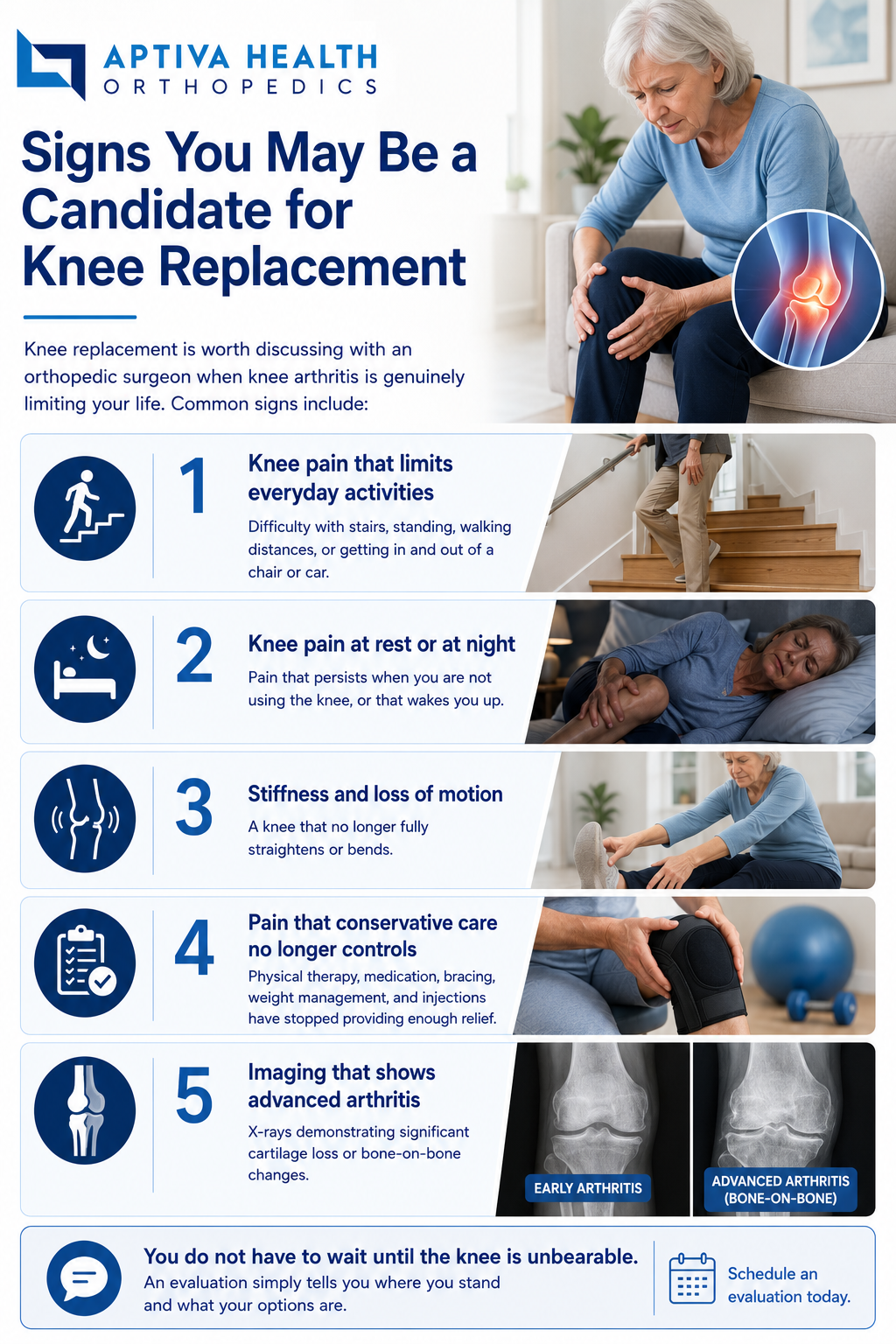
Signs You May Be a Candidate for Knee Replacement
Knee replacement is worth discussing with an orthopedic surgeon when knee arthritis is genuinely limiting your life. Common signs include:
Knee pain that limits everyday activities — difficulty with stairs, standing, walking distances, or getting in and out of a chair or car.
Knee pain at rest or at night — pain that persists when you are not using the knee, or that wakes you up.
Stiffness and loss of motion — a knee that no longer fully straightens or bends.
Pain that conservative care no longer controls — physical therapy, medication, bracing, weight management, and injections have stopped providing enough relief.
Imaging that shows advanced arthritis — X-rays demonstrating significant cartilage loss or bone-on-bone changes.
You do not have to wait until the knee is unbearable. An evaluation simply tells you where you stand and what your options are.
Schedule your appointment today!
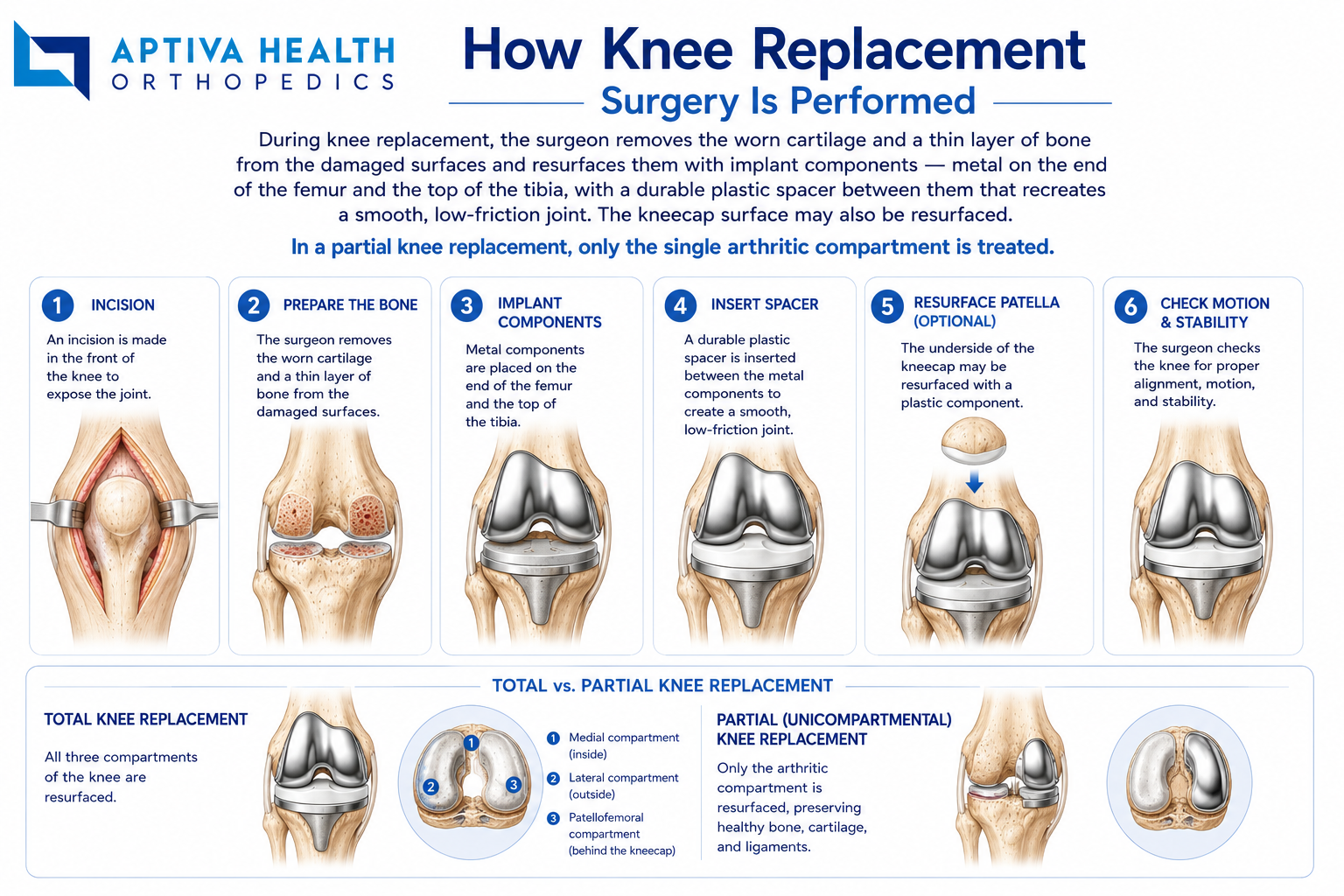
How Knee Replacement Surgery Is Performed
During knee replacement, the surgeon removes the worn cartilage and a thin layer of bone from the damaged surfaces and resurfaces them with implant components — metal on the end of the femur and the top of the tibia, with a durable plastic spacer between them that recreates a smooth, low-friction joint. The kneecap surface may also be resurfaced. In a partial knee replacement, only the single arthritic compartment is treated.
Most knee replacements are performed on an outpatient or short-stay basis at the appropriate surgical center. Aptiva Health uses minimally invasive techniques whenever the anatomy allows.
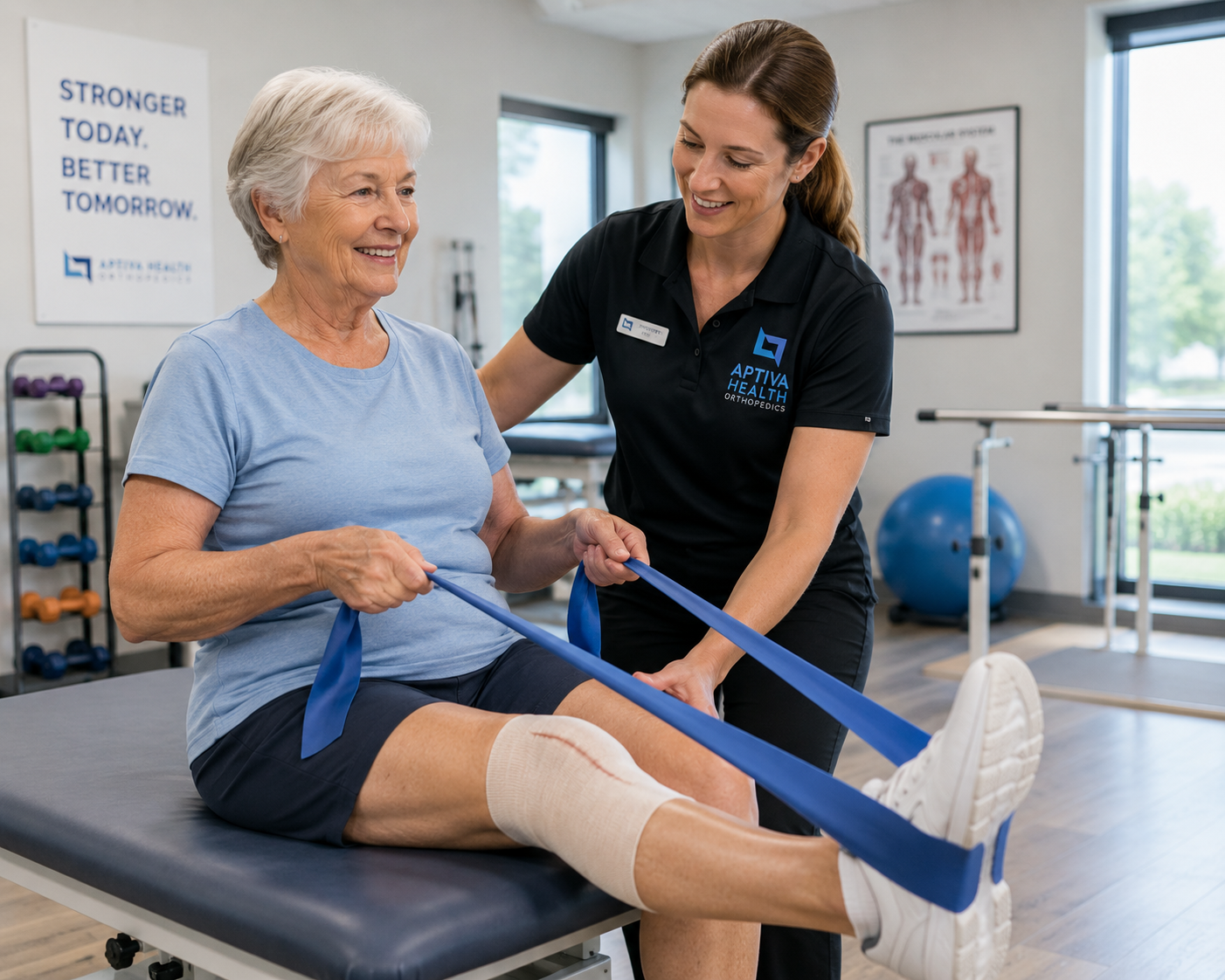
Recovery After Knee Replacement
Recovery from knee replacement is an active process, and physical therapy is central to the result.
Most patients are walking with assistance the same day or the day after surgery. Over the following weeks, patients progress off a walker and then a cane, regain motion, and rebuild strength. Substantial recovery takes about three months, with strength, endurance, and motion continuing to improve for up to a year. Partial knee replacement generally recovers faster than total knee replacement.
Aptiva Health coordinates post-operative physical therapy in-house, so the surgical team and the therapy team share the same plan — which keeps rehabilitation on track and recovery moving.
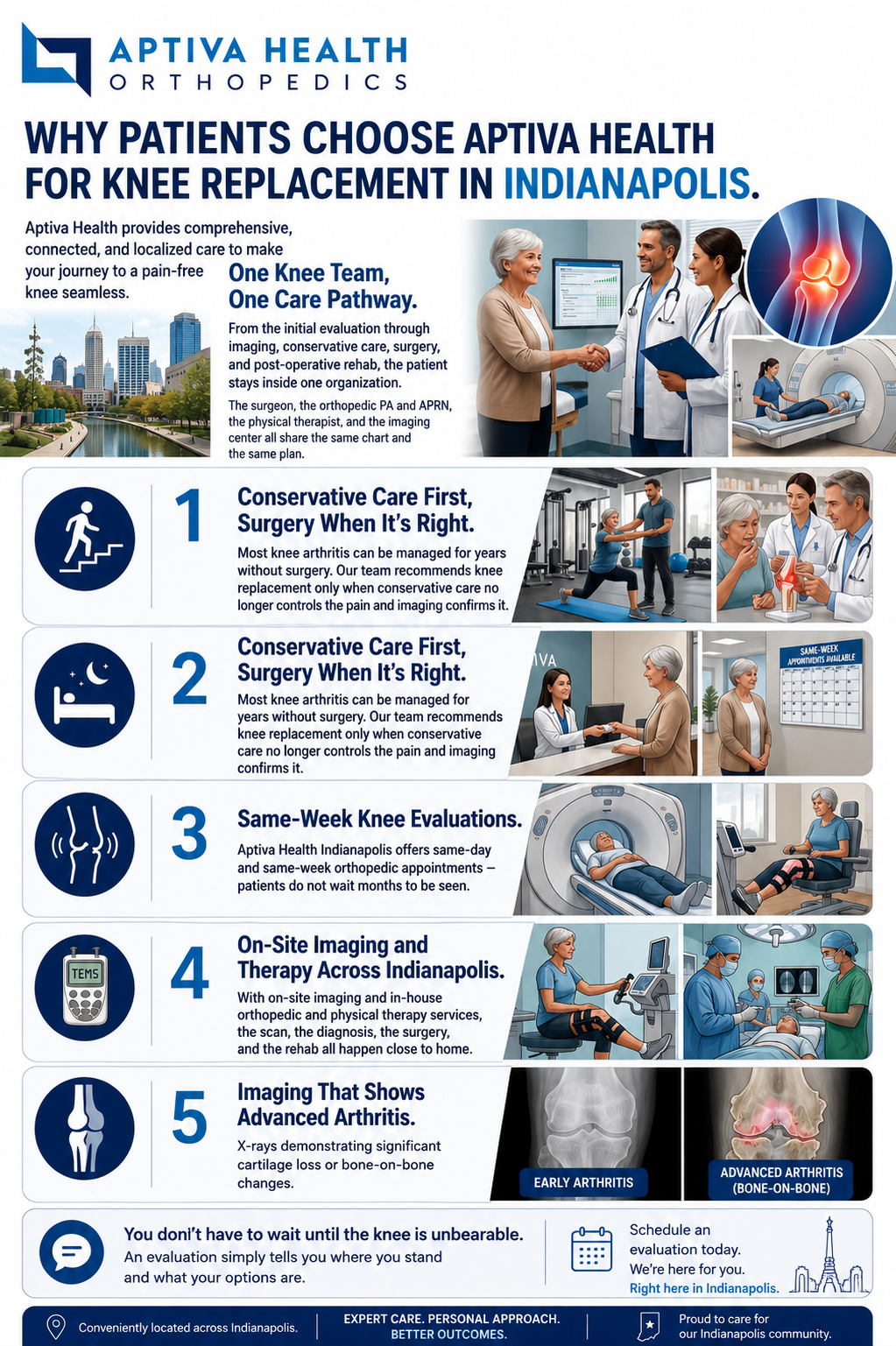
Why Patients Choose Aptiva Health for Knee Replacement in Indianapolis
One knee team, one care pathway. From the initial evaluation through imaging, conservative care, surgery, and post-operative rehab, the patient stays inside one organization. The surgeon, the orthopedic PA and APRN, the physical therapist, and the imaging center all share the same chart and the same plan.
Conservative care first, surgery when it's right. Most knee arthritis can be managed for years without surgery. Our team recommends knee replacement only when conservative care no longer controls the pain and imaging confirms it.
Same-week knee evaluations. Aptiva Health Louisville offers same-day and same-week orthopedic appointments — patients do not wait months to be seen.
On-site imaging and therapy across Louisville. With on-site imaging and in-house orthopedic and physical therapy services, the scan, the diagnosis, the surgery, and the rehab all happen close to home.

When to See a Doctor - Call Now!
You should be evaluated by an orthopedic specialist if you have:
Knee pain that has limited your daily activities for months
Knee pain at rest or at night
Stiffness that keeps the knee from fully straightening or bending
Knee arthritis that conservative care no longer controls
A prior knee surgery or injury and a knee that has gradually worsened
For non-emergency knee evaluation, Aptiva Health Indianapolis offers same-week appointments — patients do not wait months to be seen.
Meet the Indianapolis Knee Replacement Team

Jason May, MD | Orthopedic Surgeon
Dr. Jason May is a board-certified emergency medicine physician and the lead clinician at Aptiva Health's Indianapolis clinic on Gray Road. With more than two decades of hospital-based emergency experience and prior service as Chief of Staff at Columbus Regional Hospital, Dr. May now quarterbacks Aptiva's outpatient injury care model for patients across Central Indiana.
Specialty: Emergency Medicine with extensive orthopedic and trauma care experience
Title:Orthopedic Surgeon / Emergency Medicine Physician
Residency: Indiana University School of Medicine
Medical School: University of Kentucky College of Medicine
Locations: Indianapolis
Accepting New Patients: Yes

D. Philip Stickney, MD | Orthopedic Surgeon
Dr. D. Philip Stickney, a board -certified orthopedic surgeon, has been providing general orthopedic care for over 25 years. He received his medical degree from Case Western Reserve University in Cleveland, Ohio with orthopedic surgery training at Mt. Sinai in Cleveland and Akron General Medical Center in Akron, Ohio. He treats a variety of conditions from arthritis to sports medicine and occupational injuries. As former team physician for Hiram College in Ohio, he has a breadth of experience treating non-operative and operative conditions including:
Specialty: General Orthopedic Surgery
Title: Orthopedic Surgeon, Aptiva Health
Residency: Mt. Sinai Medical Center, Cleveland, Ohio and Akron General Medical Center, Akron, Ohio
Medical School: Case Western Reserve: University School of Medicine, Cleveland, Ohio
Years in Practice: 25+
Locations: Northern Kentucky (Hebron) & Indianapolis
Accepting New Patients: Yes

Robert Williams, MD | Medical Director, General Medicine & Sports Medicine Physician
Dr. Robert Williams is a board-certified Emergency Medicine physician and Medical Director at Aptiva Health, where he specializes in General Medicine, Sports Medicine, acute injury care, and concussion management. With extensive experience caring for patients in emergency medicine and urgent care settings, Dr. Williams is dedicated to providing timely, evidence-based treatment for injuries while helping patients return safely to work, sports, and everyday life.
Specialty: Emergency Medicine, General Medicine, Sports Medicine, Concussion Care
Title: Medical Director | General Medicine & Sports Medicine Physician
Residency: Emergency Medicine – University of Oklahoma Health Sciences Center (2012–2015)
Medical School: University of Kentucky College of Medicine (M.D., 2012)
Locations: Louisville, KY; Indianapolis, IN
Accepting New Patients: Yes

Bradley Stephenson, PA-C | Orthopedic Physician Assistant
Bradley Stephenson is a certified Physician Assistant dedicated to delivering high-quality, patient-centered healthcare. Known for his compassionate approach and strong focus on communication, Bradley strives to ensure every patient feels informed, respected, and cared for during each visit.
Specialty: Orthopedics & Sports Medicine
Title: Physician Assistant
Accepting New Patients: Yes

Bryan Davidson, PA-C, CAQ-OS | Orthopedic Physician Assistant - Aptiva Health
At Aptiva Health, Bryan Davidson, PA-C, CAQ-OS brings advanced orthopedic experience, surgical support expertise, and a compassionate approach to patient care. As a certified Physician Assistant with a Certificate of Added Qualifications in Orthopedic Surgery, Bryan is committed to helping patients feel informed, supported, and confident throughout their orthopedic care journey.
Specialty: Orthopedics & Sports Medicine
Title: Physician Assistant

Schedule a Knee Replacement Consultation in Indianapolis — Schedule Now
Address: 6801 Gray Road, Suite H · Indianapolis, IN 46237
Phone: 463-303-0501 Fax: (855) 859-0123
Hours: Monday–Friday, 8:00 AM – 5:00 PM
Workers' comp scheduling line: 1-844-999-3627
Directions: Located on the south side of Indianapolis, easily accessible from I-65 (Exit 103 Southport Rd), US-31 (East Street), and I-465. Approximately 10 minutes from downtown Greenwood and 15 minutes from downtown Indianapolis.
Insurance accepted: Most major medical insurance, Medicare, Medicare Advantage, most Kentucky Medicaid plans, workers' compensation, auto injury coverage (PIP and MedPay), and cash-pay.
Frequently Asked Questions About Knee Replacement in Indianapolis
How do I know if I need a knee replacement? Knee replacement is considered when knee arthritis causes pain and stiffness that limit everyday activities and has not improved with conservative care — physical therapy, anti-inflammatory medication, weight management, bracing, and injections. Common signs include knee pain at rest or at night, difficulty with stairs and walking distances, and X-rays showing advanced cartilage loss. Your Aptiva Health surgeon reviews your symptoms, exam, and imaging to determine whether replacement is the right step.
What is the difference between partial and total knee replacement? A total knee replacement resurfaces all three compartments of the knee joint. A partial, or unicompartmental, knee replacement resurfaces only the single compartment damaged by arthritis and preserves the healthy ligaments and cartilage. Partial knee replacement is an option for select patients whose arthritis is confined to one part of the knee, and it usually involves a smaller incision and a faster recovery. Your surgeon reviews your imaging and exam to recommend the option that fits your knee.
How long does a knee replacement last? Modern knee replacement implants are durable. Most last 15 to 20 years or more, and a large share continue to function well beyond 20 years. Longevity depends on factors such as activity level, body weight, and implant type. Your surgeon discusses what to expect based on your individual situation.
Am I too young for a knee replacement? Age alone does not decide whether knee replacement is appropriate. The decision is based on how much arthritis is limiting your life, how well conservative treatment has worked, and your imaging. Younger, active patients are sometimes candidates, and your surgeon weighs implant longevity against your current pain and function. Many younger patients first exhaust conservative care, and some are candidates for a partial knee replacement.
How long is recovery after knee replacement surgery? Most patients are walking with assistance the same day or the day after surgery. Substantial recovery takes about three months, with strength and motion continuing to improve for up to a year. Partial knee replacement generally recovers faster than total knee replacement. Aptiva Health coordinates post-operative physical therapy in-house, which keeps rehabilitation on schedule.
Is knee replacement an outpatient surgery? Many knee replacements today are performed on an outpatient or short-stay basis, meaning select patients go home the same day. Whether a particular patient is a candidate for outpatient surgery depends on their overall health, home support, and the procedure. Your Aptiva Health surgical team reviews this with you before surgery.
Can I avoid or delay a knee replacement? Often, yes. Many patients with knee arthritis manage their symptoms for years with conservative care: physical therapy and strengthening, weight management, anti-inflammatory medication, bracing, activity modification, and knee injections including corticosteroid and viscosupplementation. Aptiva Health's stepped-care approach is built around finding the least-invasive treatment that works, and surgery is recommended only when conservative care no longer controls the pain.
Who performs knee replacement surgery at Aptiva Health Indianapolis? Knee replacement at Aptiva Health Louisville is performed by board-certified orthopedic surgeons led by Dr. Jason May, Orthopedic Surgery & Sports Medicine. Conservative care, knee injections, and pre- and post-operative management are provided by orthopedic physician assistants Bradley Stephenson, PA-C and Bryan Davidson, PA-C, who work directly with the surgical team.
Does Medicare and insurance cover knee replacement? Knee replacement is covered by most major medical insurance plans, Medicare, Medicare Advantage, and Indiana Medicaid plans when it is medically necessary. Aptiva Health verifies benefits and handles authorization before surgery so patients understand their coverage in advance.
What are the risks of knee replacement surgery? Knee replacement is a common and highly successful surgery, but like any operation it carries risks, which can include infection, blood clots, stiffness, and, over the long term, implant wear. Aptiva Health reviews your individual risk factors before surgery and uses established protocols to minimize complications. Your surgeon discusses the specific risks and benefits for your situation.
Can I get a second opinion before knee replacement surgery? Yes. Many patients come to Aptiva Health for a second opinion after being told they need a knee replacement elsewhere. Bringing prior imaging and physician notes makes the consultation most useful. Our surgeons review the imaging, perform an independent exam, and give a clear recommendation — sometimes confirming the surgical plan, sometimes identifying conservative options that have not yet been tried.
How quickly can I be seen for a knee replacement consultation in Indianapolis? Aptiva Health Indianapolis offers same-week orthopedic appointments. New patients with imaging in hand can often be evaluated within the same week of calling, and on-site imaging means the X-ray or MRI, the diagnosis, and the surgical plan can happen within one organization.