

Shoulder Surgery in Indianapolis, IN

Aptiva Health provides comprehensive shoulder care in Louisville — from the first evaluation through imaging, conservative treatment, surgery, and rehabilitation — anchored by board-certified orthopedic surgeons Jason May, MD and D. Philip Stickney, MD and a team of orthopedic advanced practice providers. We treat the full range of shoulder conditions, prioritizing conservative care first — physical therapy, anti-inflammatory medication, and targeted injections — and offering minimally invasive surgical options including shoulder arthroscopy, rotator cuff repair, labral repair, and total and reverse shoulder replacement when surgery becomes the right answer. With on-site MRI, on-site physical therapy, and an in-house orthopedic and sports medicine team, the entire shoulder care pathway happens under one roof.
Medically reviewed by JJason May, MD and D. Philip Stickney, MD. Last reviewed: July 2026.
Schedule your appointment today!
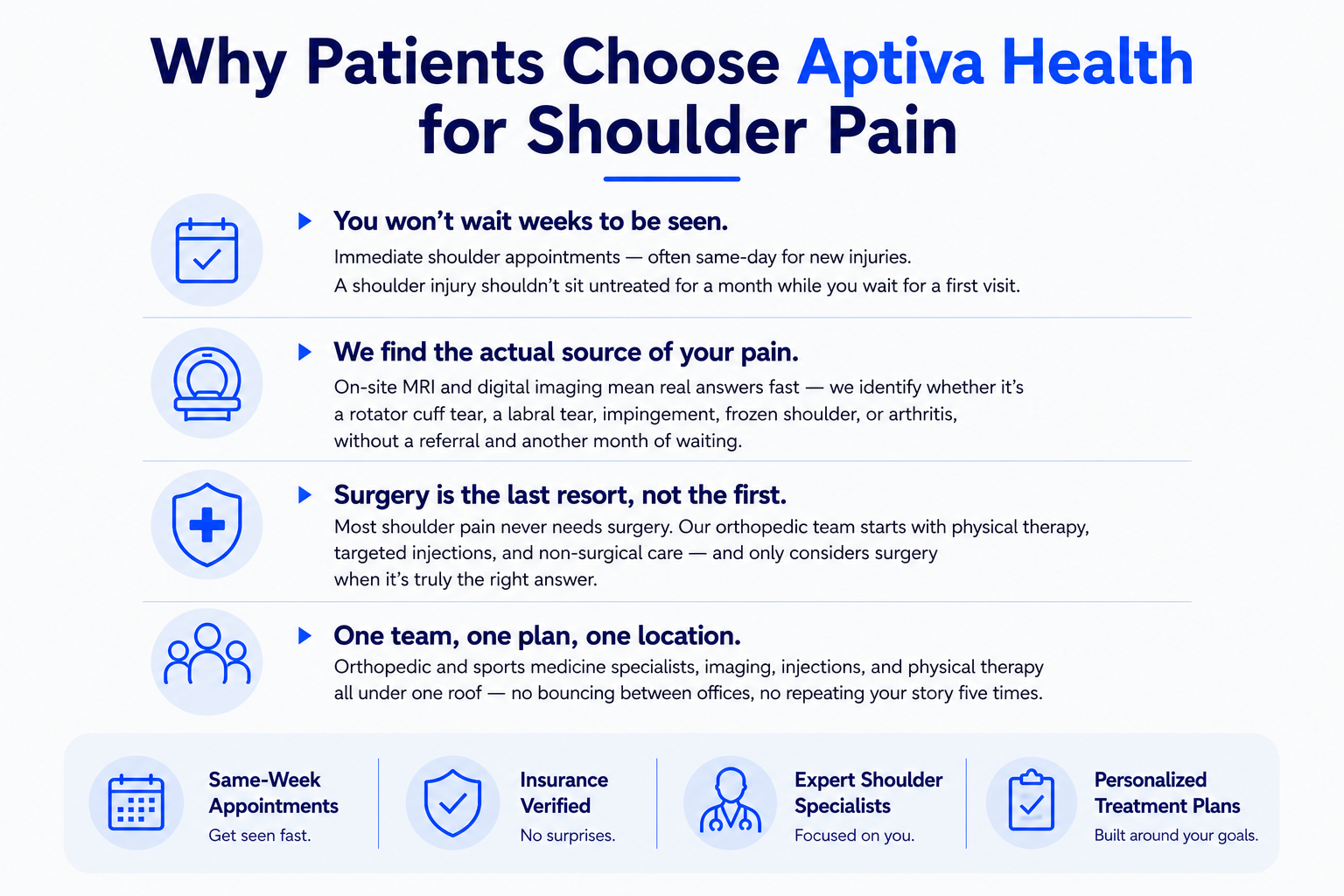
Why Patients Choose Aptiva Health for Shoulder Care in Indianapolis
One Shoulder Team, One Care Pathway
Most shoulder patients in Indianapolis end up coordinating care across three or four practices: a primary care office for the referral, a separate imaging center for the MRI, an orthopedic specialist booked weeks out, an injection appointment somewhere else, and a separate physical therapy practice for rehab. Each handoff is another week of delay, another insurance authorization, another appointment to drive to.
Aptiva Health is structured differently. From the initial evaluation through MRI, conservative care, injections, surgery, and post-operative rehab, the patient stays inside one organization. The surgeon, the orthopedic PA and APRN, the physical therapist, and the imaging center all share the same chart and the same plan.
Conservative Care First, Surgery When It's Right
Most shoulder problems do not require surgery. Our shoulder team starts every patient with the least-invasive treatment that is likely to work — physical therapy, anti-inflammatory medication, activity modification, and targeted shoulder injections. We measure progress, image when needed, and only recommend surgery when the patient's symptoms and imaging both indicate it is the right step.
When surgery is the right answer, we use minimally invasive techniques whenever the anatomy allows — smaller incisions, less tissue disruption, less pain, and a faster return to normal activity.
Same-Week Shoulder Evaluations
Aptiva Health Louisville offers same-day and same-week orthopedic appointments. Patients do not wait months for a first visit. New patients with imaging in hand can often be evaluated within 7 days of calling, and acute shoulder injuries can be seen right away through our Immediate Injury Care walk-in clinic, including on-site X-ray.
On-Site Imaging and Therapy in Indianapolis
Aptiva Health sees shoulder patients with on-site MRI imaging and Aptiva orthopedic, sports medicine, interventional pain, and physical therapy services available close to home. No separate trip to an outside imaging center, no long wait for the scan.
Schedule your appointment today!
Meet the Indianapolis Shoulder Team

Jason May, MD | Orthopedic Surgeon
Dr. Jason May is a board-certified emergency medicine physician and the lead clinician at Aptiva Health's Indianapolis clinic on Gray Road. With more than two decades of hospital-based emergency experience and prior service as Chief of Staff at Columbus Regional Hospital, Dr. May now quarterbacks Aptiva's outpatient injury care model for patients across Central Indiana.
Specialty: Emergency Medicine with extensive orthopedic and trauma care experience
Title:Orthopedic Surgeon / Emergency Medicine Physician
Residency: Indiana University School of Medicine
Medical School: University of Kentucky College of Medicine
Locations: Indianapolis
Accepting New Patients: Yes

D. Philip Stickney, MD | Orthopedic Surgeon
Dr. D. Philip Stickney, a board -certified orthopedic surgeon, has been providing general orthopedic care for over 25 years. He received his medical degree from Case Western Reserve University in Cleveland, Ohio with orthopedic surgery training at Mt. Sinai in Cleveland and Akron General Medical Center in Akron, Ohio. He treats a variety of conditions from arthritis to sports medicine and occupational injuries. As former team physician for Hiram College in Ohio, he has a breadth of experience treating non-operative and operative conditions including:
Specialty: General Orthopedic Surgery
Title: Orthopedic Surgeon, Aptiva Health
Residency: Mt. Sinai Medical Center, Cleveland, Ohio and Akron General Medical Center, Akron, Ohio
Medical School: Case Western Reserve: University School of Medicine, Cleveland, Ohio
Years in Practice: 25+
Locations: Northern Kentucky (Hebron) & Indianapolis
Accepting New Patients: Yes
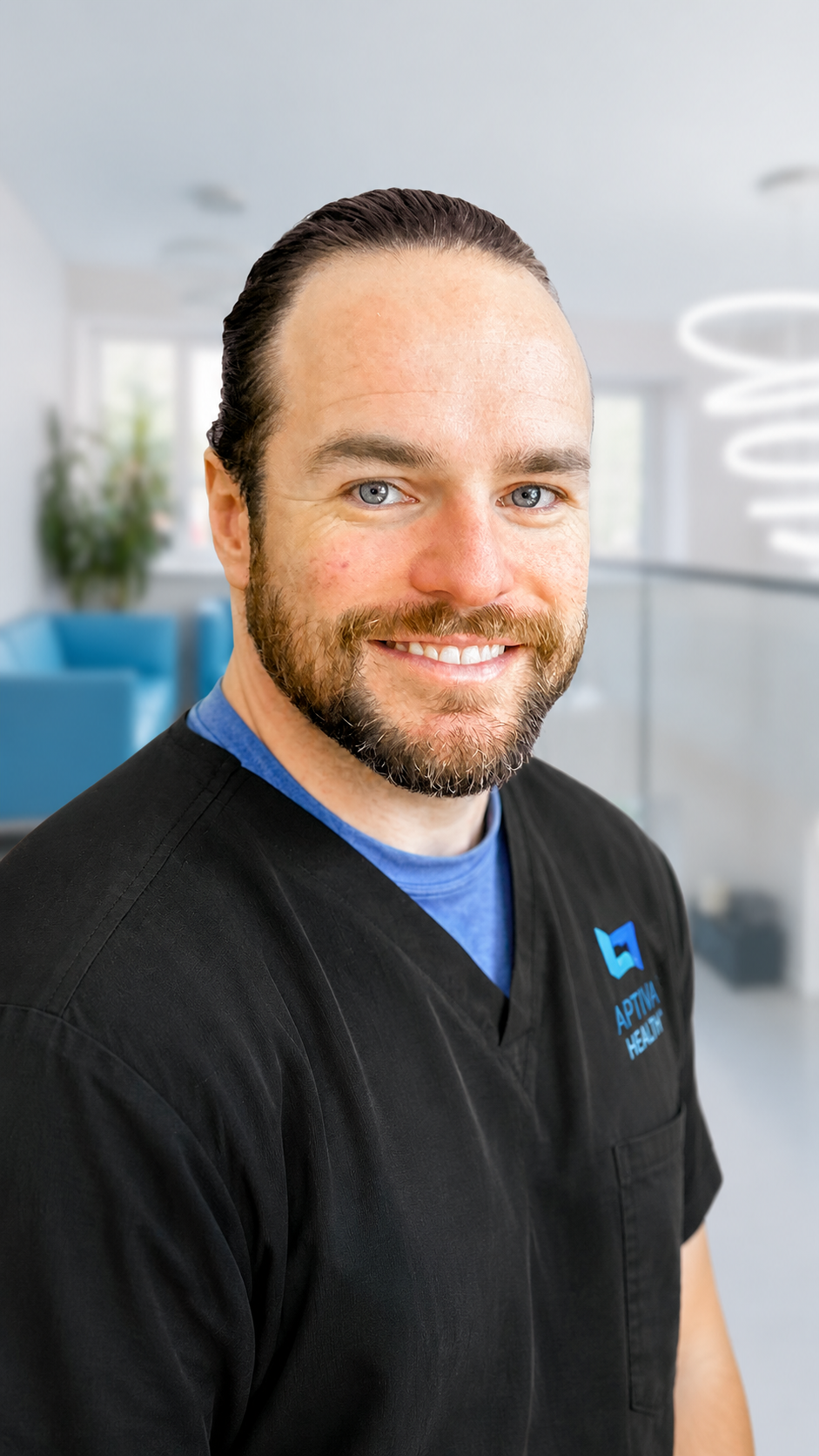
Robert Williams, MD | Medical Director, General Medicine & Sports Medicine Physician
Dr. Robert Williams is a board-certified Emergency Medicine physician and Medical Director at Aptiva Health, where he specializes in General Medicine, Sports Medicine, acute injury care, and concussion management. With extensive experience caring for patients in emergency medicine and urgent care settings, Dr. Williams is dedicated to providing timely, evidence-based treatment for injuries while helping patients return safely to work, sports, and everyday life.
Specialty: Emergency Medicine, General Medicine, Sports Medicine, Concussion Care
Title: Medical Director | General Medicine & Sports Medicine Physician
Residency: Emergency Medicine – University of Oklahoma Health Sciences Center (2012–2015)
Medical School: University of Kentucky College of Medicine (M.D., 2012)
Locations: Louisville, KY; Indianapolis, IN
Accepting New Patients: Yes

Bradley Stephenson, PA-C | Orthopedic Physician Assistant
Bradley Stephenson is a certified Physician Assistant dedicated to delivering high-quality, patient-centered healthcare. Known for his compassionate approach and strong focus on communication, Bradley strives to ensure every patient feels informed, respected, and cared for during each visit.
Specialty: Orthopedics & Sports Medicine
Title: Physician Assistant
Accepting New Patients: Yes

Bryan Davidson, PA-C, CAQ-OS | Orthopedic Physician Assistant - Aptiva Health
At Aptiva Health, Bryan Davidson, PA-C, CAQ-OS brings advanced orthopedic experience, surgical support expertise, and a compassionate approach to patient care. As a certified Physician Assistant with a Certificate of Added Qualifications in Orthopedic Surgery, Bryan is committed to helping patients feel informed, supported, and confident throughout their orthopedic care journey.
Specialty: Orthopedics & Sports Medicine
Title: Physician Assistant
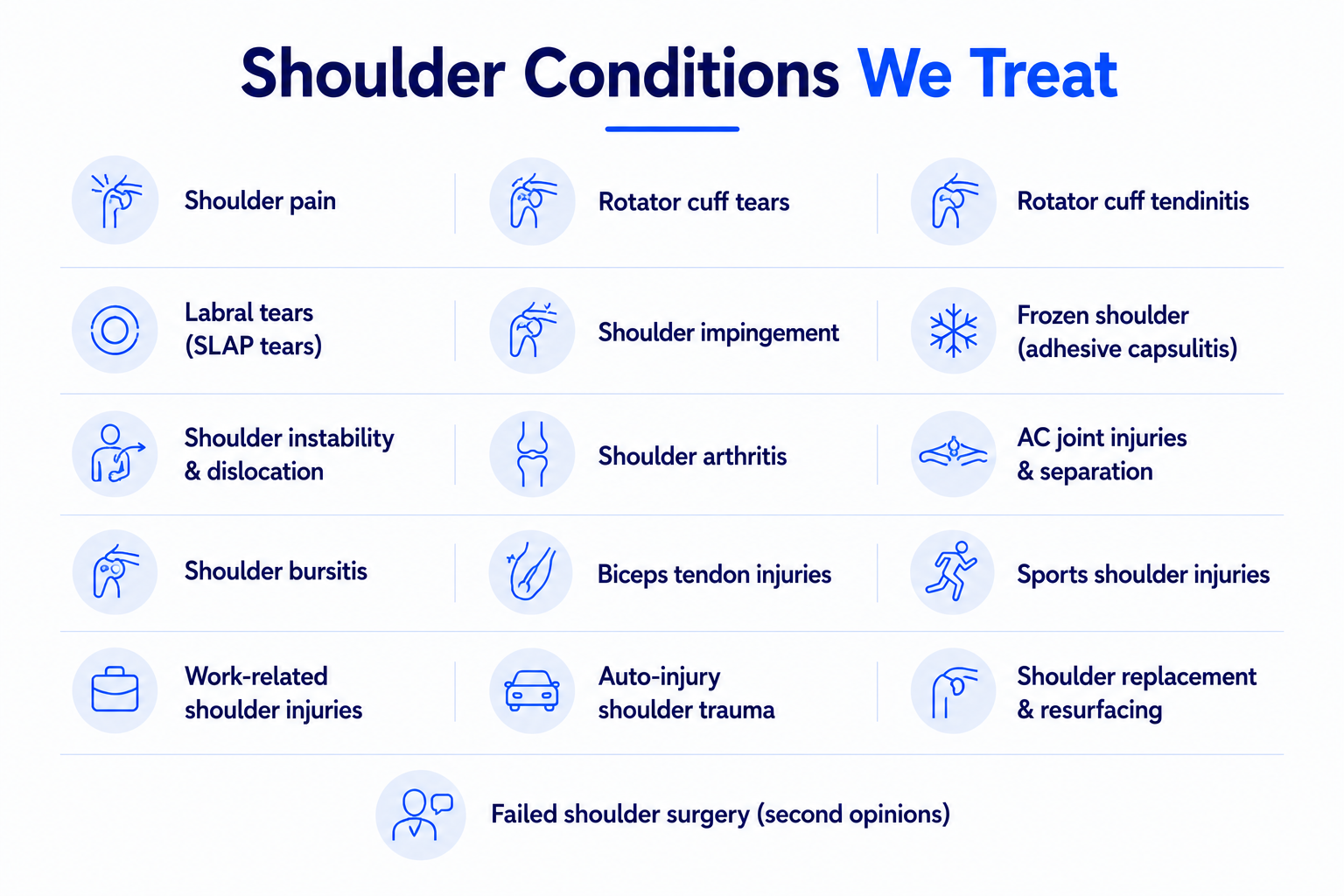
Shoulder Conditions We Treat in Indianapolis
Our Indianapolis shoulder team evaluates and treats the full range of shoulder injuries and degenerative conditions:
Rotator cuff tears — partial or full-thickness tears of the rotator cuff tendons, from injury or age-related wear.
Labral tears and SLAP tears — tears of the cartilage rim that deepens the shoulder socket, including tears at the top of the labrum.
Shoulder impingement and rotator cuff tendinitis — pinching and inflammation of the rotator cuff tendons beneath the shoulder blade.
Shoulder instability and dislocation — a shoulder that slips partially or fully out of the socket, including recurrent dislocations.
Shoulder arthritis — cartilage wear in the shoulder joint that produces pain, stiffness, and reduced motion.
Frozen shoulder (adhesive capsulitis) — progressive stiffness and pain that limits shoulder motion.
AC joint injuries — separations and arthritis of the acromioclavicular joint at the top of the shoulder.
Biceps tendon injuries — inflammation, partial tears, and ruptures of the long head of the biceps tendon.
Shoulder bursitis — inflammation of the fluid-filled sac that cushions the rotator cuff.
Shoulder fractures — fractures of the upper arm bone, collarbone, and shoulder blade.
Work-related and auto-accident shoulder injuries — evaluated and treated under workers' compensation and auto injury coverage.

Shoulder Surgeries Performed in Indianapolis
When conservative care has not provided sufficient relief, our Indianapolis shoulder surgeons perform the full range of minimally invasive and joint replacement procedures. Most are performed on an outpatient or short-stay basis at the appropriate surgical center.
Arthroscopic (minimally invasive) shoulder surgery
Shoulder arthroscopy — a small camera and instruments inserted through tiny incisions to diagnose and treat problems inside the shoulder.
Rotator cuff repair — reattaching torn rotator cuff tendons to the bone to restore strength and motion.
Labral and SLAP repair — repairing a torn labrum, including tears at the top of the socket.
Shoulder stabilization (Bankart repair) — tightening and repairing the structures that hold the shoulder in the socket to stop recurrent dislocation.
Subacromial decompression — removing inflamed tissue and bone to relieve rotator cuff impingement.
Biceps tenodesis — repairing or re-anchoring a damaged biceps tendon.
AC joint surgery — treating arthritis or separation of the AC joint at the top of the shoulder.
Shoulder replacement surgery
Total shoulder replacement — resurfacing an arthritic shoulder joint while keeping its natural ball-and-socket orientation, used when the rotator cuff is intact.
Reverse total shoulder replacement — reversing the ball-and-socket positions so other muscles can power the arm, used when the rotator cuff is torn or no longer functional.
Non-surgical shoulder procedures
Many shoulder patients avoid surgery entirely with conservative treatment delivered by our orthopedic PA and APRN:
Shoulder injections — including corticosteroid injections to reduce inflammation and pain.
PRP injections — platelet-rich plasma and regenerative injections for select patients.
Physical therapy — to rebuild shoulder strength, motion, and stability.
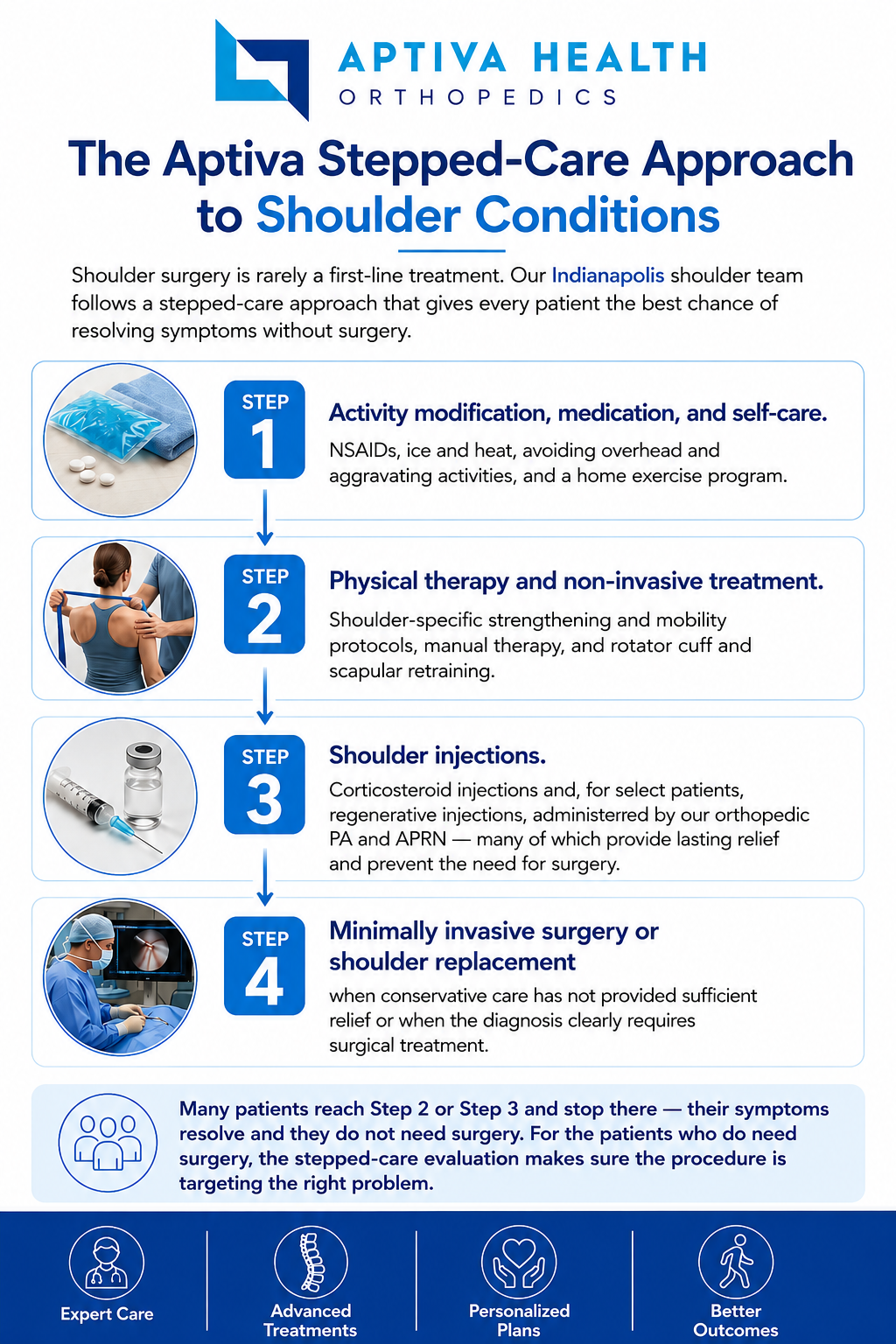
The Aptiva Stepped-Care Approach to Shoulder Conditions
Shoulder surgery is rarely a first-line treatment. Our Indianapolis shoulder team follows a stepped-care approach that gives every patient the best chance of resolving symptoms without surgery.
Step 1 — Activity modification, medication, and self-care. NSAIDs, ice and heat, avoiding overhead and aggravating activities, and a home exercise program.
Step 2 — Physical therapy and non-invasive treatment. Shoulder-specific strengthening and mobility protocols, manual therapy, and rotator cuff and scapular retraining.
Step 3 — Shoulder injections. Corticosteroid injections and, for select patients, regenerative injections, administered by our orthopedic PA and APRN — many of which provide lasting relief and prevent the need for surgery.
Step 4 — Minimally invasive surgery or shoulder replacement when conservative care has not provided sufficient relief or when the diagnosis clearly requires surgical treatment.
Many patients reach Step 2 or Step 3 and stop there — their symptoms resolve and they do not need surgery. For the patients who do need surgery, the stepped-care evaluation makes sure the procedure is targeting the right problem.
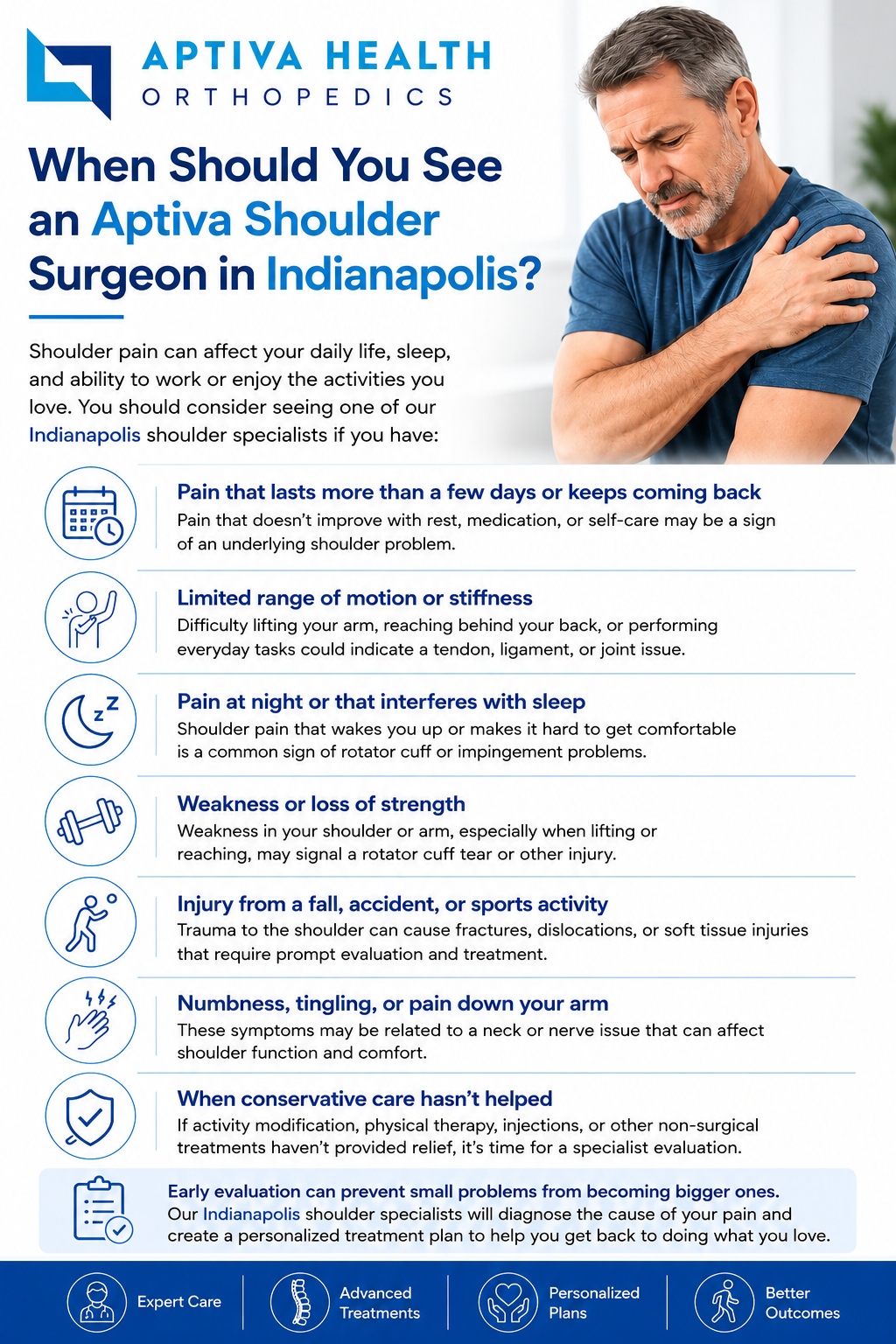
When Should You See an Aptiva Shoulder Surgeon in Indianapolis?
Most shoulder pain comes on gradually and resolves with conservative care. Certain patterns warrant prompt evaluation by an orthopedic specialist:
Shoulder pain that has not improved after 4–6 weeks of rest, activity modification, over-the-counter anti-inflammatories, and basic strengthening.
Weakness lifting or reaching — difficulty raising the arm overhead or out to the side.
Shoulder pain that worsens at night or wakes you up, or that makes it hard to sleep on that side.
A shoulder that slips, catches, or feels unstable.
Significant loss of motion — a shoulder that is becoming progressively stiffer.
A shoulder injury from sports, a fall, or a work or auto accident.
A prior shoulder surgery that did not provide the relief expected.
Get to an emergency room or urgent care immediately if you experience: an obvious shoulder deformity after an injury, a shoulder that is locked or clearly dislocated, inability to move the arm after trauma, or numbness and loss of circulation in the arm or hand. These can indicate a fracture, dislocation, or nerve or vascular injury.
For non-emergency shoulder evaluation, Aptiva Health Indianapolis offers same-day and same-week appointments — patients do not wait months to be seen.

Schedule a Shoulder Consultation in Indianapolis — Schedule Now
Address: 6801 Gray Road, Suite H · Indianapolis, IN 46237
Phone: 463-303-0501 Fax: (855) 859-0123
Hours: Monday–Friday, 8:00 AM – 5:00 PM
Workers' comp scheduling line: 1-844-999-3627
Directions: Located on the south side of Indianapolis, easily accessible from I-65 (Exit 103 Southport Rd), US-31 (East Street), and I-465. Approximately 10 minutes from downtown Greenwood and 15 minutes from downtown Indianapolis.
Insurance accepted: Most major medical insurance, Medicare, Medicare Advantage, most Kentucky Medicaid plans, workers' compensation, auto injury coverage (PIP and MedPay), and cash-pay.
Frequently Asked Questions About Shoulder Surgery in Indianapolis
Who are the shoulder surgeons at Aptiva Health Indianapolis?
Aptiva Health Indianapolis’ shoulder surgery is performed by board-certified orthopedic surgeons Jason May, MD and D. Philip Stickney, MD. Conservative care, shoulder injections, and pre- and post-operative management are provided by orthopedic physician assistants Bradley Stephenson, PA-C and Bryan Davidson, PA-C, who work directly with the surgical team.
Where can I see a shoulder surgeon in Indianapolis?
Aptiva Health Indianapolis sees shoulder patients at 6801 Gray Road, Suite H, Indianapolis, IN 46237. On-site MRI imaging is available so the scan, diagnosis, and treatment plan can happen within one organization.
Do I need shoulder surgery?
Most shoulder problems do not require surgery. At Aptiva Health Indianapolis, we start every patient with conservative care — physical therapy, anti-inflammatory medication, activity modification, and targeted injections when appropriate — and only recommend surgery when symptoms and imaging both clearly indicate it. Many patients resolve their symptoms without an operation.
What is the difference between a total and reverse shoulder replacement?
A total shoulder replacement resurfaces the shoulder joint while keeping its natural ball-and-socket orientation, and is used when the rotator cuff is still intact. A reverse total shoulder replacement switches the positions of the ball and socket, which lets other muscles power the arm when the rotator cuff is torn or no longer functional. Your Aptiva Health surgeon reviews your imaging and exam to recommend the option that fits your shoulder.
What shoulder conditions does Aptiva Health Indianapolis treat?
Aptiva Health Indianapolis treats the full range of shoulder conditions, including rotator cuff tears, labral and SLAP tears, shoulder impingement, shoulder instability and dislocation, shoulder arthritis, frozen shoulder, AC joint injuries, biceps tendon injuries, shoulder bursitis, and work-related and auto-accident shoulder injuries.
How long is recovery after shoulder surgery?
Recovery depends on the procedure. Minor arthroscopic procedures such as subacromial decompression often allow a return to non-strenuous activity within a few weeks. Rotator cuff repair and labral repair require a sling and a staged rehabilitation program, with a return to full activity over roughly four to six months. Total and reverse shoulder replacement patients typically progress over about three months, with continued gains for up to a year. Aptiva Health coordinates post-operative physical therapy in-house, which speeds recovery.
Can I avoid shoulder surgery?
Many patients can. Most shoulder pain improves with physical therapy, activity modification, anti-inflammatory medication, and targeted shoulder injections. Aptiva Health Indianapolis stepped-care approach is built around finding the least-invasive treatment that solves the problem, and surgery is recommended only when conservative care has not worked and imaging confirms a surgical indication.
What is shoulder arthroscopy?
Shoulder arthroscopy is a minimally invasive procedure in which the surgeon inserts a small camera and instruments through tiny incisions to diagnose and treat problems inside the shoulder, such as rotator cuff tears, labral tears, impingement, and inflamed tissue. Because it avoids a large incision, arthroscopy generally means less pain, smaller scars, and a faster return to activity than open shoulder surgery.
How quickly can I be seen for a shoulder evaluation at Aptiva Health Indianapolis?
Aptiva Health Indianapolis offers same-day and same-week orthopedic appointments. New patients with imaging in hand can often be evaluated within the same week of calling. For an acute shoulder injury, the Immediate Injury Care walk-in clinic can evaluate the shoulder right away, including on-site X-ray.
Does Aptiva Health Indianapolis perform second-opinion shoulder consultations?
Yes. Many shoulder patients come to Aptiva Health for a second opinion after being told they need surgery elsewhere. Bringing prior imaging — X-ray, MRI, or CT — and any prior physician notes makes the consultation most useful. Our team reviews the imaging, performs an independent exam, and gives a clear recommendation — sometimes confirming the surgical plan, sometimes suggesting non-surgical alternatives.
Does Aptiva Health Indianapolis treat work-related and auto-accident shoulder injuries?
Yes. Many shoulder patients at Aptiva Health Indianapolis are treated under workers' compensation or auto injury coverage. We work directly with employers, third-party administrators, and adjusters, and handle Kentucky workers' compensation documentation and impairment ratings when applicable.
What insurance does Aptiva Health Indianapolis accept for shoulder surgery?
Aptiva Health Indianapolis accepts most major medical insurance plans, Medicare, Medicare Advantage, Indiana Medicaid plans, workers' compensation, auto accident coverage (PIP and MedPay), and cash-pay arrangements. Our team verifies benefits before your visit.