

Laminectomy in Indianapolis, IN
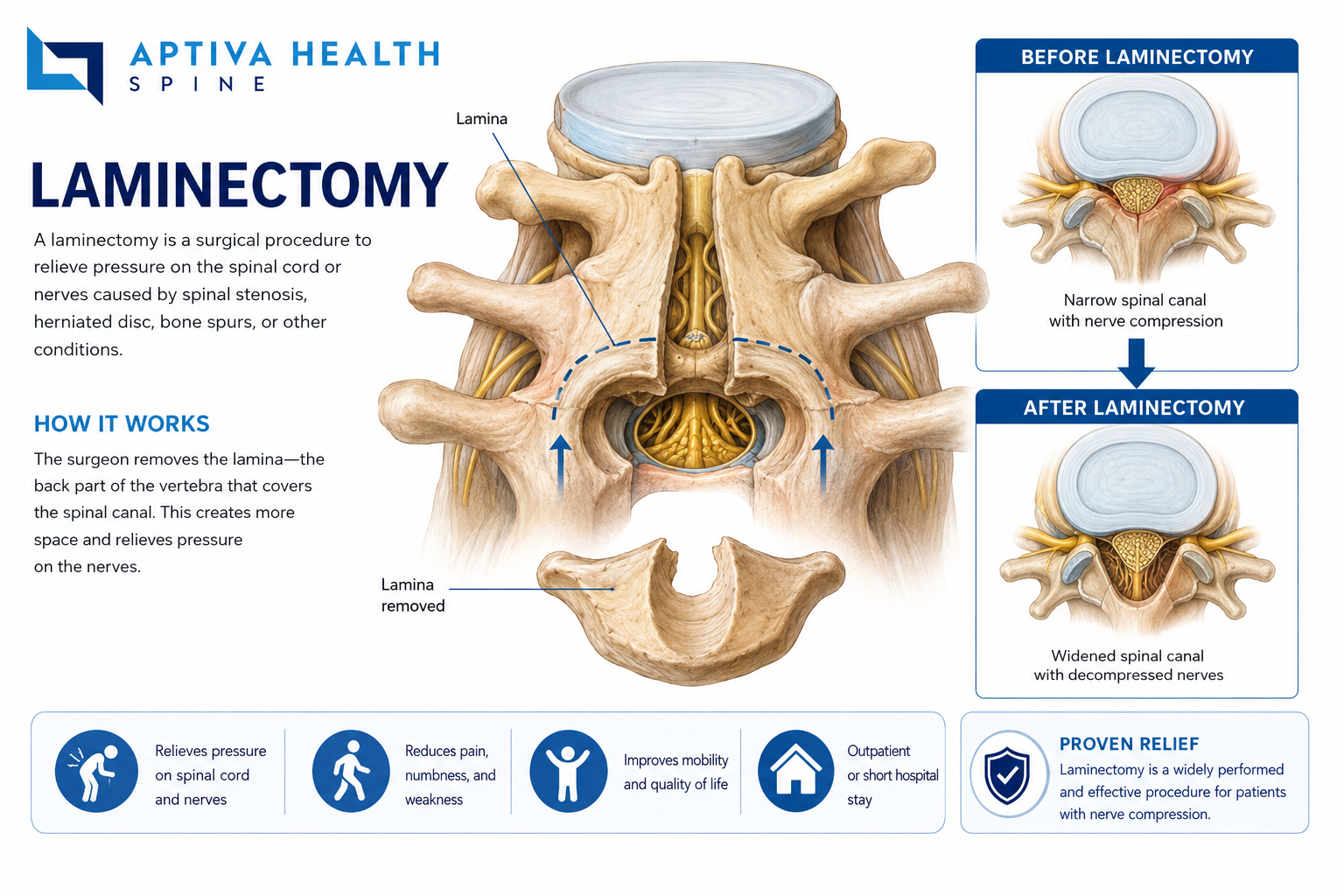
A minimally invasive spinal decompression procedure that uses small incisions, muscle-sparing technique, and same-day discharge for appropriate candidates with lumbar spinal stenosis, neurogenic claudication, or nerve compression. Dr. Jaideep Chunduri leads Aptiva Health Indianapolis’ lumbar decompression program, combining decades of Louisville experience with fellowship-trained expertise from AOSpine — the international foundation that sets clinical standards in spine surgery.
Medically reviewed by Jaideep Chunduri, MD— May 2026.
Schedule your appointment today!
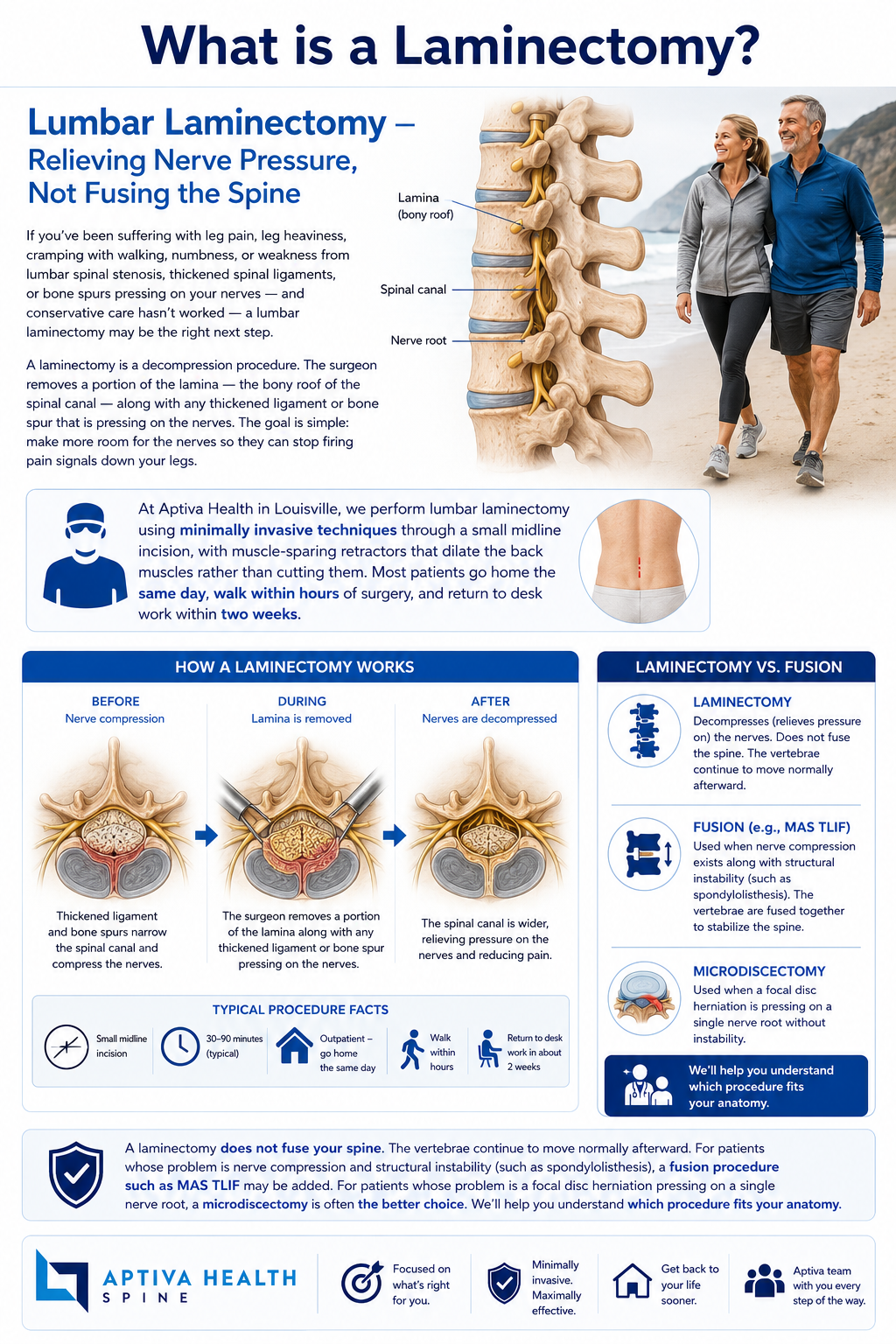
Lumbar Laminectomy — Relieving Nerve Pressure, Not Fusing the Spine
If you've been suffering with leg pain, leg heaviness, cramping with walking, numbness, or weakness from lumbar spinal stenosis, thickened spinal ligaments, or bone spurs pressing on your nerves — and conservative care hasn't worked — a lumbar laminectomy may be the right next step.
A laminectomy is a decompression procedure. The surgeon removes a portion of the lamina — the bony roof of the spinal canal — along with any thickened ligament or bone spur that is pressing on the nerves. The goal is simple: make more room for the nerves so they can stop firing pain signals down your legs.
At Aptiva Health in Louisville, we perform lumbar laminectomy using minimally invasive techniques through a small midline incision, with muscle-sparing retractors that dilate the back muscles rather than cutting them. Most patients go home the same day, walk within hours of surgery, and return to desk work within two weeks.
A laminectomy does not fuse your spine. The vertebrae continue to move normally afterward. For patients whose problem is nerve compression and structural instability (such as spondylolisthesis), a fusion procedure such as MAS TLIF may be added. For patients whose problem is a focal disc herniation pressing on a single nerve root, a microdiscectomy is often the better choice. We'll help you understand which procedure fits your anatomy.
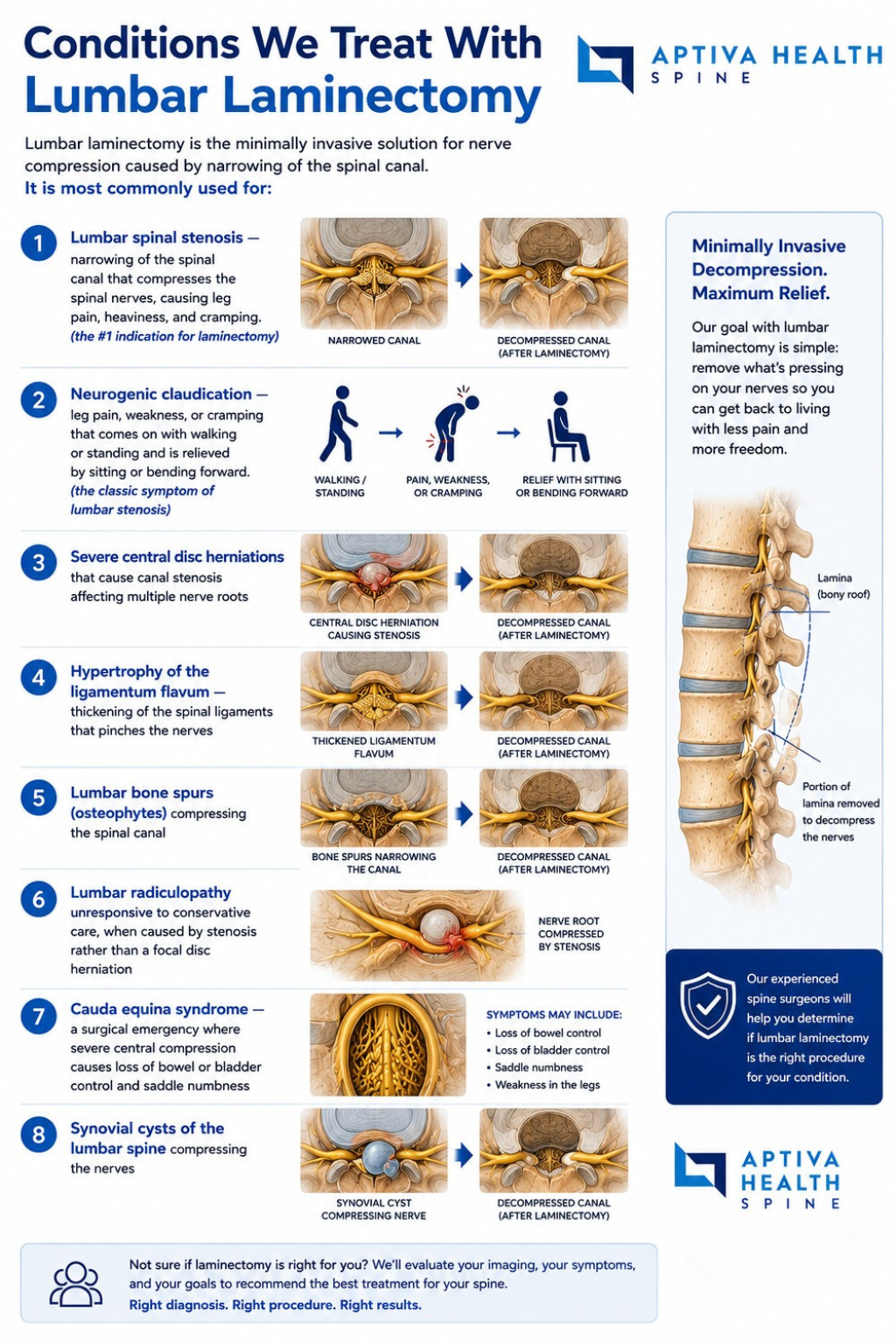
Conditions We Treat With Lumbar Laminectomy
Lumbar laminectomy is the minimally invasive solution for nerve compression caused by narrowing of the spinal canal. It is most commonly used for:
Lumbar spinal stenosis — narrowing of the spinal canal that compresses the spinal nerves, causing leg pain, heaviness, and cramping (the #1 indication for laminectomy)
Neurogenic claudication — leg pain, weakness, or cramping that comes on with walking or standing and is relieved by sitting or bending forward (the classic symptom of lumbar stenosis)
Severe central disc herniations that cause canal stenosis affecting multiple nerve roots
Hypertrophy of the ligamentum flavum — thickening of the spinal ligaments that pinches the nerves
Lumbar bone spurs (osteophytes) compressing the spinal canal
Lumbar radiculopathy unresponsive to conservative care, when caused by stenosis rather than a focal disc herniation
Cauda equina syndrome — a surgical emergency where severe central compression causes loss of bowel or bladder control and saddle numbness
Synovial cysts of the lumbar spine compressing the nerves
Not sure if your back and leg pain is a stenosis problem, a disc problem, or an instability problem? Compare options on our MAS TLIF Indianapolis, Microdiscectomy Indianapolis, and Spine Surgery Indianapolis pages, or get evaluated by an Aptiva spine provider.
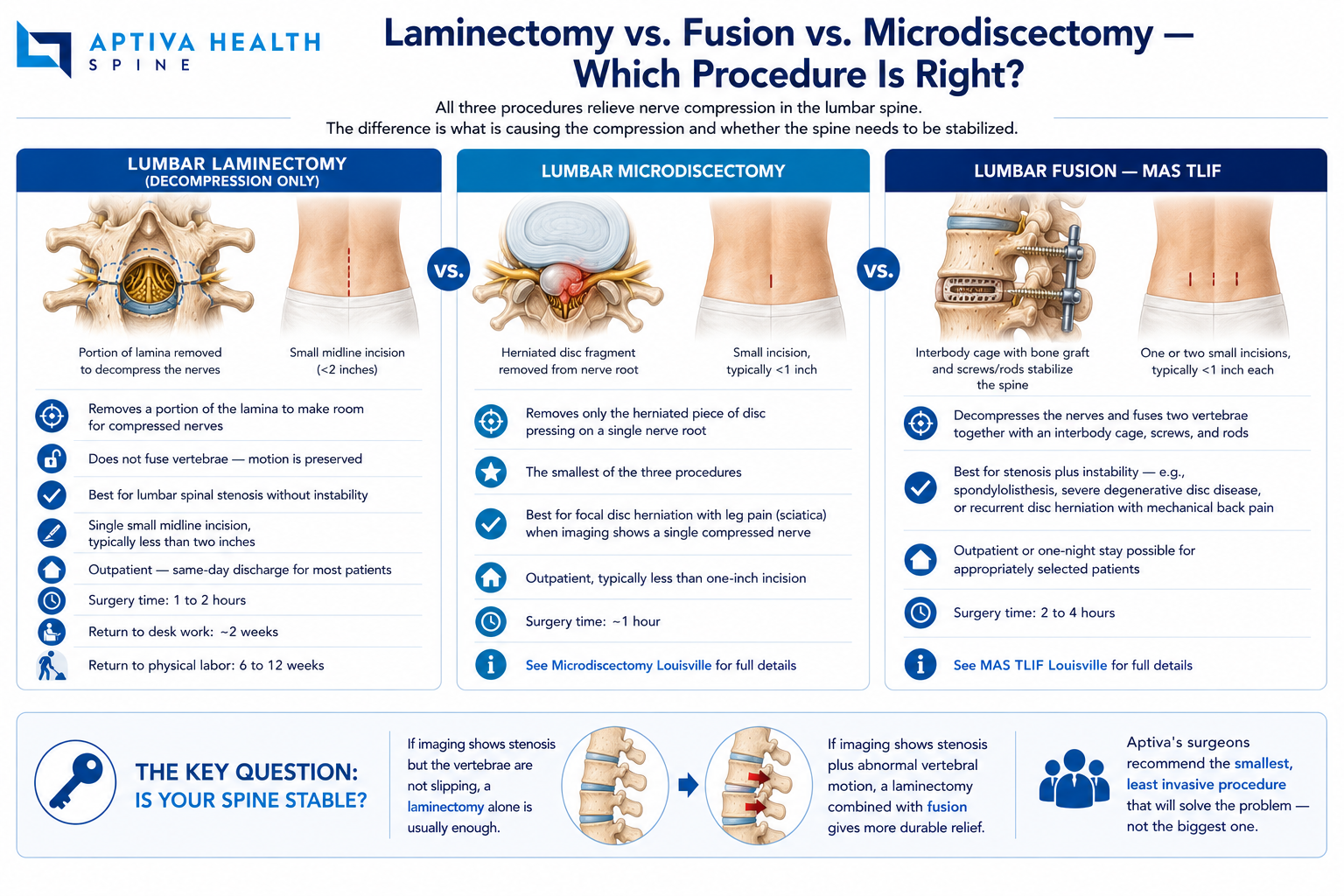
Laminectomy vs. Fusion vs. Microdiscectomy — Which Procedure Is Right?
All three procedures relieve nerve compression in the lumbar spine. The difference is what is causing the compression and whether the spine needs to be stabilized.
Lumbar Laminectomy (Decompression Only)
Removes a portion of the lamina to make room for compressed nerves
Does not fuse vertebrae — motion is preserved
Best for lumbar spinal stenosis without instability
Single small midline incision, typically less than two inches
Outpatient — same-day discharge for most patients
Surgery time: 1 to 2 hours
Return to desk work: ~2 weeks
Return to physical labor: 6 to 12 weeks
Lumbar Microdiscectomy
Removes only the herniated piece of disc pressing on a single nerve root
The smallest of the three procedures
Best for focal disc herniation with leg pain (sciatica) when imaging shows a single compressed nerve
Outpatient, typically less than one-inch incision
Surgery time: ~1 hour
See Microdiscectomy Louisville for full details
Lumbar Fusion — MAS TLIF
Decompresses the nerves and fuses two vertebrae together with an interbody cage, screws, and rods
Best for stenosis plus instability — e.g., spondylolisthesis, severe degenerative disc disease, or recurrent disc herniation with mechanical back pain
Outpatient or one-night stay possible for appropriately selected patients
Surgery time: 2 to 4 hours
See MAS TLIF Louisville for full details
The key question: Is your spine stable? If imaging shows stenosis but the vertebrae are not slipping, a laminectomy alone is usually enough. If imaging shows stenosis plus abnormal vertebral motion, a laminectomy combined with fusion gives more durable relief. Aptiva's surgeons recommend the smallest, least invasive procedure that will solve the problem — not the biggest one.
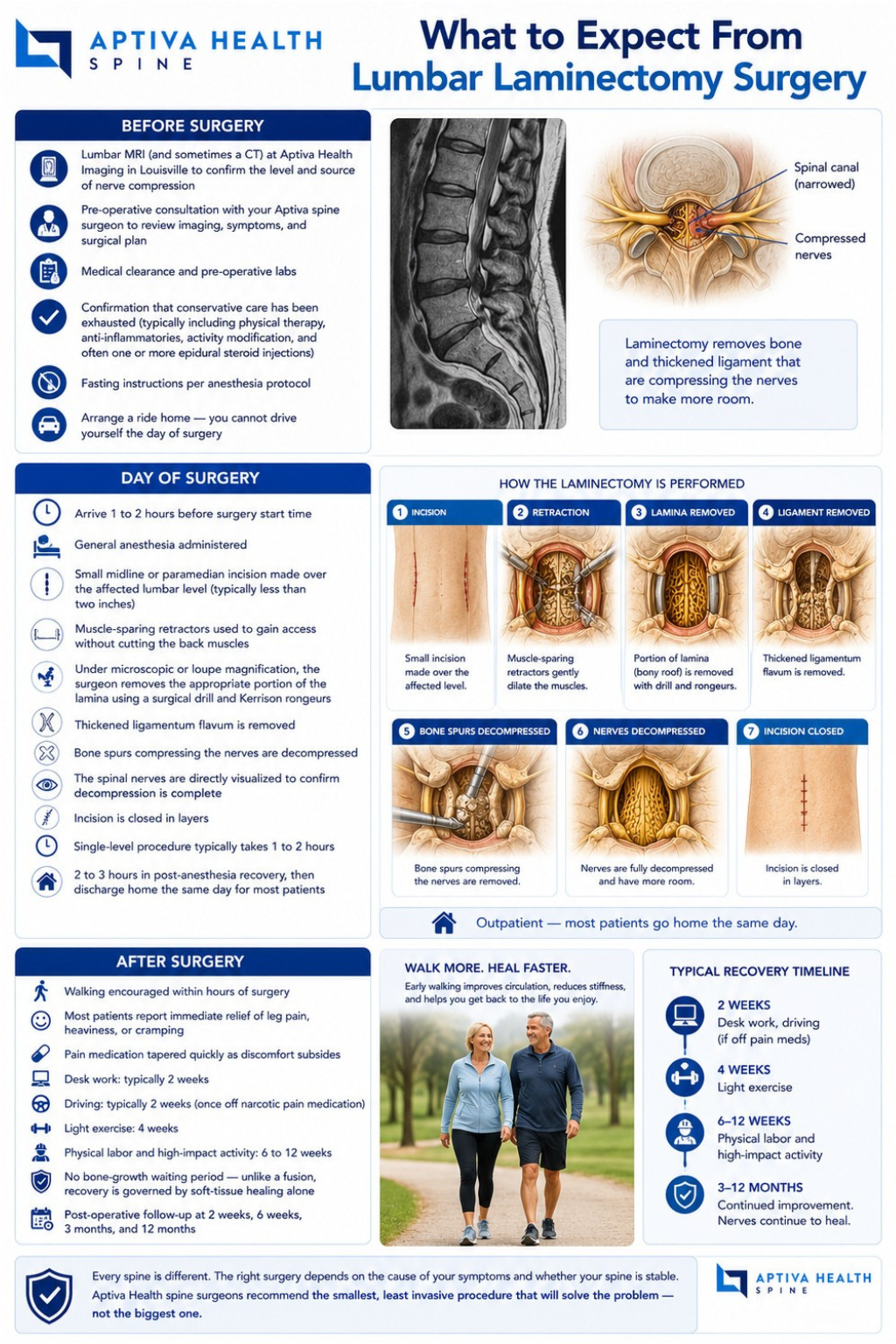
What to Expect From Lumbar Laminectomy Surgery
Before Surgery
Lumbar MRI (and sometimes a CT) at Aptiva Health Imaging in Indianapolis to confirm the level and source of nerve compression
Pre-operative consultation with your Aptiva spine surgeon to review imaging, symptoms, and surgical plan
Medical clearance and pre-operative labs
Confirmation that conservative care has been exhausted (typically including physical therapy, anti-inflammatories, activity modification, and often one or more epidural steroid injections)
Fasting instructions per anesthesia protocol
Arrange a ride home — you cannot drive yourself the day of surgery
Day of Surgery
Arrive 1 to 2 hours before surgery start time
General anesthesia administered
Small midline or paramedian incision made over the affected lumbar level (typically less than two inches)
Muscle-sparing retractors used to gain access without cutting the back muscles
Under microscopic or loupe magnification, the surgeon removes the appropriate portion of the lamina using a surgical drill and Kerrison rongeurs
Thickened ligamentum flavum is removed
Bone spurs compressing the nerves are decompressed
The spinal nerves are directly visualized to confirm decompression is complete
Incision is closed in layers
Single-level procedure typically takes 1 to 2 hours
2 to 3 hours in post-anesthesia recovery, then discharge home the same day for most patients
After Surgery
Walking encouraged within hours of surgery
Most patients report immediate relief of leg pain, heaviness, or cramping
Pain medication tapered quickly as discomfort subsides
Desk work: typically 2 weeks
Driving: typically 2 weeks (once off narcotic pain medication)
Light exercise: 4 weeks
Physical labor and high-impact activity: 6 to 12 weeks
No bone-growth waiting period — unlike a fusion, recovery is governed by soft-tissue healing alone
Post-operative follow-up at 2 weeks, 6 weeks, 3 months, and 12 months
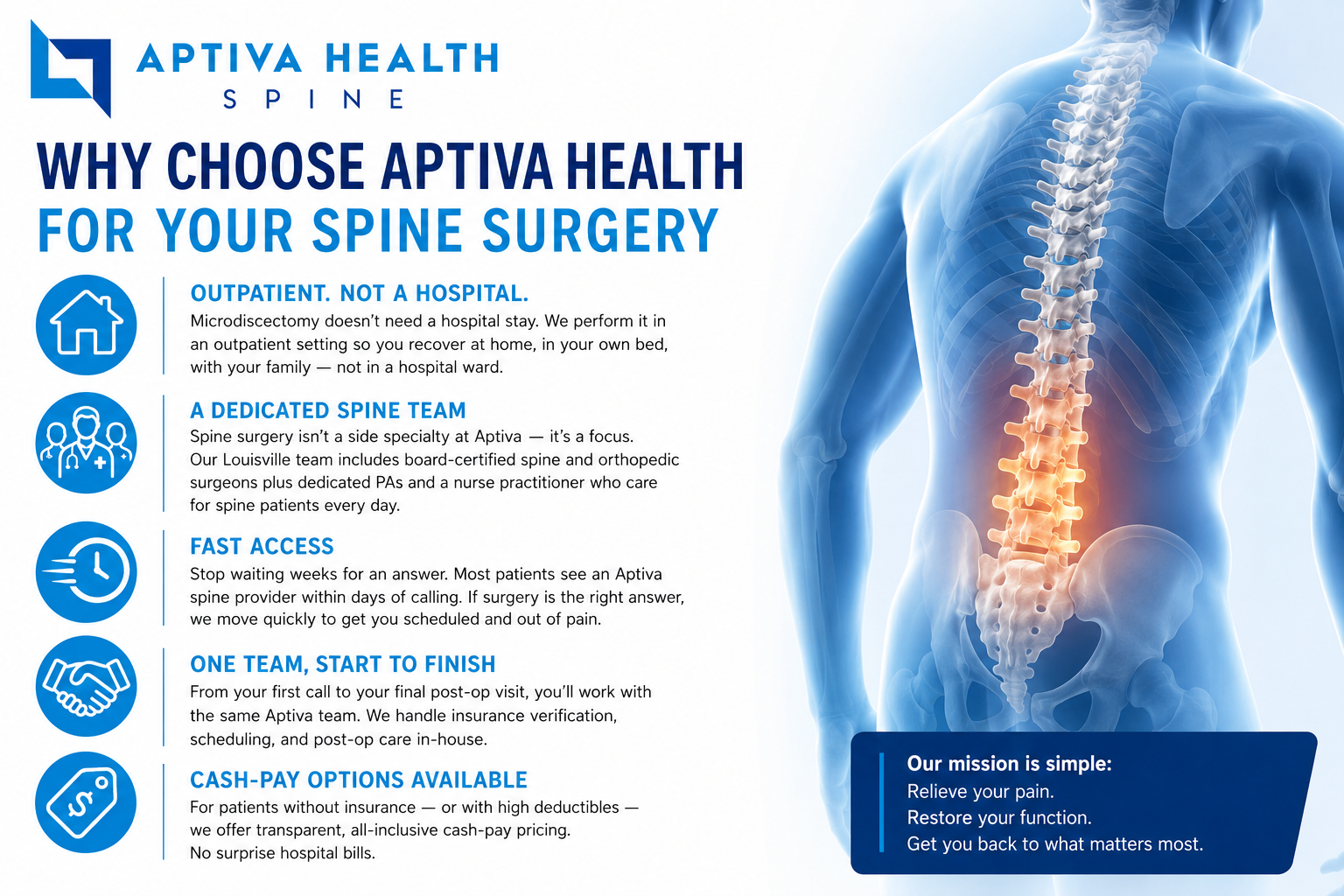
Why Choose Aptiva Health for Your Laminectomy
Minimally invasive technique, not traditional open decompression. Aptiva performs lumbar laminectomy using small incisions and muscle-sparing retractors — not the larger midline incision and muscle-stripping approach used in traditional open laminectomy. Patients recover at home, not in a multi-day hospital stay.
A surgeon with over 20 years experience. Dr. Jaideep Chunduri is an orthopedic spine surgeon at Aptiva Health and one of the most experienced spine surgeons in the tri-state region. He is the former Director of Orthopaedic Spine Surgery at TriHealth in Cincinnati, a founding orthopedic spine surgeon at Beacon Orthopedics, and SCOI fellowship-trained. He sees patients in Northern Kentucky, Indianapolis (beginning May 21, 2026), and the Greater Cincinnati region.
A dedicated spine team. Spine surgery isn't a side specialty at Aptiva — it's a focus. Our Indianapolis team includes board-certified spine and orthopedic surgeons, an interventional pain physician, and dedicated PAs and an NP who care for spine patients every day.
Honest guidance — decompression only when conservative care has failed. We don't recommend surgery unless imaging shows a clear structural cause of nerve compression and a well-documented course of non-surgical care has failed. Our interventional pain specialist, Dr. Steven Ganzel, performs epidural steroid injections, facet joint injections, medial branch blocks, and radiofrequency ablation — non-surgical options that provide lasting relief for many patients with spinal stenosis and may avoid the need for surgery entirely.
The right procedure — not the biggest one. For patients with a single herniated disc and no stenosis, lumbar microdiscectomy is often the better choice. For patients with stenosis plus instability, a combined laminectomy and MAS TLIF fusion may be appropriate. We evaluate every patient individually and recommend the least invasive procedure that will solve the problem.
Fast access. Stop waiting weeks for an answer. Most patients see an Aptiva spine provider within days of calling.
One team, start to finish. From your first call to your final post-op visit, you'll work with the same Aptiva team. We handle insurance verification, scheduling, and post-op care in-house.
Cash-pay options available. For patients without insurance — or with high deductibles — we offer transparent, all-inclusive cash-pay pricing for laminectomy that includes the surgeon, facility, anesthesia, and post-operative visits. No surprise hospital bills.
Schedule your appointment today!
Your Indianapolis Spine Care Team
At Aptiva Health, your spine care is delivered by a team of board-certified surgeons and advanced practice providers who focus on the diagnosis, treatment, and follow-up of conditions of the cervical and lumbar spine — including spinal stenosis, herniated discs, sciatica, and degenerative spine conditions.

Jaideep Chunduri, MD | Orthopedic Spine Surgeon
Dr. Jaideep Chunduri is an orthopedic spine surgeon at Aptiva Health and one of the most experienced spine surgeons in the tri-state region. He is the former Director of Orthopaedic Spine Surgery at TriHealth in Cincinnati, a founding orthopedic spine surgeon at Beacon Orthopedics, and SCOI fellowship-trained. He sees patients in Northern Kentucky, Indianapolis (beginning May 21, 2026), and the Greater Cincinnati region.
Specialty: Orthopedic Spine Surgery
Fellowship: Southern California Orthopaedic Institute · Van Nuys, CA
Board Certified: American Board of Orthopedic Surgery (ABOS)
Licensed in: Kentucky, Ohio, and Indiana
Years in Practice: 20+ in Greater Cincinnati and the Tri-State Region
Locations: Aptiva Health Northern Kentucky & Aptiva Health Indianapolis
Also Serves: Cincinnati patients at the Hebron, KY office
Accepting New Patients: Yes

Bradley Stephenson, PA-C | Orthopedic Physician Assistant
Bradley Stephenson is a certified Physician Assistant dedicated to delivering high-quality, patient-centered healthcare. Known for his compassionate approach and strong focus on communication, Bradley strives to ensure every patient feels informed, respected, and cared for during each visit.
Specialty: Orthopedics & Sports Medicine
Title: Physician Assistant
Accepting New Patients: Yes

Bryan Davidson, PA-C, CAQ-OS | Orthopedic Physician Assistant - Aptiva Health
At Aptiva Health, Bryan Davidson, PA-C, CAQ-OS brings advanced orthopedic experience, surgical support expertise, and a compassionate approach to patient care. As a certified Physician Assistant with a Certificate of Added Qualifications in Orthopedic Surgery, Bryan is committed to helping patients feel informed, supported, and confident throughout their orthopedic care journey.
Specialty: Orthopedics & Sports Medicine
Title: Physician Assistant

Insurances Accepted
Aptiva Health accepts most major insurance plans, Medicare, Medicaid Managed Care, workers' compensation, and auto insurance (PIP and Medpay). We verify benefits and provide a clear cost estimate before surgery.
Lumbar laminectomy is a well-established procedure covered by Medicare and most major commercial insurance plans when medically necessary. Single-level and multi-level laminectomies are both routinely covered when imaging and clinical criteria are met.
For patients paying out of pocket, we offer transparent, bundled cash-pay pricing for lumbar laminectomy that includes the surgeon, facility, anesthesia, and post-operative visits — no surprise itemized hospital bills.
Call 463-303-0501 to verify your insurance or request a cash-pay quote.
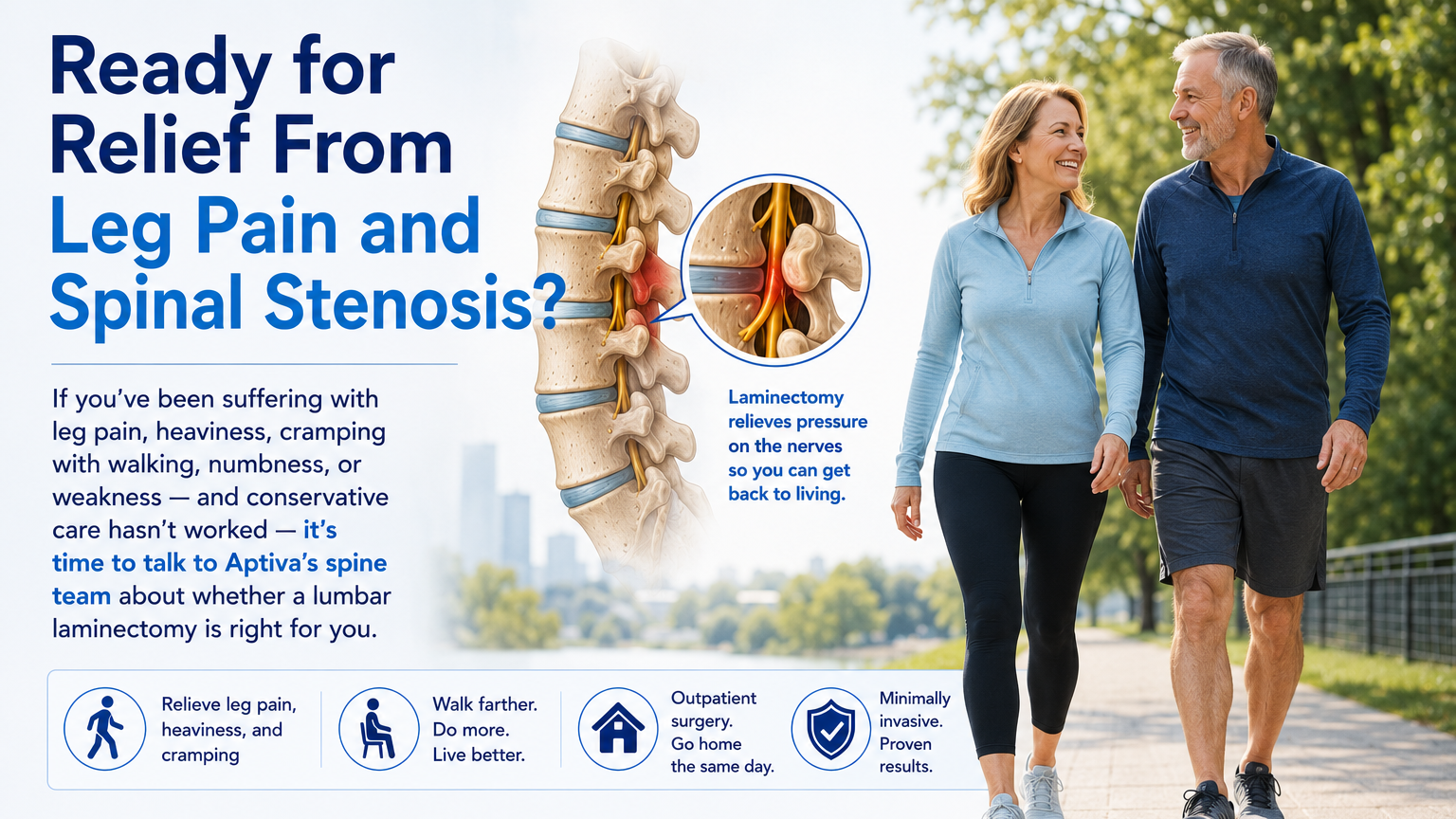
Ready for Relief From Leg Pain and Spinal Stenosis?
If you've been suffering with leg pain, heaviness, cramping with walking, numbness, or weakness — and conservative care hasn't worked — it's time to talk to Aptiva's spine team about whether a lumbar laminectomy is right for you.
Schedule a Consultation in Indianapolis — Schedule Now
Address: 6801 Gray Road, Suite H · Indianapolis, IN 46237
Phone: 463-303-0501 Fax: (855) 859-0123
Hours: Monday–Friday, 8:00 AM – 5:00 PM
Workers' comp scheduling line: 1-844-999-3627
Directions: Located on the south side of Indianapolis, easily accessible from I-65 (Exit 103 Southport Rd), US-31 (East Street), and I-465. Approximately 10 minutes from downtown Greenwood and 15 minutes from downtown Indianapolis.
Insurance accepted: Most major medical insurance, Medicare, Medicare Advantage, most Indiana Medicaid plans, workers' compensation, auto injury coverage (PIP and MedPay), and cash-pay.
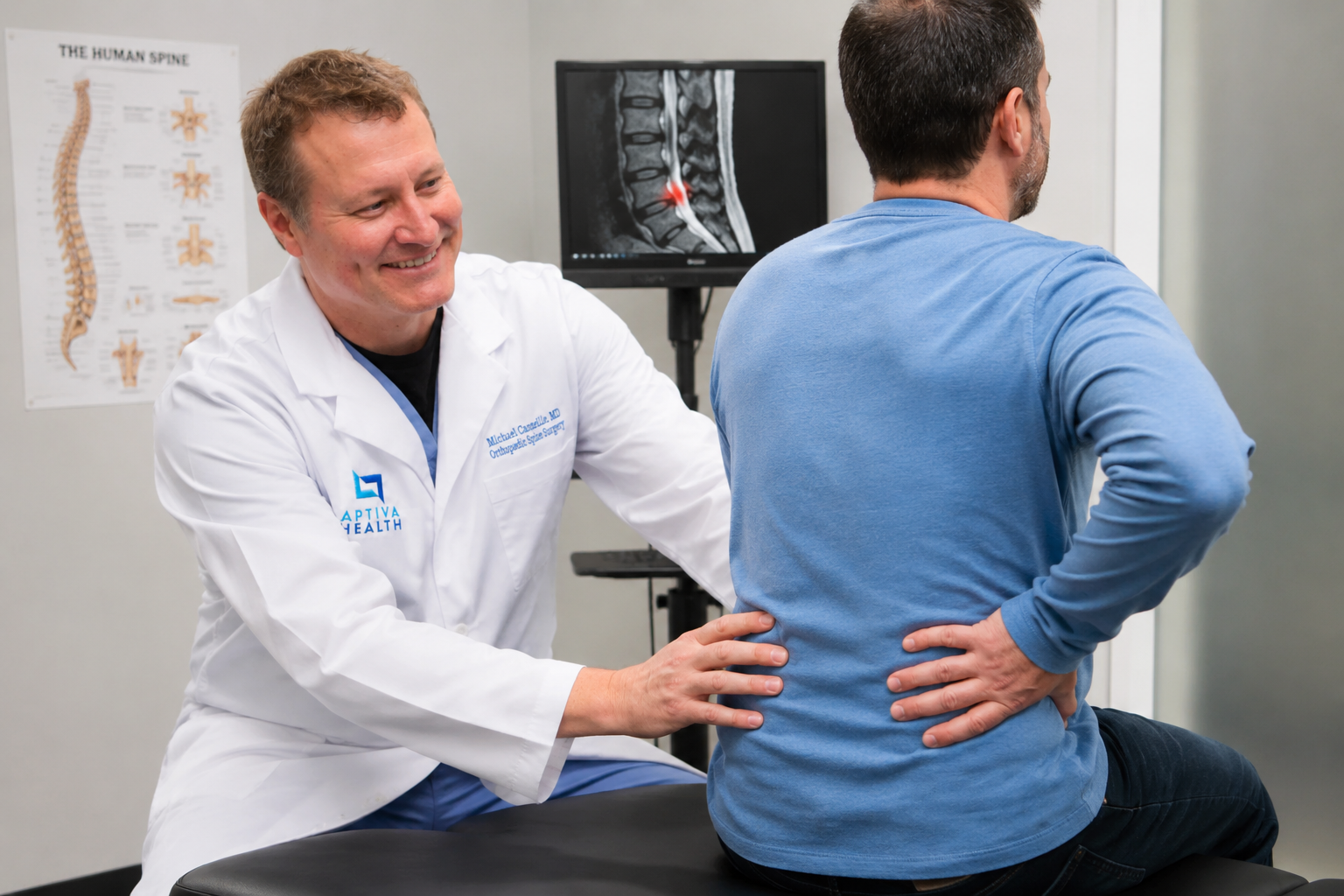
Lumbar Laminectomy: Frequently Asked Questions
Q. What is a lumbar laminectomy?
A lumbar laminectomy is a surgical decompression procedure that removes a portion of the lamina—the bony roof of the spinal canal—to create more space for compressed spinal nerves. It is one of the most common surgical treatments for lumbar spinal stenosis. The goal is to relieve pressure on the spinal nerves caused by narrowing of the spinal canal, not to fuse or stabilize the spine. At Aptiva Health Indianapolis, Dr. Jaideep Chunduri performs lumbar laminectomy using minimally invasive techniques whenever appropriate, allowing many patients to return home the same day.
Q. What conditions does a laminectomy treat?
Lumbar laminectomy is most commonly performed to treat lumbar spinal stenosis, a condition in which narrowing of the spinal canal compresses the spinal nerves and causes symptoms such as leg pain, heaviness, numbness, or cramping when walking or standing (neurogenic claudication). It may also be recommended for:
Bone spurs compressing spinal nerves
Thickened ligamentum flavum
Severe central lumbar disc herniations causing spinal canal narrowing
Lumbar radiculopathy that has not improved with conservative treatment
Certain emergency conditions, such as cauda equina syndrome
Your spine specialist will review your symptoms and imaging to determine whether laminectomy is the most appropriate treatment.
Q. What is the difference between a laminectomy and a spinal fusion?
A lumbar laminectomy relieves pressure on compressed nerves by creating more space within the spinal canal. It does not stabilize or permanently join the bones of the spine.
A spinal fusion joins two or more vertebrae together to eliminate abnormal movement and provide stability. Fusion is typically recommended when spinal stenosis is accompanied by conditions such as spondylolisthesis, spinal instability, or significant degenerative motion.
Many patients with spinal stenosis require only a laminectomy, while others benefit from a combined decompression and fusion procedure.
Q. What is the difference between a laminectomy and a microdiscectomy?
Although both procedures relieve nerve compression, they address different problems.
A microdiscectomy removes a small portion of a herniated disc that is pressing on a single nerve root and is commonly used to treat sciatica caused by a lumbar disc herniation.
A laminectomy removes part of the lamina to create more space throughout the spinal canal and is typically performed when nerve compression is caused by spinal stenosis, bone spurs, or thickened ligaments rather than a single herniated disc.
Some patients have both conditions and may benefit from a combination of procedures.
Q. Is a lumbar laminectomy an outpatient procedure?
Yes. Most single-level lumbar laminectomies performed by Dr. Jaideep Chunduri at Aptiva Health Indianapolis are outpatient procedures.
Patients typically:
Arrive the morning of surgery
Undergo a procedure lasting approximately 1–2 hours
Recover for several hours after surgery
Return home the same day
Patients undergoing more extensive procedures or those with certain medical conditions may require an overnight stay.
Q. Am I a candidate for lumbar laminectomy?
You may be a candidate if you have:
Persistent leg pain, numbness, or weakness
Cramping or heaviness in the legs when walking
Lumbar spinal stenosis confirmed on MRI
Symptoms that have not improved with conservative treatment
Before recommending surgery, your provider will typically discuss non-surgical options such as:
Physical therapy
Anti-inflammatory medications
Activity modification
Epidural steroid injections or other interventional pain procedures
Dr. Chunduri will review your imaging, medical history, and symptoms to determine whether lumbar laminectomy is appropriate for your condition.
Q. How long does lumbar laminectomy surgery take?
A single-level lumbar laminectomy generally requires 1 to 2 hours of surgical time.
Including pre-operative preparation, anesthesia, and recovery, most patients spend approximately 4 to 6 hours at the surgical center before returning home.
Q. How long is recovery after a lumbar laminectomy?
Recovery varies depending on the individual and the extent of surgery, but many patients recover relatively quickly.
Typical recovery milestones include:
Walking the day of surgery
Returning to desk work within approximately 2 weeks
Driving once cleared by your surgeon and no longer taking prescription pain medication
Light exercise after several weeks
Returning to more strenuous activities over 6 to 12 weeks, depending on healing and surgeon recommendations
Because a laminectomy relieves pressure on nerves without fusing the spine, many patients notice improvement in leg symptoms within the first few weeks.
Q. What is the success rate of lumbar laminectomy?
Lumbar laminectomy has been shown to provide significant improvement in leg pain, walking tolerance, and quality of life for many appropriately selected patients with lumbar spinal stenosis.
The likelihood of a successful outcome depends on several factors, including:
The underlying spinal condition
Severity and duration of symptoms
Overall health
Following post-operative recovery recommendations
During your consultation, Dr. Chunduri will discuss your expected outcomes based on your specific diagnosis.
Q. Will I lose flexibility after a laminectomy?
Because a lumbar laminectomy does not fuse the vertebrae, most patients maintain normal spinal motion.
In fact, many patients experience improved mobility after surgery because pain, numbness, and leg weakness no longer limit their daily activities.
Q. Will my insurance cover lumbar laminectomy?
Most major insurance plans, Medicare, and many workers' compensation plans cover lumbar laminectomy when it is medically necessary.
Aptiva Health Indianapolis works with many insurance providers and will verify your benefits before surgery. Our team can also discuss self-pay options and provide transparent pricing information when needed.
Q. Who performs lumbar laminectomy at Aptiva Health Indianapolis?
Lumbar laminectomy at Aptiva Health Indianapolis is performed by Dr. Jaideep Chunduri, a board-certified, fellowship-trained orthopedic spine surgeon specializing in the surgical treatment of neck and back conditions.
Patients receive comprehensive care from a multidisciplinary spine team. Bradley Stephenson, PA-C, and Bryan Davidson, PA-C, work closely with Dr. Chunduri throughout the evaluation, surgical, and recovery process, providing patient education, post-operative follow-up, and ongoing support to help ensure a seamless experience.
Q. Should I try non-surgical treatment before considering surgery?
In most cases, yes.
Whenever appropriate, the spine specialists at Aptiva Health Indianapolis begin with conservative treatment before recommending surgery. Depending on your condition, non-surgical options may include:
Physical therapy
Anti-inflammatory medications
Activity modification
Epidural steroid injections
Facet joint injections
Medial branch blocks
Radiofrequency ablation
Other image-guided pain management procedures
If these treatments no longer provide adequate relief or your symptoms continue to worsen, Dr. Chunduri and the Aptiva Health spine team can determine whether lumbar laminectomy is the next appropriate step in your care. This team-based approach reflects Aptiva Health's commitment to coordinated, patient-centered spine care, ensuring patients receive the right treatment at the right time.