

ACDF in Indianapolis, IN

The most trusted surgical treatment for neck and arm pain from a damaged cervical disc — now offered as a same-day outpatient procedure in Indianapolis. Dr. Jaideep Chunduri leads Aptiva Health's anterior cervical fusion program, combining decades of experience with fellowship-trained expertise from AOSpine — the international foundation that sets clinical standards in spine fusion surgery.
Medically reviewed by Jaideep Chunduri, MD — July 2026.
Schedule your appointment today!
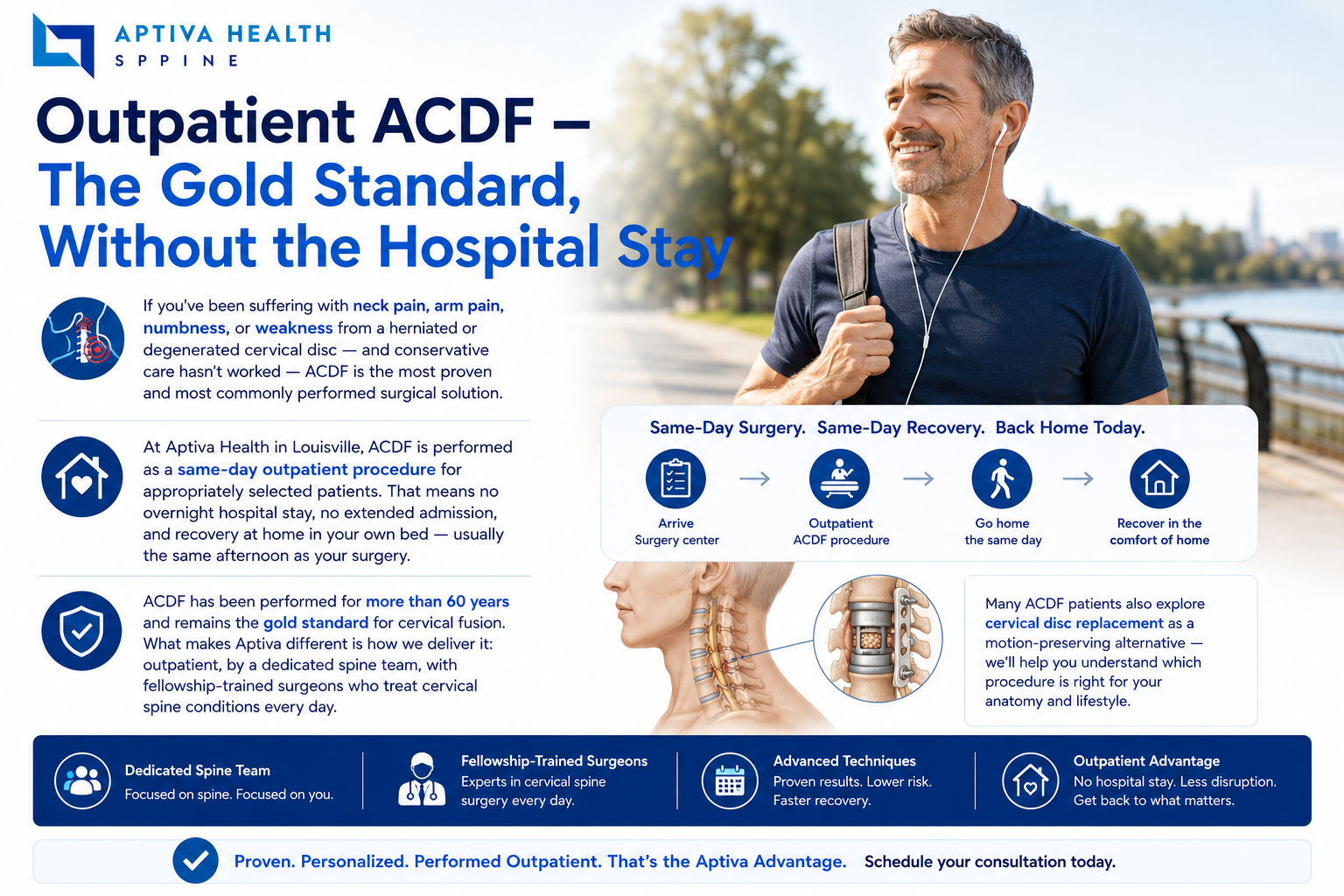
Outpatient ACDF — The Gold Standard, Without the Hospital Stay
If you've been suffering with neck pain, arm pain, numbness, or weakness from a herniated or degenerated cervical disc — and conservative care hasn't worked — ACDF is the most proven and most commonly performed surgical solution.
At Aptiva Health in Indianapolis, ACDF is performed as a same-day outpatient procedure for appropriately selected patients. That means no overnight hospital stay, no extended admission, and recovery at home in your own bed — usually the same afternoon as your surgery.
ACDF has been performed for more than 60 years and remains the gold standard for cervical fusion. What makes Aptiva different is how we deliver it: outpatient, by a dedicated spine team, with fellowship-trained surgeons who treat cervical spine conditions every day. Many ACDF patients also explore cervical disc replacement as a motion-preserving alternative — we'll help you understand which procedure is right for your anatomy and lifestyle.
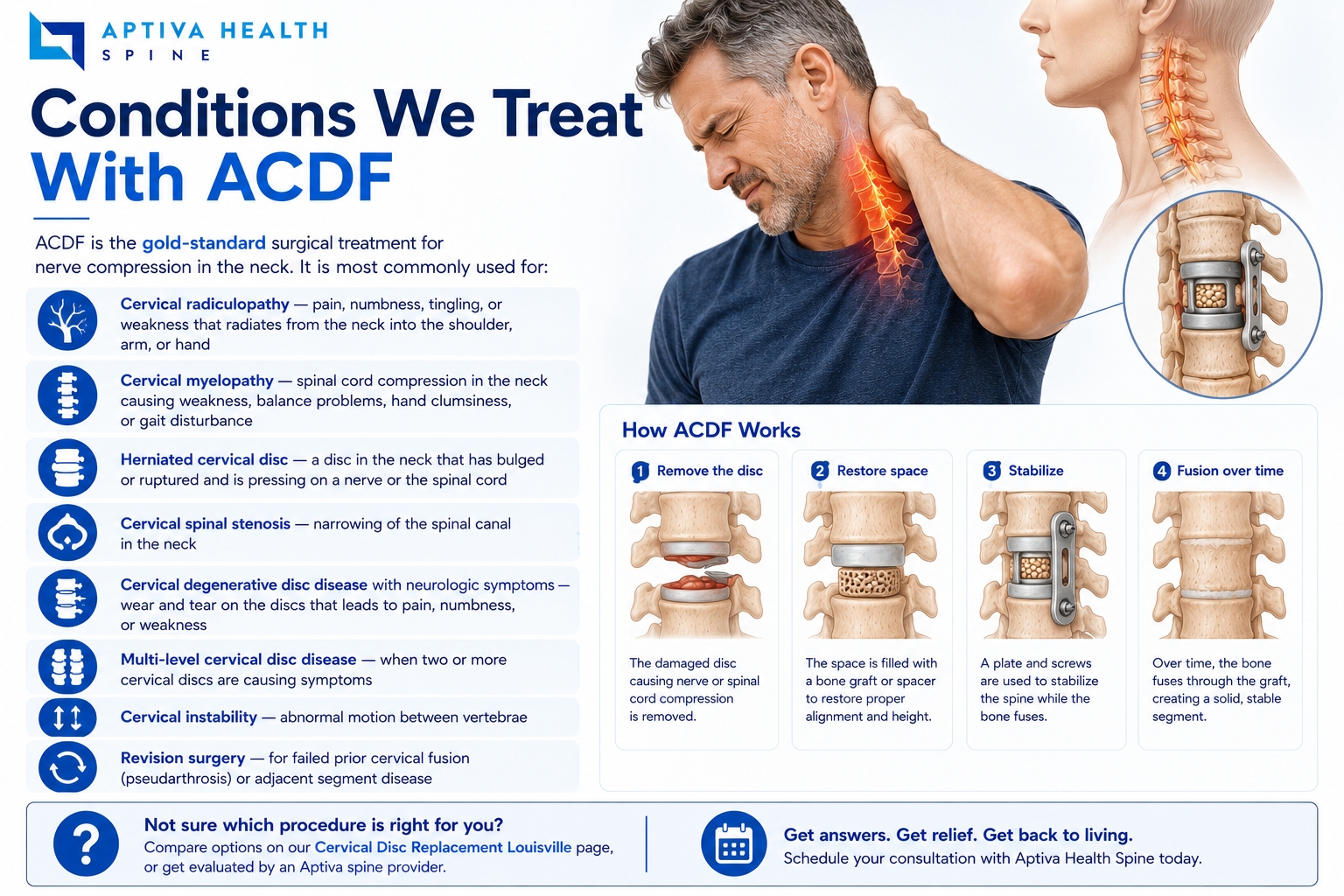
Conditions We Treat With ACDF
ACDF is the gold-standard surgical treatment for nerve compression in the neck. It is most commonly used for:
Cervical radiculopathy — pain, numbness, tingling, or weakness that radiates from the neck into the shoulder, arm, or hand
Cervical myelopathy — spinal cord compression in the neck causing weakness, balance problems, hand clumsiness, or gait disturbance
Herniated cervical disc — a disc in the neck that has bulged or ruptured and is pressing on a nerve or the spinal cord
Cervical spinal stenosis — narrowing of the spinal canal in the neck
Cervical degenerative disc disease with neurologic symptoms
Multi-level cervical disc disease — when two or more cervical discs are causing symptoms
Cervical instability — abnormal motion between vertebrae
Revision surgery — for failed prior cervical fusion (pseudarthrosis) or adjacent segment disease
Not sure which procedure is right for you? Compare options on our Cervical Disc Replacement page, or get evaluated by an Aptiva spine provider.
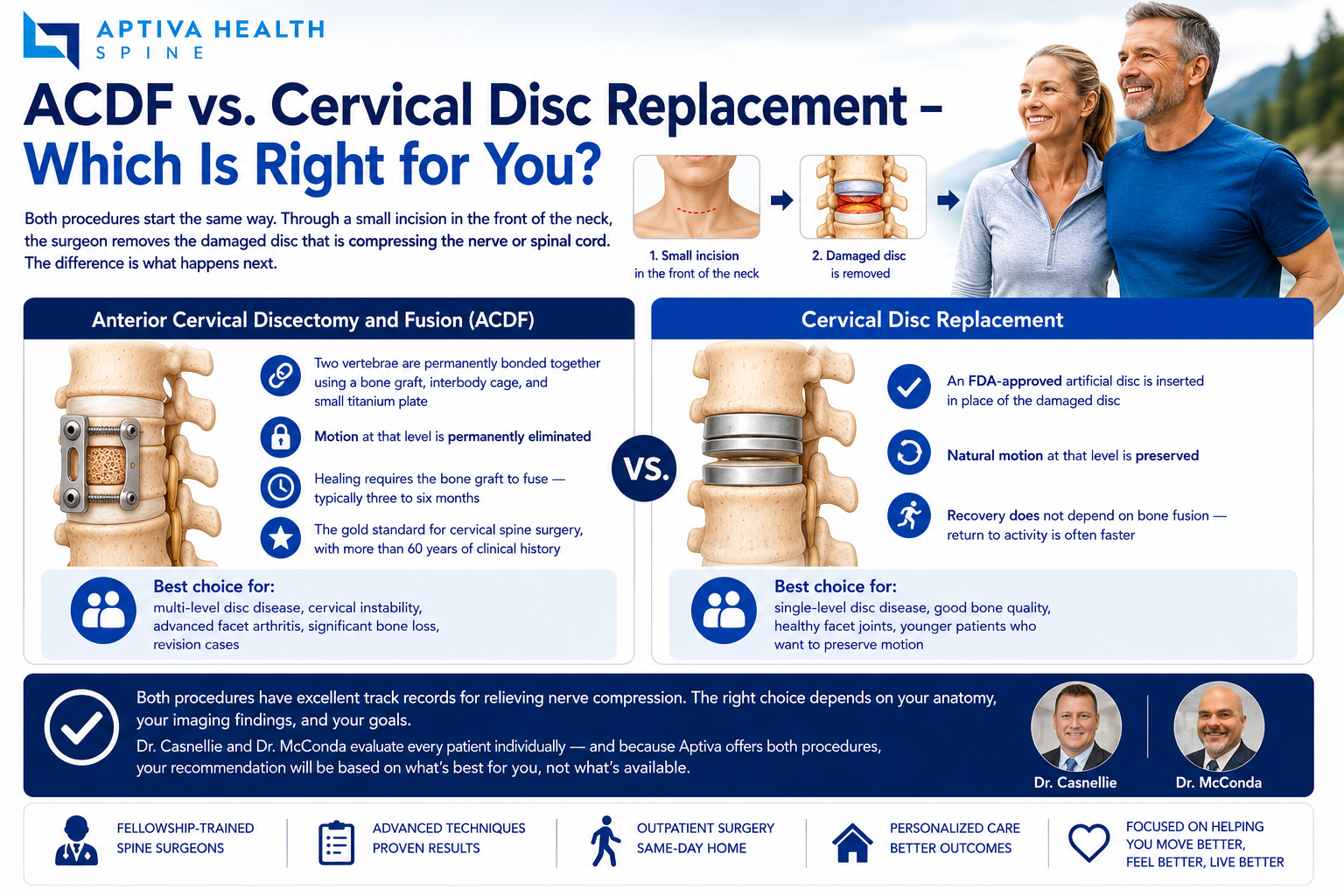
ACDF vs. Cervical Disc Replacement — Which Is Right for You?
Both procedures start the same way. Through a small incision in the front of the neck, the surgeon removes the damaged disc that is compressing the nerve or spinal cord. The difference is what happens next.
Anterior Cervical Discectomy and Fusion (ACDF)
Two vertebrae are permanently bonded together using a bone graft, interbody cage, and small titanium plate
Motion at that level is permanently eliminated
Healing requires the bone graft to fuse — typically three to six months
The gold standard for cervical spine surgery, with more than 60 years of clinical history
Best choice for: multi-level disc disease, cervical instability, advanced facet arthritis, significant bone loss, revision cases
Cervical Disc Replacement
An FDA-approved artificial disc is inserted in place of the damaged disc
Natural motion at that level is preserved
Recovery does not depend on bone fusion — return to activity is often faster
Best choice for: single-level disc disease, good bone quality, healthy facet joints, younger patients who want to preserve motion
Both procedures have excellent track records for relieving nerve compression. The right choice depends on your anatomy, your imaging findings, and your goals. Dr. Jaideep Chunduri evaluates every patient individually — and because Aptiva offers both procedures, your recommendation will be based on what's best for you, not what's available.
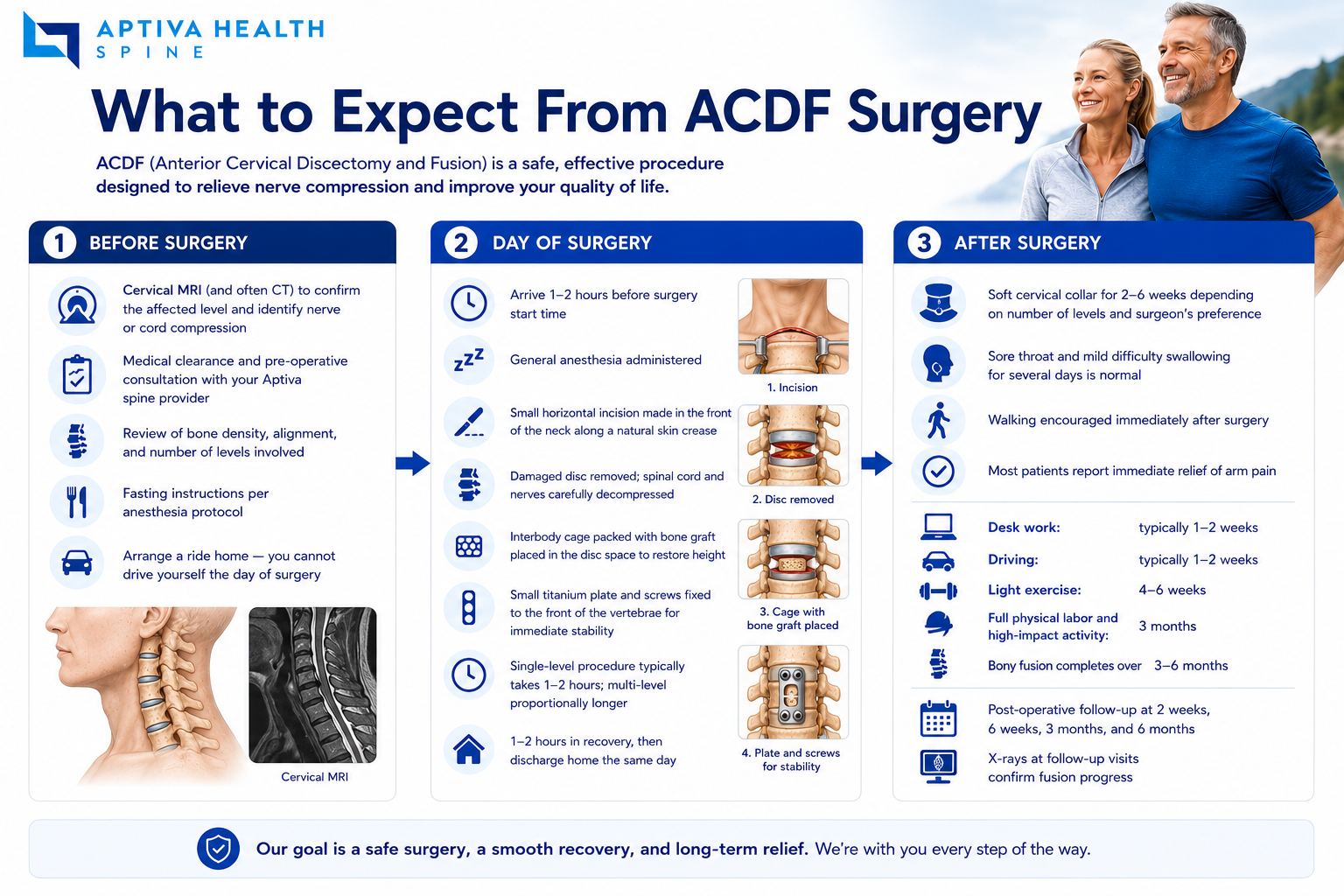
What to Expect From ACDF Surgery
Before Surgery
Cervical MRI (and often CT) to confirm the affected level and identify nerve or cord compression
Medical clearance and pre-operative consultation with your Aptiva spine provider
Review of bone density, alignment, and number of levels involved
Fasting instructions per anesthesia protocol
Arrange a ride home — you cannot drive yourself the day of surgery
Day of Surgery
Arrive 1-2 hours before surgery start time
General anesthesia administered
Small horizontal incision made in the front of the neck along a natural skin crease
Damaged disc removed; spinal cord and nerves carefully decompressed
Interbody cage packed with bone graft placed in the disc space to restore height
Small titanium plate and screws fixed to the front of the vertebrae for immediate stability
Single-level procedure typically takes 1-2 hours; multi-level proportionally longer
1-2 hours in recovery, then discharge home the same day
After Surgery
Soft cervical collar for 2-6 weeks depending on number of levels and surgeon's preference
Sore throat and mild difficulty swallowing for several days is normal
Walking encouraged immediately after surgery
Most patients report immediate relief of arm pain
Desk work: typically 1-2 weeks
Driving: typically 1-2 weeks
Light exercise: 4-6 weeks
Full physical labor and high-impact activity: 3 months
Bony fusion completes over 3-6 months
Post-operative follow-up at 2 weeks, 6 weeks, 3 months, and 6 months
X-rays at follow-up visits confirm fusion progress
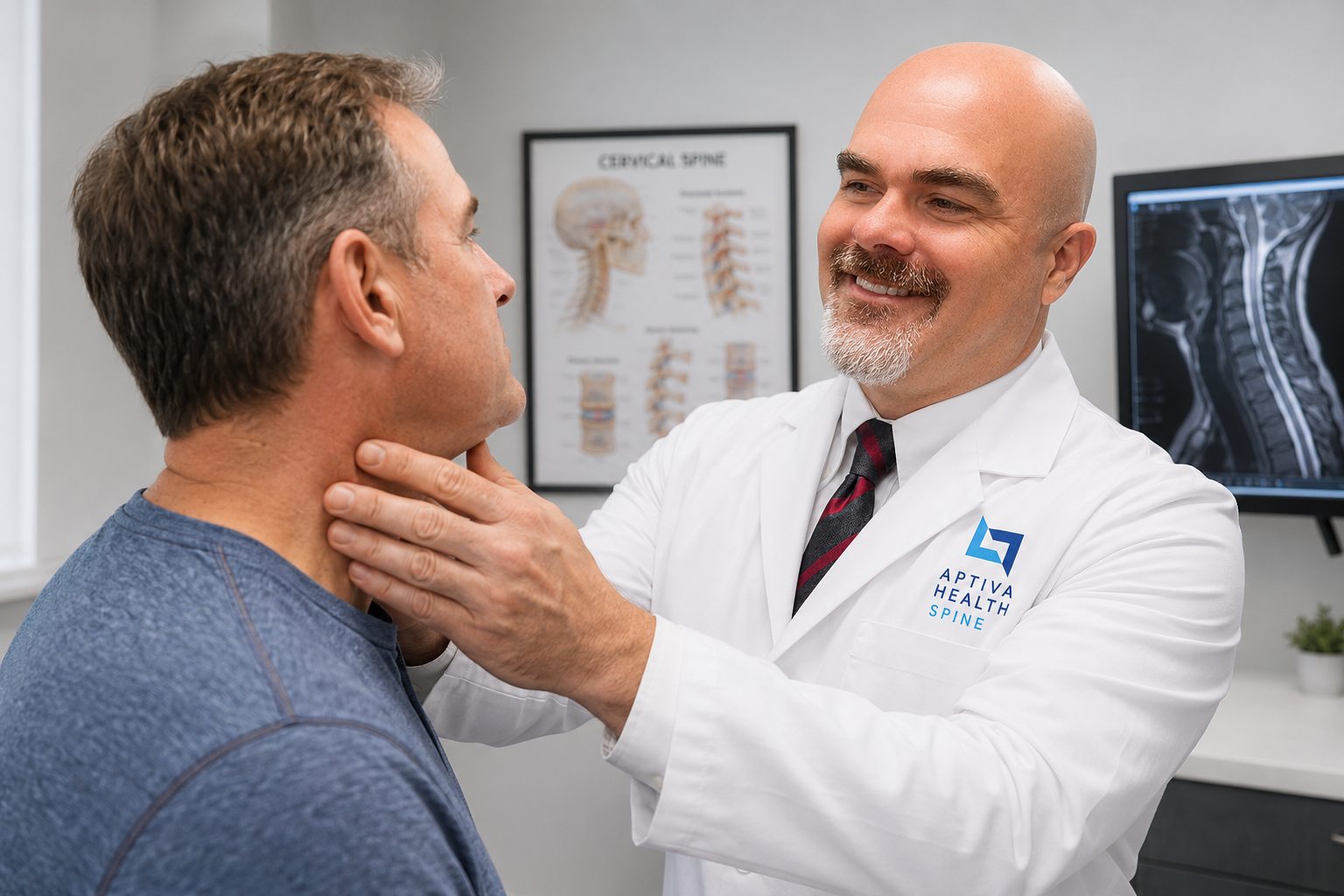
Why Choose Aptiva Health for Your ACDF
Outpatient ACDF — recover at home, not in a hospital. Most ACDF patients at Aptiva go home the same day. You recover in your own bed, with your family — not in a hospital ward.
Fellowship-trained fusion surgeons. Dr. Jaideep Chunduri completed his fellowship at Southern California Orthopaedic Institute and is board certified by the American Board of Orthopedic Surgery (ABOS).
A dedicated spine team. Spine surgery isn't a side specialty at Aptiva — it's a focus. Our Indianapolis team includes board-certified spine and orthopedic surgeons, and dedicated PAs and an NP who care for spine patients every day.
Both options under one roof. Aptiva offers ACDF and cervical disc replacement. Your recommendation will be based on what's right for your anatomy and goals — not on which procedure your surgeon happens to perform.
Honest guidance. Some patients don't need surgery at all. Our interventional pain specialist, Dr. Steven Ganzel, performs epidural steroid injections, facet joint injections, medial branch blocks, and radiofrequency ablation — non-surgical treatments that provide lasting relief for many patients and may avoid the need for surgery entirely.
Fast access. Stop waiting weeks for an answer. Most patients see an Aptiva spine provider within days of calling.
One team, start to finish. From your first call to your final post-op visit, you'll work with the same Aptiva team. We handle insurance verification, scheduling, and post-op care in-house.
Cash-pay options available. For patients without insurance — or with high deductibles — we offer transparent, all-inclusive cash-pay pricing for ACDF that includes the surgeon, facility, anesthesia, implants, and post-operative visits. No surprise hospital bills.
Schedule your appointment today!
Your Indianapolis Spine Care Team
At Aptiva Health, your spine care is delivered by a team of board-certified surgeons and advanced practice providers who focus on the diagnosis, treatment, and follow-up of conditions of the cervical and lumbar spine — including herniated discs, sciatica, spinal stenosis, and degenerative spine conditions.
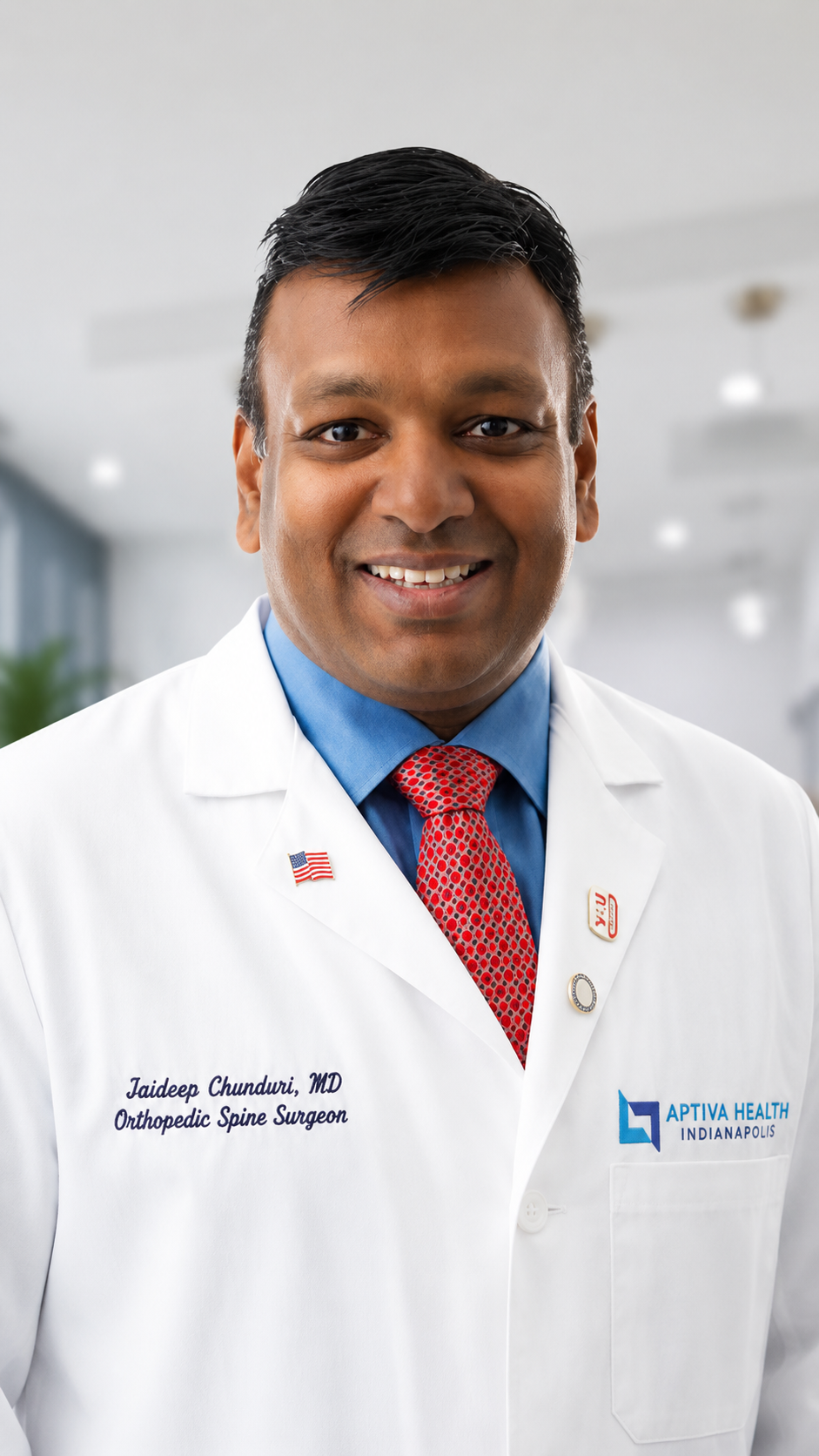
Jaideep Chunduri, MD | Orthopedic Spine Surgeon
Dr. Jaideep Chunduri is an orthopedic spine surgeon at Aptiva Health and one of the most experienced spine surgeons in the tri-state region. He is the former Director of Orthopaedic Spine Surgery at TriHealth in Cincinnati, a founding orthopedic spine surgeon at Beacon Orthopedics, and SCOI fellowship-trained. He sees patients in Northern Kentucky, Indianapolis (beginning May 21, 2026), and the Greater Cincinnati region.
Specialty: Orthopedic Spine Surgery
Fellowship: Southern California Orthopaedic Institute · Van Nuys, CA
Board Certified: American Board of Orthopedic Surgery (ABOS)
Licensed in: Kentucky, Ohio, and Indiana
Years in Practice: 20+ in Greater Cincinnati and the Tri-State Region
Locations: Aptiva Health Northern Kentucky & Aptiva Health Indianapolis
Also Serves: Cincinnati patients at the Hebron, KY office
Accepting New Patients: Yes

Bradley Stephenson, PA-C | Orthopedic Physician Assistant
Bradley Stephenson is a certified Physician Assistant dedicated to delivering high-quality, patient-centered healthcare. Known for his compassionate approach and strong focus on communication, Bradley strives to ensure every patient feels informed, respected, and cared for during each visit.
Specialty: Orthopedics & Sports Medicine
Title: Physician Assistant
Accepting New Patients: Yes

Bryan Davidson, PA-C, CAQ-OS | Orthopedic Physician Assistant - Aptiva Health
At Aptiva Health, Bryan Davidson, PA-C, CAQ-OS brings advanced orthopedic experience, surgical support expertise, and a compassionate approach to patient care. As a certified Physician Assistant with a Certificate of Added Qualifications in Orthopedic Surgery, Bryan is committed to helping patients feel informed, supported, and confident throughout their orthopedic care journey.
Specialty: Orthopedics & Sports Medicine
Title: Physician Assistant

Insurances Accepted
Aptiva Health accepts most major insurance plans, Medicare, Medicaid Managed Care, workers' compensation, and auto insurance (PIP and Medpay). We verify benefits and provide a clear cost estimate before surgery.
ACDF is FDA-approved (the procedure and implants used) and covered by Medicare and most major commercial insurance plans when medically necessary. One-level, two-level, and three-level ACDF are all routinely covered.
For patients paying out of pocket, we offer transparent, bundled cash-pay pricing for ACDF that includes the surgeon, facility, anesthesia, implants, and post-operative visits — no surprise itemized hospital bills.
Call 463-303-0501 to verify your insurance or request a cash-pay quote.
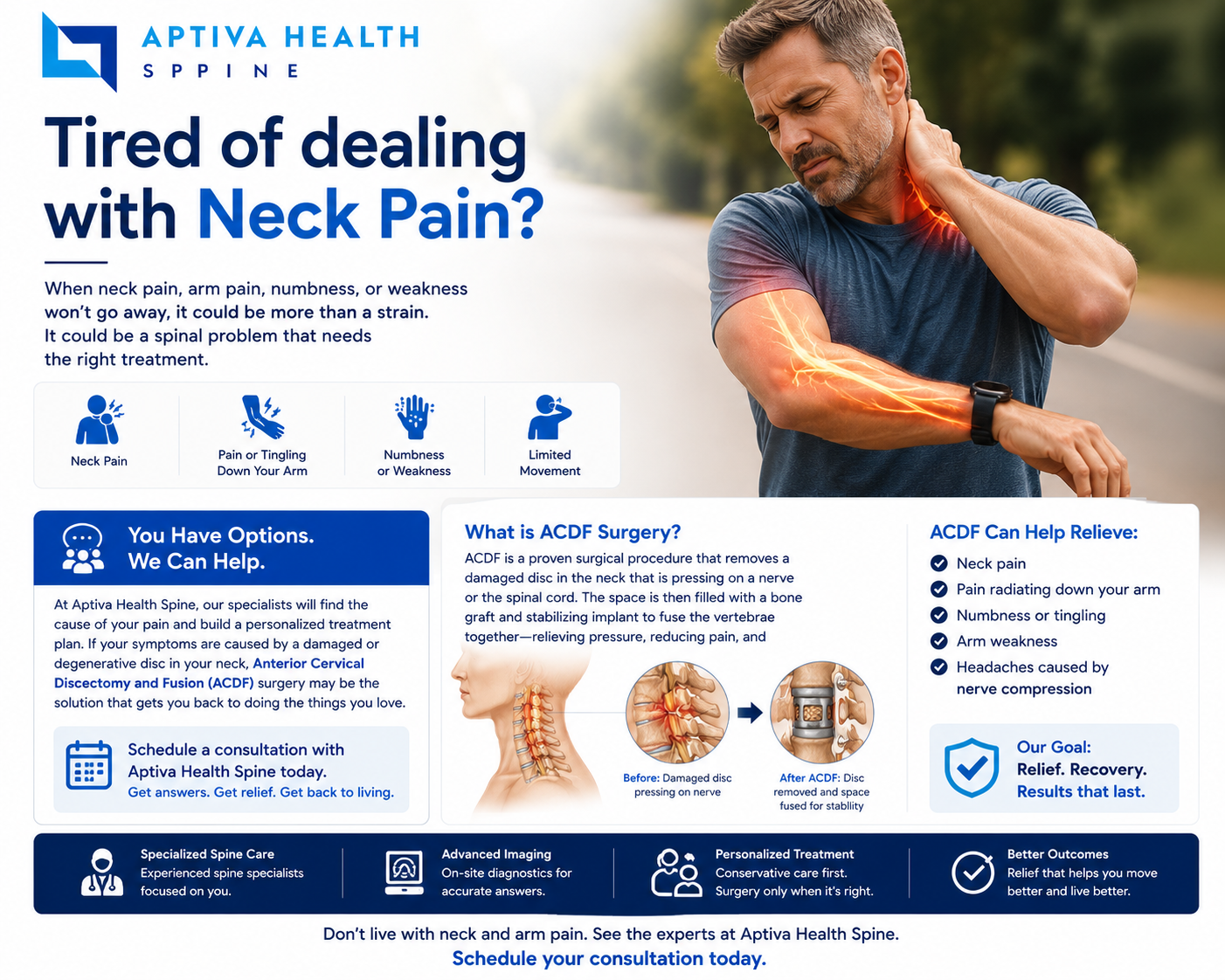
Ready for Relief From Neck and Arm Pain?
If you've been suffering with neck pain, arm pain, numbness, or weakness — and conservative care hasn't worked — it's time to talk to Aptiva's spine team.
Schedule a Consultation in Indianapolis — Schedule Now
Address: 6801 Gray Road, Suite H · Indianapolis, IN 46237
Phone: 463-303-0501 Fax: (855) 859-0123
Hours: Monday–Friday, 8:00 AM – 5:00 PM
Workers' comp scheduling line: 1-844-999-3627
Directions: Located on the south side of Indianapolis, easily accessible from I-65 (Exit 103 Southport Rd), US-31 (East Street), and I-465. Approximately 10 minutes from downtown Greenwood and 15 minutes from downtown Indianapolis.
Insurance accepted: Most major medical insurance, Medicare, Medicare Advantage, most Indiana Medicaid plans, workers' compensation, auto injury coverage (PIP and MedPay), and cash-pay.
ACDF: Frequently Asked Questions
What is ACDF (anterior cervical discectomy and fusion)?
ACDF is the most commonly performed surgery for neck and arm pain caused by a damaged cervical disc. The surgeon makes a small incision in the front of the neck, removes the damaged disc that is compressing the spinal cord or nerve root, and replaces it with a bone graft and small interbody cage. A titanium plate and screws are usually attached to the front of the vertebrae for stability. Over the following months, the two vertebrae fuse together into a single solid bone, which permanently stabilizes the cervical spine at that level.
Is ACDF performed as an outpatient procedure?
Yes. At Aptiva Health in Indianapolis, ACDF is performed as an outpatient procedure for appropriately selected patients. Most patients are discharged the same day, usually a few hours after surgery, and recover at home rather than in a hospital bed. This is a meaningful difference from traditional hospital-based ACDF, which often involves an overnight admission.
How is ACDF different from cervical disc replacement?
Both procedures start the same way — the surgeon removes the damaged cervical disc that is compressing the nerve or spinal cord. The difference is what happens next. In ACDF, the two vertebrae are permanently joined together using a bone graft and small plate, eliminating motion at that level. In cervical disc replacement, an FDA-approved artificial disc is inserted to preserve motion. ACDF remains the gold standard and is the right choice for patients with multi-level disease, instability, advanced arthritis, or certain other anatomic factors. Cervical disc replacement may be preferred for younger, single-level patients with good bone quality who want to preserve neck motion.
Am I a candidate for ACDF?
ACDF is generally considered when patients have neck or arm pain, numbness, tingling, or weakness caused by a herniated or degenerated cervical disc — and have not improved after six or more weeks of conservative care such as physical therapy, anti-inflammatory medications, and epidural steroid injections. ACDF is particularly appropriate for patients with multi-level disc disease, cervical instability, significant cervical stenosis, advanced facet arthritis, or those who are not candidates for cervical disc replacement. A consultation and review of cervical imaging with Dr. Chunduri determines whether ACDF is right for you.
How long does ACDF surgery take?
A single-level ACDF typically takes about one to two hours of surgical time. Two-level and three-level fusions take proportionally longer. Including pre-operative preparation, anesthesia, and post-anesthesia recovery, patients are generally at the surgical facility for four to six hours before being discharged home the same day.
How long is the recovery after ACDF?
Most patients go home the same day. A soft cervical collar is typically worn for two to six weeks depending on the surgeon's preference and the number of levels treated. Sore throat and difficulty swallowing for several days is normal and improves quickly. Patients typically return to desk-based work within one to two weeks and resume driving within one to two weeks. Light exercise resumes around four to six weeks; full physical labor and high-impact activity typically resume at three months once early fusion is confirmed on imaging. Solid bony fusion generally completes within three to six months.
Will I lose neck motion after ACDF?
Motion is permanently eliminated at the level that is fused — that is how the surgery works. However, most patients do not notice a meaningful loss in overall neck range of motion after a single-level ACDF, because the remaining cervical levels compensate naturally. Multi-level ACDF results in more noticeable motion loss. Patients who want to preserve motion and are good candidates for cervical disc replacement may be better suited to that procedure instead.
Can ACDF be done at multiple levels?
Yes. ACDF can be performed at one, two, three, or in select cases four cervical levels in a single operation. The most common is single-level ACDF (typically at C5-C6 or C6-C7). Two-level and three-level fusions are performed when multiple discs are causing symptoms or when the cervical spine requires broader stabilization. Multi-level ACDF takes longer to perform and to heal, and the post-operative collar and activity restrictions may be slightly more extensive.
What is the success rate of ACDF?
ACDF has one of the longest track records of any spine surgery and a very high success rate. Published clinical studies generally report approximately 90 to 95 percent of single-level ACDF patients experience significant relief of arm pain (radiculopathy), with fusion rates above 95 percent. Outcomes are most predictable when surgery is performed by an experienced spine surgeon on appropriately selected patients.
Will my insurance cover ACDF?
Yes. ACDF is a well-established procedure covered by Medicare and most major commercial insurance plans when medically necessary. Aptiva Health accepts most major insurance plans, Medicare, Medicaid Managed Care, workers' compensation, and auto insurance (PIP and Medpay). Our team verifies benefits and provides a clear cost estimate before surgery. We also offer transparent, bundled cash-pay pricing for ACDF that includes the surgeon, facility, anesthesia, implants, and post-operative visits.
Who performs ACDF at Aptiva Health Indianapolis?
Anterior Cervical Discectomy and Fusion (ACDF) at Aptiva Health Indianapolis is performed by Dr. Jaideep Chunduri, a board-certified orthopedic spine surgeon specializing in the surgical treatment of cervical and lumbar spine conditions. Dr. Chunduri uses evidence-based techniques to treat herniated discs, cervical radiculopathy, spinal stenosis, and other conditions that cause neck pain, arm pain, numbness, and weakness.
Throughout your care, Dr. Chunduri is supported by Bradley Stephenson, PA-C, and Bryan Davidson, PA-C, who assist with patient evaluations, education, surgical preparation, post-operative follow-up, and ongoing recovery. Together, the Aptiva Health Indianapolis spine team provides coordinated, patient-centered care designed to guide you through every stage of treatment—from your initial consultation to rehabilitation and return to daily activities.